“ Now comes the cookshop, where rows of turbaned customers are squatted on the floor with bowls before them, and the busy cook is at work over a fireplace fed with dried leaves. He fries cakes of rice in oil, he spits half a dozen scraps of meat on a wooden skewer, and roasts them over charcoal. Then a big pot simmers over the fire of leaves, and the smell of a "double-onioned" stew is wafted across the place to mingle with a thousand other queer smells of the bazaar. He sells vegetables done up into all kinds of shapes, and made hot to the taste with plenty of curry ”
Quotes about “cookshop”
Countess Vera Serkoff, Paper-bag Cookery
“ Economy, however, is not everything, and paper-bag cookery appeals also to the epicure, who does not consider cost in ordering a meal to his taste.Food cooked in a paper bag acquires a richness and a delicacy of flavour imparted by no other means of cooking. All the juices of the meat are preserved; there is no greasiness, no dryness, no risk of burning; even tough meat is made tender. Until a joint cooked by this method has been tasted, the epicure has no idea of the exquisite flavour and delicacy which await him. ”
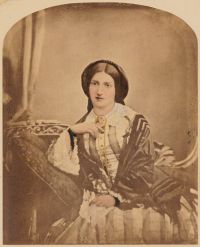 Isabella Beeton,
Mrs. Beeton's Book of Household Management
(1907)
Isabella Beeton,
Mrs. Beeton's Book of Household Management
(1907)
“ In the peat districts on the east and west coasts of England, cooking is still carried on under what appear to us almost impossible conditions, i.e. by means of a peat fire, burning on a stone hearth, with a wide chimney above it. In nearly all the houses the back kitchen or scullery is provided with a brick oven, in which bread and joints of meat may be baked; but by reason of the cost of extra fuel, time and trouble entailed, the heating of this oven is a weekly, or at most, a bi-weekly occurrence, and on other days culinary operations are confined to the open kitchen fire. ”
Various, The Atlantic Monthly (1864)
“ In this branch of cookery, doing quickly is doing well. The fire must be brisk, the attention, alert. The introduction of cooking-stoves offers to careless domestics facilities for gradually drying-up meats, and despoiling them of all flavor and nutriment,—facilities which appear to be very generally laid hold of. They have almost banished the genuine, old-fashioned roast-meat from our tables, and left in its stead dried meats with their most precious and nutritive juices evaporated. How few cooks, unassisted, are competent to the simple process of broiling a beefsteak or mutton-chop! ”
Emma Paddock Telford, Standard Paper-Bag Cookery
“ Paper-bag Cookery calls for no big outlay of money, no patent stove oven, no complex apparatus or appliances. All that is necessary is an oven of any sort—coal, gas, electric, wood or oil—a broiler, a paper bag specially and sanitarily prepared,—grease proof and waterproof,—a wood cookery dish if the food contains liquid or a number of separate ingredients, and something to cook therein. Another convenience are the wire clips for fastening the mouth and corners of the bag, which can be purchased wherever the bags are sold. ”
Countess Vera Serkoff, Paper-bag Cookery
“ Paper-bag cookery should appeal especially to the caterer for a small family. The difficulty of providing suitable joints for households of three or four persons is very great. A small piece of sirloin or half leg of mutton dries up to nothing when cooked in the ordinary way, and loud are the complaints that the flavour and juiciness of a large joint is not to be had under ten to twelve pounds of meat. Yet, if the housewife invests in the large, juicy joint desired, she finds it a very expensive business. One day's dinner hot and one cold is all that is really relished. ”
Lieut.-Col. Newnham-Davis, The Gourmet's Guide to London
“ It is a very long day's work. She is at the market at five a.m. to buy her material; at seven her staff is ready to help her in her own kitchen, and she begins with the last dishes of the dinner, preparing the sweets and ices; next she turns to the cleaning and preparation of the vegetables, and then to the materials for the soup and the making of the cold dishes. By one o'clock the meats and birds are all prepared for the cooking, and at six all the things to be cooked at the house where the dinner is to be given are put in hampers and taken over there. ”
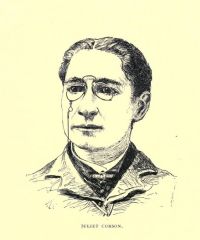 Juliet Corson,
The Cooking Manual of Practical Directions for Economical Every-Day Cookery
Juliet Corson,
The Cooking Manual of Practical Directions for Economical Every-Day Cookery
“ It is just there that benefit is derived from European culinary skill; the judicious use of a few inexpensive sweet herbs, and savory sauces, will raise a side dish, made from the cheapest cut of meat, in gustatory excellence far [Pg 4] above a badly cooked porterhouse steak, or a large but poorly flavored roast. Because the art of utilizing every part of food is eminently French, the New York Cooking School plan has been to adapt foreign thrift to home kitchen use. To provide enough at each meal; to cook and serve it so as to invite appetite ”
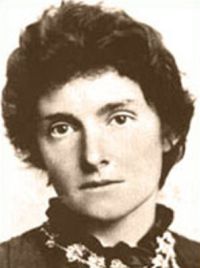 E. Nesbit,
Wings and the Child; Or, The Building of Magic Cities
E. Nesbit,
Wings and the Child; Or, The Building of Magic Cities
“ A flour-dredger and a pepper-pot, a potato-cutter, patty pans, and those little tall tins that you bake castle puddings in, the round wooden moulds with which dairy-maids imprint cows and swans upon pats of butter, the kitchen mortar, especially the big marble one, so heavy that cook does not care to use it, brown earthenware bowls and stewing-pots, the lids of tea-pots, clothes-pegs, jars that have held ginger, and jars that have held jam—especially the brownish corrugated kind of jar—all these things and many more you may glean in a kitchen whose Queen is kind. ”
Wilhelmina Rawson, Australian enquiry book of household and general information (1894)
“ Make a stuffing of parsley, boiled onion, breadcrumbs, dripping, salt, pepper and one egg; stuff the breast first,then fill the body. The young cook will do well to study her cookery book, not merely to take recipes from it, but to learn the different seasonings, flavorings and stuffings that go with the various meats, and having mastered such details, experiment on her own account. If economy is necessary in the household, she must learn to make up all cold meats and to utilize cold vegetables and scraps of dry bread, in fact, every morsel of food that comes under her hand. ”
 Alexis Soyer,
The Modern Housewife or, Ménagère
Alexis Soyer,
The Modern Housewife or, Ménagère
“ Of late years, great improvements have been made in the construction of ovens for baking of meat, called roasting ovens, which cause great economy in the expenditure of fuel; and, in large public establishments, where a number of the same kind of joints are required, it is the best plan of cooking. In the Receipts will be found the time required by each for baking, but, in a general way, for meat, hot ovens are the best; for poultry, not so hot as meat; and pastry, according to its kind. ”
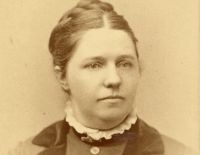 Maria Parloa,
Miss Parloa's Young Housekeeper
Maria Parloa,
Miss Parloa's Young Housekeeper
“ Each guest lifts the bowl and doily from the plate and places them at the left hand side. The doily is never to be used to wipe the fingers.A good waitress will not pile one dish upon another when removing them from the table. She should be provided with a tray for all the smaller dishes, and should remove the plates one or two at a time.All dishes from which people help themselves, such as vegetables, bread, butter, etc., should be passed at the left; those that are set before people, such as soup plates, clean plates, water glasses, finger bowls, etc., should be passed at the right. ”
Consumers' League of New York City, Consumers' Cooperative Societies in New York State
“ In this store the purchaser can find all the articles carried by a first-class grocer, canned goods, green goods, dairy products and, in addition, a complete supply of baked goods, baked by the cooperative society itself. The bakery is to be found behind the grocery. Large, high windows throw a flood of light into the mixing room. The oven is of a modern type, large, easily controlled and economical. Five men work at the baking and a boy wraps bread in waxed paper with a mechanical device which automatically folds and seals. ”
Anonymous, The Coffee Publichouse (1878)
“ In some London houses, including those of the Coffee Tavern Company, the customers are allowed to bring their own chop or piece of meat to be cooked, and are provided with plate, knife and fork, salt and pepper for a charge of one halfpenny. Hitherto this accommodation has been provided for working men only at publichouses, and wherever the custom prevails the Coffee Publichouse should adopt it. A grill may be fitted up for the purpose at an expense of from £15 to £20. Gas ovens are found to work well, both for cooking meat and baking bread, cakes, &c. ”
Countess Vera Serkoff, Paper-bag Cookery
“ For the business woman, living in one room, ordinary cooking is out of the question, yet most landladies refuse to cook for their lodgers, except at a high charge, and restaurant living is expensive. Ordinary cooking, too, means more or less heat and odours, incompatible with keeping the one room fresh and neat. In this case, too, paper-bag cookery solves the difficulty. ”
Anne Cobbett, The English Housekeeper (1851)
“ It is impossible to give particular directions for fitting up a kitchen, because so much must depend upon the number of servants, and upon what is required in the way of cookery. It was the fashion formerly to adorn it with a quantity of copper saucepans, stewpans, &c., &c., very expensive, and troublesome to keep clean. Many of these articles, which were regularly scoured once a week, were not, perhaps, used once in the year. A young lady ought, if she has a good cook, to be guided by her, in some measure, in the purchase of kitchen utensils ”
 Charles Egbert Craddock,
The Storm Centre: A Novel
Charles Egbert Craddock,
The Storm Centre: A Novel
“ Others ran in and out of the kitchen, bearing to the waiters, to be dispensed among the guests, interminable relays of the waffles of those times, golden brown, delicately rich, soft, yet crisp, of a peculiar lightness,—a kind that will be seen no more, despite the food inventions and dietetic improvements, for the artists of that choice cookery are all dead and their receipts only serve to mark the decadence of proficiency. ”
William Carew Hazlitt, Old Cookery Books and Ancient Cuisine… (1902)
“ He is asked what his profession is worth to the community; and he replies that without him people would have to eat their greens and flesh raw; whereupon it is rejoined that they might readily dress them themselves; to which the cook can only answer, that in such case all men would be reduced to the position of servants.The kitchen had its chef or master-cook (archimacherus) , under-cooks, a waferer or maker of sweets, a scullion or swiller (who is otherwise described as a quistron) , and knaves, or boys for preparing the meat; and all these had their special functions and implements. ”
Meta Stern Lilienthal, From Fireside to Factory (1916)
“ The modern housekeeper serves prepared breakfast-food that requires no cooking at all. She serves canned soups, canned fruits, canned vegetables and preserved pickles and jams from the grocery store. The colonial housekeeper not only did all the cooking, but all the baking, pickling, preserving, salting and brewing as well. When wash-day comes around, the modern housekeeper buys her material from the grocer. The colonial housekeeper had to manufacture the material herself. Every cake of soap used in the colonial household was made in the domestic soap-vat by the thrifty housewife. ”
 Friedrich Christian Accum,
Culinary Chemistry
Friedrich Christian Accum,
Culinary Chemistry
“ Made dishes are sometimes very expensive, and sometimes very economical, for ragouts and fricassees are often much less expensive than the plain dishes made of the same material, that is, a given weight of meat will go farther than if plainly roasted or boiled. French cookery consists nearly altogether of made dishes, both with the rich and poor. The rich have them to gratify the palate, and the poor, [149] for the sake of economy. Many circumstances combine to prevent made dishes from becoming of very general or frequent use in England. ”
John Lockwood, Our campaign around Gettysburg
“ Labor in constructions for the benefit of your culinary corps is most judiciously invested. A broad and level plat with convenient arrangements for boiling the pot and preparing the rations, the whole covered with a screen of some sort from the sun and the weather, will give you better coffee, better soup, better everything—not to speak of the occasional substitution of a bake or a roast in place of the inevitable boil—than if you have failed to provide for the comfort of your cooks. ”
Catherine Owen, Culture and Cooking; Or, Art in the Kitchen
“ It is a good plan to keep a supply of panure or dried bread-crumbs always ready. Cut any slices of baker's bread, dry them in a cool oven so that they remain quite colorless, or they will not do for the purpose. When as dry as crackers, crush under a rolling-pin, and sift; keep in a jar for use.In no branch of cooking is excellence more appreciated than in that of frying. A dish of filets de sole or cutlets, crisp and golden brown, is an ornament to any table, and is seldom disdained by any one. ”
 Mary Ronald,
The Century Cook Book
Mary Ronald,
The Century Cook Book
“ Every kitchen can produce a stock made from odds and ends unsuitable for other purposes than the stock-pot, and this stock is most useful in preparing sauces, giving a flavor not obtained in specially prepared stock.A French cook keeps at hand the different essences required to combine in sauces, such as a Mirepoix (vegetable flavor) , which is made by cutting into dice an onion, carrot, and turnip, celery, parsley, bay-leaf and bits of meat, frying them in fat pork or butter, then adding a little water, and simmering an hour, or until the flavor of the vegetables is extracted ”
Cora Moore, Twenty-four Little French Dinners and How to Cook and Serve Them
“ It is as strange as it is true that with the supplies that have lately proved sufficient to feed a world to draw upon the chief trouble with American cookery is its monotony. The American cook has a wider variety of foods at his command than any other in the world, yet in the average home how rarely is it that the palate is surprised with a flavor that didn't have its turn on the corresponding day last week or tickled with a sauce that is in itself an inspiration and a delight, not a mere “gravy,” liable to harden into lumps of grease when it cools. ”
 William Stearns Davis,
Life on a Mediaeval Barony
William Stearns Davis,
Life on a Mediaeval Barony
“ In the cookhouse, where the finer dishes must be prepared, the master cook has a true arsenal of utensils—pots,114 trivets, mortar and pestle, a table for mincing herbs, pothooks, caldrons, frying pans and gridirons, saucepans, platters, a pepper mill, dressing board, scummer, ladle, and many things else. There is no lack of help in the kitchen. Half a dozen loutish boys gladly work there all day long (receiving, incidentally, many of the cook's hard knocks) in return for being allowed to lick the pans and gnaw the scraps, so cheap is human labor. ”
 Lucy Maynard Salmon,
Progress in the household
Lucy Maynard Salmon,
Progress in the household
“ But man does not live by bread alone, and a kitchen may be sanitary in all its arrangements, it may represent unity of [143] plan, it may have every modern convenience, and yet it may lack the essential of attractiveness. The arts and crafts movement has not yet reached the kitchen, and it is thus almost impossible to secure cooking-utensils of good artistic design and color. But the second-hand store will often furnish a piece of good pottery, brass, or copper that may be utilized in the kitchen and serve the added purpose of increasing its attractiveness. ”
Willard Grosvenor Bleyer, How To Write Special Feature Articles
“ Within three years, it is promised, the community kitchen will have become national in character. Its possibilities for development are limitless.Way was blazed for the pioneer kitchen by Edward F. Brown, executive secretary of the New York school lunch committee.The active power behind the cauldrons of soup, cabbage and frankfurters, beans and rice pudding is vested in Mrs. James A. Burden, jr., and Mrs. William K. Vanderbilt, jr.The evolution of the community kitchen is going to be of interest to every housewife and to every wage earner in all classes of society. ”
Isabella Beeton,
Mrs. Beeton's Book of Household Management
(1907)
“ The Casserole possesses many advantages over the ordinary iron and copper cooking utensils, for the pots always look clean; they will impart no disagreeable flavour to the most delicate foods; they will not rust or tarnish, and if properly kept will not stain; they cook the food evenly and slowly, and consequently less fuel is required and the contents are not liable to burn. Moreover, they are inexpensive, and with careful management will prove cheaper than metal pots. Chafing Dish Cookery 3638.—BROILED OYSTERS. (Fr.—Huîtres frites.) ”
