A crossroads, defined as a junction where two roads intersect perpendicularly, serves as a powerful symbol of convergence and divergence in literature. Authors have long employed this imagery to explore themes of choice, journey, and transformation. G. K. Chesterton frames it as a metaphor for human freedom, while Stratton D. Brooks portrays its desolation, contrasting with E.
V. Lucas’s poetic vision of roads evolving into urban centers. Mary Ellen Chase and Charles S. Brooks highlight its function as a passage through natural and human landscapes, revealing how crossroads embody both physical paths and existential turning points. These varied perspectives underscore the concept’s enduring significance as a reflection of human experience.
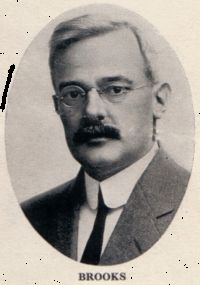 Stratton D. Brooks,
Composition-Rhetoric
Stratton D. Brooks,
Composition-Rhetoric