Dispersion (optics)

Definition and stakes

ScienceApologist/Optics workshop

“ In practice, most dispersive media follow this inequality for ranges of wavelengths that are more extensive than just the optical, and so include the adjacent regions of the ultraviolet and infrared, but the relation rarely holds for all wavelengths because, for example, gamma rays penetrate most matter as particles and long enough wavelength radio waves pass through most material with very little attenuation or dispersion. ”
Source: Wikisource

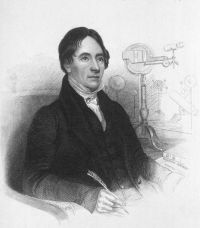
Henry Coddington,  An Elementary Treatise on Optics (1823)

“ And if rays are admitted to all points on the surface of the lens, the points v, i, &c. will be the vertices of so many cones of light of the different colours.
As all the rays do not converge to one point, it is important to know at least where they approach most nearly to it, or where they are all collected in the least space, and how great that space is, which is, in technical language, to require the center and diameter of the least circle of chromatic aberration or dispersion.
”
Source: Wikisource

Joseph Rogerson Cotter,  1911 Encyclopædia Britannica, Volume 8… (1911)

“ Such bodies show strong absorption bands in those colours which they reflect, while of the transmitted light that which is of a slightly greater wave-length than the absorbed light has an abnormally great refrangibility, and that of a slightly shorter wave-length an abnormally small refrangibility. The name given to this phenomenon,—“anomalous dispersion”—is an unfortunate one, as it has been found to obey a regular law. ”
Source: Wikisource

Get perspective with Kwize: daily news enlightened by great literature