“ The conscientious, capable, and hard-working Don is probably commoner than he has ever been; and his success is great. But even he might echo the cry against a possible tendency towards mere educational efficiency in fellows, which is expressed in the exclamation: “Nothing is so much to be feared [Pg 196] as that we should one day compete with the Board Schools.” ”
Don (academic)
Definition and stakes
The theme of “don (academic)” has been addressed by authors such as Johann Gottlieb Fichte, Jacob Abbott, Willis Fletcher Johnson and Vincent van Gogh. It is often associated with terms like college, student, teacher, professor and education.
Quotes about “don (academic)”
“ If you take an academy or a private school, constituted and organized like other similar institutions, success in your own will give you influence over others. A successful teacher of an academy raises the general standard of academic instruction. A college professor, if he brings extraordinary talents to bear upon the regular duties of that office, throws light, universally, upon the whole science of college discipline and instruction, and thus aids in infusing a continually renewed life and vigor into those venerable seats of learning that might otherwise sink into decrepitude and decay. ”
 Johann Gottlieb Fichte,
On the Nature of the Scholar — Lecture IX.…
“ If, at the conclusion of his university training it were found that even then the Student could not be made to comprehend the true nature of study, then study would altogether disappear from the world;—there would be study no longer, but the number of handicrafts would be increased. He who is not conscious of a living and clear comprehension of the Idea, and is at the same time an upright and honourable man, will forbear to assume the vocation of the Academic Teacher. ”
 Emerson Hough,
The Broken Gate: A Novel
“ We've not to do it over again. You can't forget what you have learned—you can't get away from your college education now, can you? You've got it—your diploma, your degree in engineering. You're a college man, Don, the only one in Spring Valley. And I'm so proud, and I'm so glad. ”
 John Donne,
Letters to Severall Persons of Honour
“ Donne, sometime Dean of St. Paul’s; a man of whose abilities I shall forbear to say [Pg 293] anything, because he who is of this nation, and pretends to learning or ingenuity, and is ignorant of Dr. Donne, deserves not to know him. The friendship of these two I must not omit to mention, being such a friendship as was generously elemented; and as it was begun in their youth, and in an University, and there maintained by correspondent inclinations and studies, so it lasted till age and death forced a separation. ”
 Alice Freeman Palmer,
Why Go to College? An Address
“ The greatest thing any friend or teacher, either in school or college, can do for a student is to furnish him with a personal ideal. The college professors who transformed me through my acquaintance with them—ah, they were few, and I am sure I did not have a dozen conversations with them outside their class rooms—gave me, each in his different way, an ideal of character, of conduct, of the scholar, the leader, of which they and I were totally unconscious at the time. ”
 Arthur Christopher Benson,
From a College Window
“ A boy goes for sympathy and companionship to his mother and sisters, not often to his father. Now a Don may do something to put this straight, if he has the will. One of the best friends I ever had was an elderly Don at my own college, who had been a contemporary of my father's. He liked young men ”
George Fitch, At Good Old Siwash
“ How a professor can go through an assorted collection of brain stufferies, get so many college degrees that his name looks like Halley's Comet with an alphabet tail, and then teach college students for forty years without even taking one of them apart to find out what he is made of, beats my time! That's a college professor for you, right through. He thinks of a college student only as something to teach—whereas, of all the nineteen hundred and eighty-seven things a college student is, that is about the least important to his notion. ”
Johann Gottlieb Fichte,
On the Nature of the Scholar — Lecture IX.…
“ In every word uttered by the Academic Teacher in the exercise of his calling, let it be Knowledge that speaks,—let it be his longings to extend her dominion,—let it be his deep love for his hearers, not as his hearers, but as the future ministers of Knowledge:—Knowledge, and these living desires to extend her dominion, let these speak, not the Teacher. ”
 William Jennings Bryan,
The First Battle — Illinois College Valedictory
(1881)
“ Beloved instructors, it is character not less than intellect that you have striven to develop. As we stand at the end of our college course, and turn our eyes toward the scenes forever past—as our memories linger on the words of wisdom which have fallen from your lips, we are more and more deeply impressed with the true conception of duty which you have ever shown. You have sought not to trim the lamp of genius until the light of morality is paled by its dazzling brilliance, but to encourage and strengthen both. ”
“ Of the successful man who is a Don by accident I confess an ignorance that borders on dislike. He is perhaps a scholar, certainly a courtier. He has the open secret of perennial youth. It is very likely that he dabbles in light literature, and may have written a book of fiction or history with a wide circulation. ”
Arthur Christopher Benson,
The Silent Isle
“ The days of the absent-minded, unkempt, slatternly, spectacled, owlish Don are over, and one has instead a brisk professional man, fond of business and ordered knowledge, who is not in the least a man of the world, but a curious variety of it, a man of a small and definite society who, on the strength of knowing a certain class, and of possessing a certain savoir faire, credits himself with a mundane position and enjoys his own self-respect. ”
Johann Gottlieb Fichte,
On the Nature of the Scholar — Lecture VII.…
“ If a conscientious course of study at a University secured no other advantage than that of presenting to youth a picture of the dignified calling of the Scholar as a model for life, and of repelling from this sphere those who are not endowed with the requisite power, such a course would, on account of this advantage alone, be of the utmost importance to the Student. ”
 Thomas Henry Huxley,
Lay Sermons, Addresses and Reviews
“ The student who repairs to them sees in the list of classes and of professors a fair picture of the world of knowledge. Whatever he needs to know there is some one ready to teach him, some one competent to discipline him in the way of learning; whatever his special bent, let him but be able and diligent, and in due time he shall find distinction and a career. Among his professors, he sees men whose names are known and revered throughout the civilized world; and their living example infects him with a noble ambition, and a love for the spirit of work. ”
John James Stevenson, Popular Science Monthly (1912)
“ That type has not disappeared; but the college professor of the last three decades has had, for the most part, special preparation for his work; teaching is, for him, the noblest of professions; except in a few departments, he is a man of the world, not enclosed in a world of his own creation. With wider opportunities, he understands his fellows and can keep in touch with younger men. ”
 Randolph Silliman Bourne,
Education and living
(1917)
“ Devoted to the traditional studies—the literatures, mathematics, philosophy, history—it is still strangely reminiscent of old musty folkways of the schoolman and theologian. Every professor knows the desire of the average student to finish his college course and grapple with his professional studies. Every professor is aware of the sharp quickening of interest which comes on entrance to the professional schools. ”
Johann Gottlieb Fichte,
On the Nature of the Scholar — Lecture IX.…
“ The vocation of the Academic Teacher requires him to communicate the Idea,—not as the Author does, abstractly, in the one perfect conception under which it presents itself to his own mind,—but he must mould, express, and clothe it in an infinite variety of forms, so that he may bring it home, under some one or other of those adventitious vestures, to those by whose present state of culture he must be guided in the exercise of his calling. ”
Johann Gottlieb Fichte,
On the Nature of the Scholar — Lecture IX.…
“ The Academic Teacher, of whom chiefly we have to speak, ought to train the Student who has been made acquainted with the nature and dignity of his calling, to the capacity of receiving the Idea, and to the power of developing it anew, and giving it a form peculiar to himself:—he should do all this if he can. ”
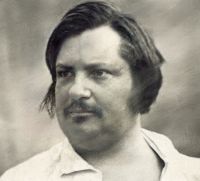 Honoré de Balzac,
The Works of Honoré de Balzac: About Catherine de' Medici…
“ An Academician was a great man in embryo. And if every Vendôme scholar would speak the truth, he would confess that, in later life, an Academician of the great French Academy seemed to him far less remarkable than the stupendous boy who wore the cross and the imposing red ribbon which were the insignia of our "Academy." ”
George Henry Blore, Victorian Worthies: Sixteen Biographies
“ He addresses them as 'you that do profess to teach and teach us nothing, feeding not the heart'—and complains of their indifference to the movements of their own age and to the needs of their pupils. For, despite the ferment which was spreading in the realms of theology, of [156] politics, and of natural science, the Dons still taught their classics in the dry pedantic manner of the past, and refused to face the problems of the nineteenth century. ”
Johann Gottlieb Fichte,
On the Nature of the Scholar — Lecture IX.…
“ Not without deliberation do I class the Teachers in the lower Schools among true and not subaltern Scholars, and therefore demand of them that they attain possession of the Idea, and be penetrated by it,—if not with perfect light, yet with living warmth. He who is destined to study will, even while a boy, surround himself invisibly with the Idea and with its sanctity, and bathe his whole being in its influence. ”
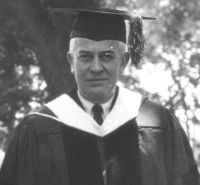 Carl Van Doren,
Contemporary American Novelists…
“ Indeed, the mark of the undergraduate almost covers them, especially of the undergraduate as he fondly imagines himself in his callow days and as he is foolishly instructed to regard himself by the more vinous and more hilarious of the old graduates who annually come back to a college to offer themselves—though this is not their conscious purpose—as an object lesson in the loud triviality peculiar and traditional to such hours of reunion. ”
Thomas Henry Huxley,
Popular Science Monthly
(1877)
“ No one knows better than my friend Colonel Donnelly, to whose clear views and great administrative abilities so much of the successful working of the science classes is due, that there is much to be done before the system can be said to be thoroughly satisfactory. The instruction given needs to be made more systematic, and especially more practical; the teachers are of very unequal excellence, and not a few stand much in need of instruction themselves, not only in the subjects which they teach, but in the objects for which they teach. ”
Johann Gottlieb Fichte,
On the Nature of the Scholar — Lecture IX.…
“ He who prosecutes his studies conscientiously, and so acquires a conviction of the importance of the vocation of the Scholar, but yet does not feel within himself a clear consciousness of the capacity to fulfil it, shows that he recognises its sacred character by not undertaking it;—he who does undertake it, manifests the same conviction by exercising it worthily. In the next lecture we shall speak of the true Author; to-day we shall discourse of the upright Teacher of future Scholars. ”
 Bessie Marchant,
A Canadian Farm Mystery; Or, Pam the Pioneer
“ Don can never forget that he has been to college and has been trained in the most expert and scientific fashion, while Nathan is quite sure that weight of years and experience should take the first place. ”
Johann Gottlieb Fichte,
On the Nature of the Scholar — Lecture IX.…
“ For this reason, the Teacher in these lower Schools should be a partaker of the Idea, because it is his task imperceptibly to familiarize the youth with the high and noble before he is able for himself to distinguish these from the vulgar, to accustom him to these, and to estrange him from the low and ignoble. Thus guarded in his early years, and thus prepared for higher progress, the youth enters the University. ”
 H. G. Wells,
Mankind in the Making
“ Now let us first have it perfectly clear that this second stage in development lies no more completely within the idea of College than the former lay completely within the idea of School. In the general discussion of these things we are constantly faced by the parallel error to that we have tried to dissipate in regard to schools, the error that the Professor and his Lecture and (in the case of experimental sciences) his Laboratory make, or can make, the man, just precisely in the same way that the Schoolmaster or Schoolmistress is supposed to be omnipotent in the education of the boy or girl. ”
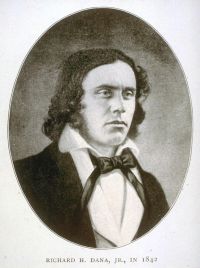 Richard Henry Dana,
Two Years Before the Mast — Chapter XXX
“ He a’n’t the child you take him for. He’ll carry all these things to the college, and if they are better than any that they have had before, he’ll be head of the college. Then, by-and-by, somebody else will go after some more, and if they beat him, he’ll have to go again, or else give up his berth. ”
Harold Henry Joachim, Immediate Experience and Mediation (1919)
“ It is natural to think of him primarily as the incomparable teacher who, throughout his long career, first as tutor and then as professor, devoted himself, with unflinching energy and with remarkable success, to one of the most difficult tasks in the world the task of communicating to others his own high sense of the seriousness of philosophy, of fostering in them his own single-hearted devotion to the truth. ”
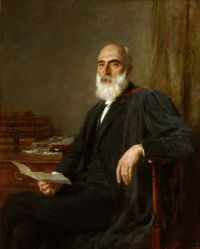 Lancelot Ridley Phelps,
Dictionary of National Biography…
(1912)
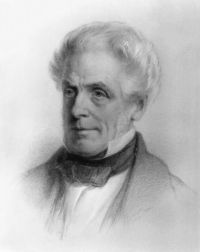
“ Here, as with his pupils in his rooms, his strength lay not merely in the abundance and accuracy of his knowledge, but even more in his method of interpreting an author and of marshalling his facts. As provost he ruled his college in a wise and liberal spirit; a sound judgment and a rare grasp of principle were linked to fine courtesy and warmth of heart. In the life and work of the university he played a leading part. ”
 Isaac Taylor,
History of the transmission of ancient books to modern times
(1859)
“ We should rather take the case of the intellectual filiation of college life: we imagine the learned professor, during the last ten years of his official [Pg 81] life, imparting his mental substance to a hundred or two of scholars, some two or three of whom, at least, will live to do the like, from the same chair, in behalf of their successors. On this ground the individual teachers need not be more than twelve, upon whose oral testimony, in succession, we rely in passing from an age of generally diffused intelligence, to the times of the revival of learning, and of printed books. ”
John Marshall Barker, Colleges in America
“ It is within the power of the college professor to help enlighten the understanding, strengthen and guide the intuitions and reasoning faculties, and to awaken within the student a consciousness of his new powers and capacities, and incite him to mental activity. The highest scholastic training demands that the professor studiously avoid all those methods of instruction which tend to mechanical habits of thought, and which check the mind's spontaneity of growth and repress the individuality so essential to true scholarship. ”
 W. W. Rouse Ball,
Cambridge Papers
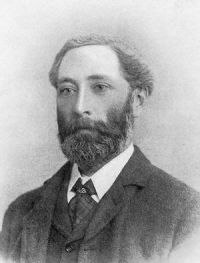
“ I have considerable influence as a lecturer, and I will not neglect it. It is by silent perseverance only that we can hope to reduce the many-headed monster of prejudice, and make the University answer her character as the loving mother of good learning and science. ”
Johann Gottlieb Fichte,
On the Nature of the Scholar — Lecture IX.…
“ The attainment by the Student of the first object of study is, to the Academic Teacher, a conditional duty,—conditioned by the possibility of its fulfilment. The attainment of the second he must ever look upon and acknowledge as his unconditional duty, which he must never deliberately relinquish. It may indeed happen that he cannot accomplish even this, but he must never admit a doubt of its ultimate attainment. ”
Johann Gottlieb Fichte,
On the Nature of the Scholar — Lecture IX.…
“ But in every case, and unconditionally, he must fill the Student with respect and veneration for the proper calling of the Scholar. The first object of all study,—to lay hold of the Idea from a new and peculiar point of view, is by no means to be given up either by the Student himself, or by the Teacher on his behalf ”
 Karl Edwin Harriman,
Ann Arbor Tales
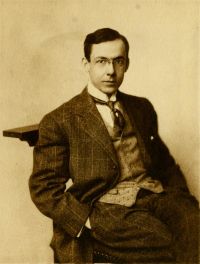
“ Or—"That is Professor ——," a fellow academician would say to a stranger on the campus as the erect, lithe-limbed young man veered round a corner. "A pillar, sir, a pillar of the institution. The making of a great man, a great man, sir."But all this was long before the advent of the old professor, long before the day when people ceased to seek him out, to fawn before his talent, and to cherish in memory the brilliant phrases that he was so apt in making. ”
