“ Thus, while the incandescent electric bulb is a great advance over fire, it is still a very inefficient source of light. Because it depends upon incandescence, a considerable portion of the electrical input goes into the production of unwanted heat, for the bulb’s filament radiates in the infrared as well as the visible region. ”
Electric bulb
Definition and stakes
The theme of “electric bulb” has been addressed by authors such as Nikola Tesla, Thomas Commerford Martin, Various, Vivian Lewes, John Fleming and Emile Garcke and James Clerk Maxwell. It is often associated with terms like light, lamp, current, filament and lighting.
Quotes about “electric bulb”
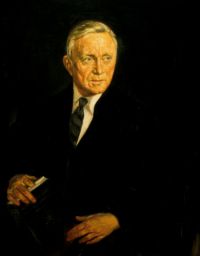 William O. Douglas,
General Electric Company v. Jewel Incandescent Lamp Company…
“ As the first claim of the patent indicates, the characteristic feature of the patented bulb is the fact that the interior surface is 'characterized by the presence of rounded as distinguished from sharp angular crevices.' It is that feature which is responsible for the bulb's strength. Now, an electric bulb frosted on the inside was old in the art. Kennedy had disclosed such a product twenty-five years earlier. Moreover, it had long been known in the art that successive acid treatments of glass rounded out the sharp angular crevices produced by the first etching. ”
Edward Huntington Williams, Every-day Science: Volume 6. The Conquest of Nature
“ A most ingenious yet simple device tells the workman when any particular crucible is in need of replenishing. A small, ordinary, incandescent electric-light bulb is placed in circuit between the poles that convey the electric current through the alumina solution. So long as the crucible contains alumina, the bulb does not glow, because twenty volts of electricity are required to make it incandescent, whereas seven volts pass through the solution. ”
Henry Schroeder, History of electric light (1923)
“ With the development of a waterproof base in 1900, by the use of a waterproof cement instead of plaster of Paris to fasten the base to the bulb, porcelain at first and later glass being used to insulate the terminals of the base from each other, lamps could be exposed to the weather and give good results. Electric sign lighting therefore received a great stimulus, and lamps as low as 2 candlepower for 110 volts were designed for this purpose. Carbon lamps with concentrated filaments were also made for stereoptican and other focussing purposes. ”
William O. Douglas,
General Electric Company v. Jewel Incandescent Lamp Company…
“ And it appears that an electric bulb, which had been frosted inside pursuant to his method, would have inevitably obtained the rounded pits and hence the attendant strength characteristic of the Pipkin bulb.If A without mentioning the element of strength patented a bulb which was extra strong, B could not obtain a patent on the bulb because of its strength, though he was the first to recognize that feature of it. ”
Various, Harper's Round Table, September 1…
“ The lamps referred to here are those having a pear-shaped glass bulb, and which are known as incandescent lamps. The kind we see in the streets, giving a very powerful light, are called arc-lights. With this class of lights, however, we will have nothing to do here. The object of this article is to give plain directions for the construction of a battery to light a small electric lamp. Some boys may think that because electricity is something mysterious it must be very difficult to produce ”
Various, Popular Science Monthly (1911)
“ The deficiencies of the carbon-filament incandescent electric light bulb are known to all of us—its reddish light, its decrease in brilliancy with use, its comparatively short life and rather low efficiency. Most of us can testify to the superiority of the tungsten bulb, one of the latest productions of the chemist and electrician—its white light, its long life with but slightly lessened intensity, the comparatively low cost of the light per candle power. ”
Various, Encyclopaedia Britannica, 11th Edition…
“ The bulbs pass into the exhausting-room, where they are exhausted by some form of mechanical or mercury pump. During this process an electric current is sent through the filament to heat it, in order to disengage the gases occluded in the carbon, and exhaustion must be so perfect that no luminous glow appears within the bulb when held in the hand and touched against one terminal of an induction coil in operation. ”
Various, Harper's Round Table, September 1…
“ A SMALL ELECTRIC-LIGHT OUTFIT. HOW TO MAKE THE BATTERY AND HOW TO SET IT UP. BY THOMAS R. TALTAVALL.All young readers of Harper's Round Table are probably familiar with the appearance of the electric light—that wonderful little glass bulb that we see in stores, hotels, theatres, etc.—and no doubt many have wondered what causes the hairlike loop inside the bulb to become so brilliantly luminous. Electricity does it; but no one knows what electricity is, not even the most advanced scientific thinker of the day. ”
George Sutherland, Twentieth Century Inventions: A Forecast
“ The glow lamp having no carbon filament, but setting up a bright light with only a fraction of the resistance presented by carbon, would, if perfected, render electric lighting by far the cheapest as well as the best method of illumination. Tentative work has indicated a high degree of probability that success will be achieved, and the glowing bulb is at any rate a possibility of the future which it will be well to reckon with. ”
Various, Popular Science Monthly (1896)
“ To-day myriads of electric bulbs are aglow without flame—indeed, just because combustion is rendered impossible by the rigid exclusion of air. As these incandescent lamps were long ago prophesied in the miner's electric fuse, so also has the first simple process of the electroplater led up to an art incomparably more important. ”
Charles Meymott Tidy, The Story of a Tinder-box
“ Instead of a platinum wire, a fine thread of carbon is brought to a very high temperature by the passage through it of the electrical current, in which condition it gives out light. All that you have to do to light up is to connect your lamp with the battery. The reign of the match, as you see, so far as incandescent electric lamps are concerned, is a thing of the past. We need no match to fire it. ”
Thomas Commerford Martin, The inventions, researches and writings of Nikola Tesla
“ Returning to the subject of electrode lamps, it is obviously of advantage in such a lamp to confine as much as possible the heat to the electrode by preventing the circulation of the gas in the bulb. If a very small bulb be taken, it would confine the heat better than a large one, but it might not be of sufficient capacity to be operated from the coil, or, if so, the glass might get too hot. ”
 John F. Woodhull,
The Library of Work and Play: Electricity and Its Everyday Uses
“ It is never profitable, however, to use them for their whole lifetime. The lamp gradually volatilizes carbon and deposits [145] it upon the inner walls of the bulb, producing a smoky appearance and shutting off light. As the filament grows thinner by this process, it offers greater resistance to the current, and as the amount of current grows less the proportion of light to current grows rapidly less, so that at last instead of paying for 3.5 watts of electricity per candle-power of light one must pay for perhaps seven or eight watts per candle-power. ”
Archibald Williams, The Romance of Modern Invention
“ An ingenious device has lately been added to the system for facilitating the lighting of the lamp. At the base of the lamp-post a small hermetically-closed can containing petroleum ether is placed, and connected by very fine copper-tubing with a burner under the vaporising tube. When the lamp is to be lit a small rubber bulb is squeezed, forcing a quantity of the ether vapour into the burner, where it is ignited by a platinum wire rendered incandescent by a current passing from a small accumulator also placed in the lamp-post. ”
 Mrs. C. S. Peel,
The Labour-saving House
“ The invention and development of the drawn-wire lamp, made by various firms and sold under trade names such as "Osram," "Mazda," and "Z," have made a great saving in the annual bill for electric light, and at the same time have raised the standard of illumination. With the carbon filament, a 32 c.p. lamp would burn for seven and a half hours with the expenditure of one unit of electricity. Now the same light can be obtained for twenty-five hours at the same cost with the metal filament lamp. ”
The Boy Mechanic, Volume 1: 700 Things for Boys to Do
“ Producing electric light by means of small bulbs that give from one-half to six candle power, and a suitable source of power, is something that will interest the average American boy. These circular bulbs range from 1/4 to 2 in. in diameter, and cost 27 cents each complete with base. They are commonly known as miniature battery bulbs, since a battery is the most popular source of power. The 1/2-cp. bulbs are usually 2-1/2 volts and take 1/4 ampere of current. ”
 Elsie De Wolfe,
The House in Good Taste
“ Gas light is more difficult to manage than electricity, for there is always the cumbersome tube and the necessity for adding mechanical accessories before a good clear light is secured. Gas lamps are hideous, for some obscure reason, whereas there are hundreds of simple and excellent wall fixtures, drop lights and reading lamps to be bought already equipped for electricity. The electric wire is such an unobtrusive thing that it can be carried through a small hole in any good vase, or jar, and with a suitable shade you have an attractive and serviceable reading light. ”
H. T. Cory, The Thompson-Houston System of Electric Lighting
“ In the distant future, electricity will be used for electric lighting only as subordinate to other uses to which it may be applied such as heating houses, taking place of stoves for cooking, being used as a substitute for the steam engine. In fact the motor is rapidly becoming of as much practical use as the electric light. ”
George Sutherland, Twentieth Century Inventions: A Forecast
“ The fundamental principle upon which heating by electricity is generally arranged depends upon the fact that a thin wire offers more electrical resistance to the passage of a current than a thick one, and therefore becomes heated. In the case of the incandescent lamp, in which the carbon filament requires to be raised to a white heat and must be free to emit its light without interference from opaque matter, it is necessary to protect the resisting and glowing material by nearly [Pg 199] exhausting the air from the hermetically sealed globe or bulb in which it is enclosed. ”
James W. Steele, Steam, Steel and Electricity
“ The little pear-shaped bulb with its delicate loop of filament, which cost months of toil and experiment at first, is now a common article, manufactured at an absurdly small cost, packed in barrelfuls and shipped everywhere, and consumed by the million. A means has been found for producing the vacuum of its interior rapidly, cheaply and thoroughly, and the beautiful incandescent glow hangs in lines and clusters over the civilized world. The phenomenon of incandescence without oxygen seems peculiar to these lights alone. ”
Alex Schwalbach, The Modern Bicycle and Its Accessories
“ The cost of the light is little more than that of oil. The incandescent bulb has a capacity of carrying four volts, and when the switch is on the first contact point the voltage of the battery is reduced by the resistance coil to a point of safety, at the same time giving a brilliant light. ”
“ As a very natural consequence of such development, the company by 1902 had 420 miles of underground system supplying installation amounting to 1,928,090 fifty-watt equivalents.Electricity a Living Factor.To talk about electrical development in terms of power consumed tells but one side of the story. More impressive even than figures are the immense number of uses to which electricity is put. Electric lighting, introduced in 1882, has become practically the standard for illumination, not only here, but for the entire civilized world. ”
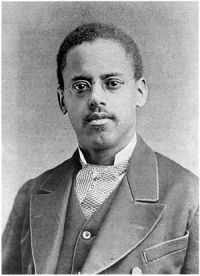 Lewis Howard Latimer,
Incandescent Electric Lighting…
(1890)
“ That the operations just described should be intelligently and carefully performed, is of the greatest importance, as each lamp when burning represents a given amount of coal being consumed at the station; and as the light is sold at a predetermined and stated price, just as gas is, it is necessary, in order to have the electric light company's books balance in favor of the proper parties, that no coal should be burned unless the light is in actual use. ”
Vivian Lewes, John Fleming and Emile Garcke, 1911 Encyclopædia Britannica, Volume 16… (1911)
“ It was evolved from the early observed fact that a conductor is heated when traversed by an electric current, and that if it has a high resistance and a high melting-point it may be rendered incandescent, and therefore become a source of light. Naturally every inventor turned his attention to the employment of wires of refractory metals, such as platinum or alloys of platinum-iridium, &c., for the purpose of making an incandescent lamp. ”
Thomas Commerford Martin, The inventions, researches and writings of Nikola Tesla
“ The greater part of the energy supplied to the bulb is then used up in heating the metal tube, and the bulb is rendered useless for the purpose. The aluminum sheet should project above the glass stem more or less—one inch or so—or else, if the glass be too close to the incandescing body, it may be strongly heated and become more or less conducting, whereupon it may be ruptured, or may, by its conductivity, establish a good electrical connection between the metal tube and the leading-in wire, in which case, again, most of the energy will be lost in heating the former. ”
Lewis Howard Latimer,
Incandescent Electric Lighting…
(1890)
“ Although electricity, like the air around us, seems very impalpable, appealing to so few of the senses, it is yet capable of being measured, for in order to run the lamps economically, we must give each of them only its due measure of the electric current passing over the wires. ”
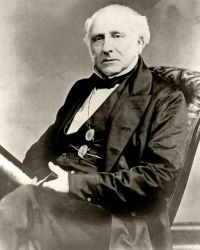 David Salomons,
Lippincott's Monthly Magazine
(1890)
“ Although there is a variety of ways of producing electricity, from the rubbing of a piece of sealing-wax on the coat-sleeve to the vast engines employed at large central lighting-stations, yet here we will consider only such methods of producing the force as are in practical use on a moderate scale. The current for electric lighting may be obtained either from chemical batteries or from machines termed dynamos. ”
James Slough Zerbe, Electricity for Boys
“ This is called the multiple circuit, and it is obvious that the entire amperage produced by the dynamo will not be required to pass through each lamp, but, on the other hand, each lamp takes only enough necessary to render the filament incandescent.This invention at once solved the problem of the incandescent system and was called the subdivision of the electric light. By this means the cost was materially reduced, and the wiring up and installation of lights materially simplified. ”
Vincent Stephen, Wrinkles in Electric Lighting
“ Lamps not to be run too bright. For the sake of economy, it is well not to run the lamps too bright. Without giving the lamps the maximum current a very good light can be obtained, and they will last all the longer. I need hardly say that there is a medium in this as in everything else, and it does not look well when a candle is placed alongside of an electric lamp to enable a person to read or write in comfort.All this time the dynamo is running, and we must feel the bearings occasionally to see if they [39] are keeping cool. No trouble with dynamo if oiling is attended to. ”
Thomas Commerford Martin, The inventions, researches and writings of Nikola Tesla
“ I take two ordinary 50-volt 16 c. p. lamps which are in every respect alike, with the exception, that one has been opened at the top and the air has filled the bulb, while the other is at the ordinary degree of exhaustion of commercial lamps. When I attach the lamp which is exhausted to the terminal of the secondary of the coil, which I have already used, as in experiments illustrated in Fig. 179a for instance, and turn on the current, the filament, as you have before seen, comes to high incandescence. ”
Vincent Stephen, Wrinkles in Electric Lighting
“ If one lamp went out through the filament giving way, it would not affect the others, so that there would still be a light in the lantern. If, through some breakdown of the engine or dynamo, the electric current were no longer to be had, then it [42] Mast-head light. would only be necessary to withdraw the stand of lamps, and put in the ordinary regulation oil-lamp. The mast-head lamp could also be fitted with the electric light, as indeed has already been done. Arc light should never be used. ”
Various, Encyclopaedia Britannica, 11th Edition…
“ The amendment, in 1888, of the Electric Lighting Act of 1882, before long caused a huge development of public electric lighting in Great Britain. By the end of the 19th century every large city in Europe and in North and South America was provided with a public electric supply for the purposes of electric lighting. The various improvements in electric illuminants, such as the Nernst oxide lamp, the tantalum and osmium incandescent lamps, and improved forms of arc lamp, enclosed, inverted and flame arcs, are described under Lighting: Electric. ”
Related terms
Authors who wrote about “electric bulb”
 Nikola TeslaThomas Commerford MartinVariousVivian Lewes, John Fleming and Emile Garcke
 James Clerk MaxwellJohn F. WoodhullLewis Howard LatimerGeorge SutherlandChautauqua InstitutionVincent StephenWilliam O. DouglasHenry SchroederHal HellmanEdward Huntington WilliamsCharles Meymott TidyJames W. SteeleElsie De WolfeAlex SchwalbachDavid SalomonsH. T. Cory
