Electrical stimulation

Definition and stakes

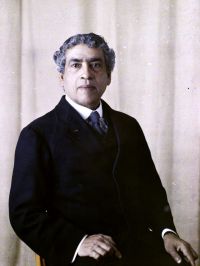
Portrait of Jagadis Chandra Bose Jagadis Chandra Bose,  Response in the Living and Non-Living

“ In experiments for the exhibition of electric response it is preferable to use a non-electrical form of stimulus, for there is then a certainty that the observed response is entirely due to reaction from stimulus, and not, as might be the case with electric stimulus, to mere escape of stimulating current through the tissue. For this reason, the mechanical form of stimulation is the most suitable.
I find that all parts of the living plant give electric response to a greater or less extent.
”
Source: Gutenberg

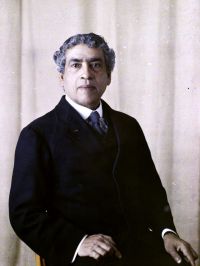
Portrait of Jagadish Chandra Bose Jagadish Chandra Bose,  Researches on Irritability of Plants (1913)

“ Thus dilute hydrochloric acid or ammonia causes excitation of both muscle and pulvinus. 3. Thermal.—The application of a hot wire will induce responsive contraction in both cases. 4. Electrical.—The muscle may be excited by an induction-shock. The pulvinus of Mimosa is also excited by such shocks. Other modes of electrical stimulation, such as that of condenser-discharge and that of the application of a constant electrical current, are found effective in causing excitation of animal tissues. ”
Source: Wikisource

Get perspective with Kwize: daily news enlightened by great literature