Elephant tooth

Definition and stakes

Edwin Tenney Brewster,  Natural Wonders

“ Now a hundred years is a pretty long time for a tooth to keep on grinding leaves and twigs and roots, so the elephant has to save his teeth and make them last.
To begin with, he saves his front teeth by not having any. His two great tusks are two upper front teeth grown out till they are not teeth at all, but crowbars that the elephant uses to grub up roots with. They have no enamel and no root. So they can keep growing at the inner end as fast as they wear off at the outer.
”

Source: Gutenberg

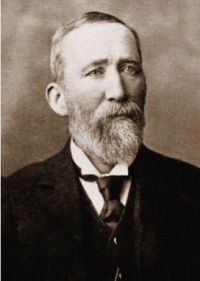
Portrait of Sir James Emerson Tennent Sir James Emerson Tennent,  The Wild Elephant and the Method of Capturing and Taming it in Ceylon

“ Elephants are said to be afflicted with tooth-ache; their tushes have likewise been found with symptoms of internal perforation by some parasite, and the natives assert that, in their agony, the animals have been known to break them off short.161 I have never heard of the teeth themselves being so affected, and it is just possible that the operation of shedding and the subsequent 173decay of the milk-tushes, may have in some instances been accompanied by incidents that gave rise to this story. ”
Source: Gutenberg

Frank E. Beddard,  Cambridge Natural History Mammalia (1902)

“ The number of these ridges varies greatly from species to species. The Indian Elephant is one of those which have the greatest number of plates in a single tooth, as many as twenty-seven. [17] Of the six molars which eventually appear, the first three are considered to correspond to premolars. But successional teeth are rare in the genus; that is to say as far as concerns the molars, for the tusks have their milk forerunners. As to the molars it is apparently only E. planifrons which certainly shows a milk dentition. In Mastodon and older types a milk dentition is commoner. ”
Source: Wikisource

Get perspective with Kwize: daily news enlightened by great literature