Exchange (prisoner of war)

Definition and stakes

Andrew W. Young The government class book

Prisoners of war are detained to prevent their returning to join the enemy, or to obtain from their government a just satisfaction as the price of their liberty. Prisoners may be kept till the end of the war. Then, or at any time during the war, the government may exchange them for its own soldiers taken prisoner by the enemy; or a ransom may be required for their release. It is the duty of the government to procure, at its own expense, the release of its citizens.
Source: Gutenberg

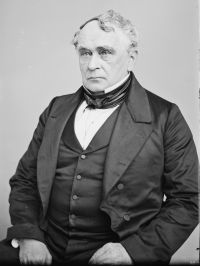
Portrait of Jubal Anderson Early Jubal Anderson Early Southern Historical Society Papers (1876)

The question of exchange of prisoners is a matter for agreement between the opposing powers, but the question of the parole is not. The paroles stipulated for in the cartel of July, 1862, were paroles with a view to subsequent exchange, and the stipulation did not create the right of a prisoner of war to be released from captivity on his parole, that existed prior to and independent of the cartel.
Source: Wikisource

Portrait of George Fox Tucker George Fox Tucker International Law

In exchanging prisoners of war, such numbers of persons of inferior rank may be substituted as an equivalent for one of superior rank as may be agreed upon by cartel, which requires the sanction of the government, or of the commander of the army in the field.
107
A prisoner of war is in honor bound truly to state to the captor his rank; and he is not to assume a lower rank than belongs to him, in order to cause a more advantageous [357] exchange, nor a higher rank, for the purpose of obtaining better treatment.
Source: Gutenberg

Get perspective with Kwize: daily news enlightened by great literature