Executive veto

Definition and stakes

George Ticknor Curtis,  Life of James Buchanan, Fifteenth President of the United States…

“ Two-thirds of Congress may overrule the Executive veto; but the whole of Congress and the President united, cannot overrule the decisions of the Supreme Court. Theirs is a veto on the action of the whole Government. I do not say that this power, formidable as it may be, ought not to exist: on the contrary, I consider it to be one of the wise checks which the framers of the Constitution have provided against hasty and unconstitutional legislation, and is a part of the great system of mutual restraints which the people have imposed on their servants for their own protection. ”
Source: Gutenberg

A Compilation of the Messages and Papers of the Presidents…

“ The power of the Executive veto was exercised by the first and most illustrious of my predecessors and by four of his successors who preceded me in the administration of the Government, and it is believed in no instance prejudicially to the public interests. It has never been and there is but little danger that it ever can be abused. No President will ever desire unnecessarily to place his opinion in opposition to that of Congress. He must always exercise the power reluctantly, and only in cases where his convictions make it a matter of stern duty, which he can not escape. ”
Source: Gutenberg

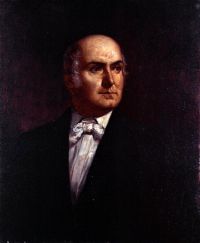
Portrait of Abel P. Upshur Abel P. Upshur,  A Brief Enquiry into the Nature and Character of our Federal Government (1863 (org. 1840))

“ But the veto power, as it stands in the Constitution, goes far beyond this object. It is, in effect, a power in the executive department to forbid all action in any other. It is true that, notwithstanding the veto of the President, a law may still be passed, provided two-thirds of each house of congress agree therein; but it is obvious that the cases are very rare, in which such concurrence could be expected. In cases of plain necessity or policy the veto would not be applied; and those of doubtful necessity or policy would rarely be carried by a majority so large as two-thirds of each house. ”
Source: Wikisource

Get perspective with Kwize: daily news enlightened by great literature