Feral animal

Definition and stakes

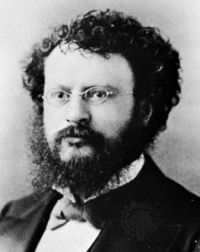
Portrait of Charles Darwin Charles Darwin,  The Variation of Animals and Plants under Domestication…

“ It has been repeatedly asserted in the most positive manner by various authors, that feral animals and plants invariably return to their primitive specific type. It is curious on what little evidence this belief rests. Many of our domesticated animals could not subsist in a wild state; thus, the more highly improved breeds of the pigeon will not "field" or search for their own food. Sheep have never become feral, and would be destroyed by almost every beast of prey. ”
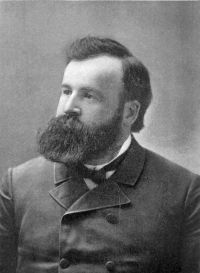
Source: Gutenberg

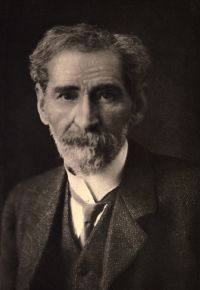
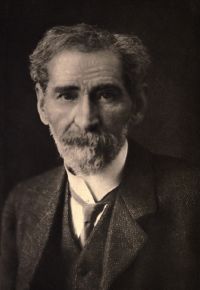
Alfred R. Wallace and Frank Finn,  1911 Encyclopædia Britannica (1911)

“ Mammals.—It is unnecessary here to dwell upon the world-wide distribution of the two rats Mus rattus and M. decumanus, and of the house-mouse M. musculus; their introduction has always been involuntary. Similarly nearly all our domestic mammals except the sheep have become feral somewhere or other, whether by intentional liberation or by escape; but the smaller ones more than the larger, such as pigs, goats, dogs and cats. This has been especially the case in Hawaii and New Zealand; in America, Australia and Hawaii, horses and cattle are also feral. Feral pigs are numerous in New Zealand. ”
Source: Wikisource

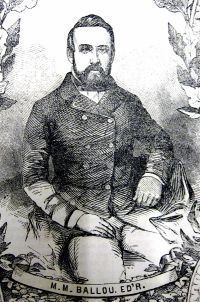
Portrait of W. Hamilton Gibson W. Hamilton Gibson,  Camp Life in the Woods and the Tricks of Trapping and Trap Making

“ Though nearly blind, and therefore incapable of following its prey by sight, it would be active beyond conception, springing this way and that way as it goes along, leaping with lightness and quickness upon any animal which it meets, rending it in pieces in a moment, thrusting its blood-thirsty snout into the body of its victim, eating the still warm and bleeding flesh, and instantly searching for fresh prey. ”
Source: Gutenberg

Get perspective with Kwize: daily news enlightened by great literature