Fetichism

Definition and stakes

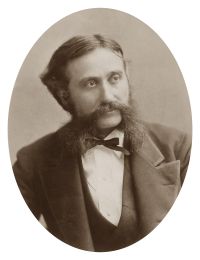
Portrait of Andrew Lang Andrew Lang,  Custom and Myth — Fetichism and the Infinite (1874)

“ Our object has been to defend the 'primitiveness of fetichism.' By this we do not mean to express any opinion as to whether fetichism (in the strictest sense of the word) was or was not earlier than totemism, than the worship of the dead, or than the involuntary sense of awe and terror with which certain vast phenomena may have affected the earliest men. We only claim for the powerful and ubiquitous practices of fetichism a place among the early elements of religion, and insist that what is so universal has not yet been shown to be 'a corruption' of something older and purer. ”
Source: Wikisource

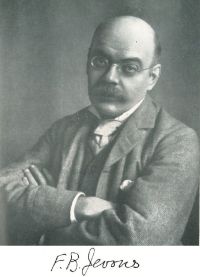
Portrait of F. B. Jevons F. B. Jevons,  An Introduction to the Study of Comparative Religion

“ Now, if we are, I will not say to do justice to the view that fetichism is the primitive religion of mankind or a stage from which other modes of religious thought have been developed, but if we are simply to understand it, we must clearly distinguish it from the view—somewhat paradoxical to say the least—that fetichism has no religious value, and yet is the source of all religious values. ”
Source: Gutenberg

Bernard Simon Talmey,  Love: A Treatise on the Science of Sex-attraction

“ Fetichism.—The word fetichism denotes the condition in which an object by virtue of association with sentiment, personality, or ideas exerts a charm. Erotic fetichism makes an idol of physical or mental qualities of an individual of the other sex or even of objects used by this individual. Erotic fetichism is physiologic in nature. Hence pathologic fetichism is generally, like masochism and sadism, not so easily diagnosed. Sometimes it is almost impossible to define sharply the beginning of the perversion. Fetichism of a considerable high degree is found in normal love as well. ”
Source: Gutenberg

Get perspective with Kwize: daily news enlightened by great literature