Homer Eon Flint, The Blind Spot
“ Watson, the present writers have thought it best at this stage to transpose the story from the first to the third person. Any narrative, unless it is negative in its material, is hard to give in the first person ”
Homer Eon Flint, The Blind Spot
“ Watson, the present writers have thought it best at this stage to transpose the story from the first to the third person. Any narrative, unless it is negative in its material, is hard to give in the first person ”
 H. G. Wells,
Mankind in the Making
H. G. Wells,
Mankind in the Making
“ In a little while there are eyes full of interest and clutching hands full of purpose, smiles and frowns, the babbling beginning of expression and affections and aversions. Before the first year is out there is obedience and rebellion, choice and self-control, speech has commenced, and the struggle of the newcomer to stand on his feet in this world of men. ”
Mervin James Curl, Expository Writing
“ Choose, then, the events that all share in common if they are of value in giving a framework for your narrative [Pg 277] presentation, but especially choose those events that in their nature illuminate the personality and complement your analysis.We think of events as being public. There is also the hero's private life. Often, especially with the more humble heroes, the home life is more important than the public deeds, brings out more clearly the real man than any amount of marching in the market place or discussing in the public square. ”
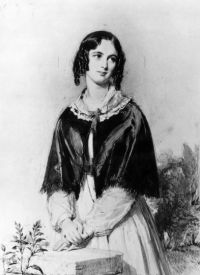 Charlotte M. Yonge,
The Daisy Chain, or Aspirations
Charlotte M. Yonge,
The Daisy Chain, or Aspirations
“ It would beg to be considered merely as what it calls itself, a Family Chronicle—a domestic record of home events, large and small, during those years of early life when the character is chiefly formed, and as an endeavour to trace the effects of those aspirations which are a part of every youthful nature. That the young should take one hint, to think whether their hopes and upward-breathings are truly upwards, and founded in lowliness, may be called the moral of the tale. ”
 John Ruskin,
On the Old Road, Vol. 2 (of 2)
John Ruskin,
On the Old Road, Vol. 2 (of 2)
“ It is quite curious how often the catastrophe, or the leading interest, of a modern novel, turns upon the want, both in maid and bachelor, of the common self-command which was taught to their grandmothers and grandfathers as the first element of ordinarily decent behavior. ”
Alice B. Emerson, Ruth Fielding at Briarwood Hall (1913)
“ In the course of her remarks she said: "This is your first experience, I understand, away from home and in a school of this character? Yes? Ah, then, many things will be new and strange to you, as well as hard to bear at first. ”
On the art of writing fiction (1894)
“ Method of telling This suggests the question, Should the story be told in the first person or the third? The first person is the more difficult to manage. Heroines, for instance, who tell their own stories are often, I have observed, sadly self-conscious and affected. They commonly begin by depreciating their own good looks, and then go on to tell us of the conquests which their plain faces make. ”
 Ralph Waldo Emerson,
Essays: First Series — Friendship
(1841)
Ralph Waldo Emerson,
Essays: First Series — Friendship
(1841)
“ You demonstrate yourself, so as to put yourself out of the reach of false relations, and you draw to you the first-born of the world, — those rare pilgrims whereof only one or two wander in nature at once, and before whom the vulgar great show as spectres and shadows merely. ”
 Samuel Johnson,
The Rambler
(1801)
Samuel Johnson,
The Rambler
(1801)
“ They rarely afford any other account than might be collected from publick papers, but imagine themselves writing a life when they exhibit a chronological series of actions or preferments; and so little regard the manners or behaviour of their heroes, that more knowledge may be gained of a man's real character, by a short conversation with one of his servants, than from a formal and studied narrative, begun with his pedigree, and ended with his funeral. ”
 Johann Wolfgang von Goethe,
Wilhelm Meister's Apprenticeship and Travels…
Johann Wolfgang von Goethe,
Wilhelm Meister's Apprenticeship and Travels…
“ If we happen, under certain circumstances, to have written and sealed and despatched a letter to a friend, which, however, does not find him, but is brought back to us, and we open it at the distance of some considerable time, a singular emotion is produced in us, on breaking up our own seal, and conversing with our altered self as with a third person. ”
Various, The Atlantic Monthly, Volume 15…
“ Indeed, biography, and personal narrative of all kinds, seem to command a general popularity. Moreover, we like to know from the person himself what he does, how he thinks and feels, what fortunes or vicissitudes he encounters, how he begins his career, and how it ends. All biography gives us most of these particulars, but they are never so vividly recited as by the subject of the narrative himself. Accordingly what was once a kind of diary of the most unimportant events I have transformed into a personal history. ”
Clarence Budington Kelland, The Steadfast Heart (1924)
“ Yet, despite his carelessness of dress and of manner, and sometimes of the niceties of language, you gained a feeling that you were in the presence of a first-class man and a gentleman—of a first-class man, who through some crotchet of fate or some minor defect of character remained a first-class man in a tiny sphere and was more or less contented that it should be so. ”
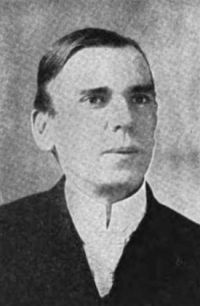 J. Breckenridge Ellis,
The Story of a Life
J. Breckenridge Ellis,
The Story of a Life
“ But no, the biographer, on second thought, will not go up to May's Lick in the present chapter. Let that expedition be reserved for Chapter Third. And let those who care for the story of lives merely for events, not for motive-springs of action, skip the present chapter, if they will. It will be to their loss, if they do so; for what life is to be understood, without an understanding of the principles that direct its course?In the life we are seeking to trace, there were three great principles that shaped events. The first has already been amplified—the resolve to become a teacher of girls. ”
 Edward Bellamy,
The Duke of Stockbridge — CHAPTER FIRSTTHE MARCH OF THE MINUTE MEN
(1900)
Edward Bellamy,
The Duke of Stockbridge — CHAPTER FIRSTTHE MARCH OF THE MINUTE MEN
(1900)
“ The first shot may well be an accident, the second may possibly be, but as the third inexorably follows, husbands and wives, brothers and sisters, parents and sons, look at each other with blanched faces, and instantly a hundred scenes of quiet preparation for meeting, are transformed into the confusion of a very different kind of preparation. ”
Louis Tracy, The Terms of Surrender
“ Though crammed with incident and rich in the vivid tints of travel in many lands, it calls for none other than the briefest summary in a narrative which, at the best, can deal only with the chief phases of a remarkable career. ”
Laura Spencer Portor, Adventures in indigence, and other essays (1918)
“ But there lacks to the modern child the quiet opportunity for knowing and studying humanity at first-hand. In place of long and comfortable and constant visits, we have a kind of motion-picture hospitality soon over, a film on a roll soon spun out; and instead of life with its slower actions and reactions, a startling mere picture of life flashing by.A short time ago I watched a party of married people and children receive an automobileful of guests at a country house. ”
Carolyn Sherwin Bailey, For the Story Teller: Story Telling and Stories to Tell
“ When she has satisfactorily answered these questions, the story teller will select her story having for its theme, atmosphere and motif an idea or group of ideas that will touch the child’s mental life as she has discovered it and [7] by means of which it will find a permanent place in his mind through its comfortable friendliness and familiarity.The child who has come directly from his home and the sheltering arms of his mother or nurse should not, at first, be taken far afield through the lands of fairies and giants. ”
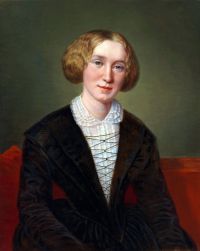 George Eliot,
Impressions of Theophrastus Such…
(1902)
George Eliot,
Impressions of Theophrastus Such…
(1902)
“ The only stories life presents to us in an orderly way are those of our autobiography, or the career of our companions from our childhood upward, or perhaps of our own children. But it is a great art to make a connected strictly relevant narative of such careers as we can recount from the beginning. ”
John Foster, An Essay on the Evils of Popular Ignorance
“ And it might be an employment of considerable though rather melancholy interest, for a person visiting many parts of the land, to put in requisition, in each place, for a day or two, the most faithful of the memories of the most narrative of the oldest people, for materials toward forming an estimate of the mental and moral state of the main body of the inhabitants, of town or country, in the period of which they themselves saw the latter part, and remember it in combination with what their progenitors related of the former. ”
 Josiah Royce,
The Conception of God
(1897)
Josiah Royce,
The Conception of God
(1897)
“ First, in so far as I am a social being, I take my fellow’s experience to be as live and real an experience as is mine. In appealing to the consensus of other men’s experiences, I am so far appealing to what I regard as a real experience other than my own momentary experience, and not as a merely possible experience. ”
George Sturt, Change in the Village
“ For if you follow the clue on, it leads very quickly to the scene where self-reliance is so to speak at home, where it seems the natural product of the people's circumstances—the scene, namely, of their daily work. ”
 Andrew Lang,
The Orange Fairy Book
Andrew Lang,
The Orange Fairy Book
“ Much has been left out in places, and the narrative has been broken up into conversations, the characters telling each other how matters stand, and speaking for themselves, as children, and some older people, prefer them to do. ”
Willis Fletcher Johnson, "My country, 'tis of thee!"
“ People with and without letters of introduction succeed in forming acquaintances, becoming part of one or another social set, even get into the churches, open bank accounts, go into business, and a year or two afterward are discovered to have antecedents which would make a person of ordinary respectability hold up his hands in horror. ”
Elliott O'Donnell, Byways of Ghost-Land
“ Many of the events, and out-of-the-way events, of my life have been read in my lines with perfect veracity, my character has been delineated with equal fidelity, and the future portrayed exactly in the manner it has come about—and all by a stranger, one who had never seen or heard of me before he "told my hand." ”
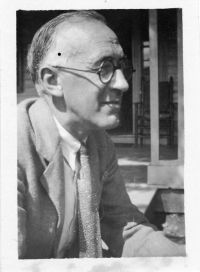 Walter Prichard Eaton,
Penguin Persons & Peppermints
Walter Prichard Eaton,
Penguin Persons & Peppermints
“ There you have a not at all impossible evolution of a story. But now suppose that instead of my being present at this party, a friend had been present, quite as alive as I to the ironies of the situation, and suppose my friend later repeated the incident to me—why should it not serve me just as well, why should it not start the fictional urge, the gestation of character and incident? ”
Baron Edward Bulwer Lytton Lytton, What Will He Do with It? — Complete
“ In the frank license of narrative, years will have rolled away ere the curtain rise again. Events that may influence a life often date from moments the most serene, from things that appear as trivial and unnoticeable as the great lady’s visit to the basketmaker’s cottage. Which of those lives will that visit influence hereafter,—the woman’s, the child’s, the vagrant’s? Whose? Probably little that passes now would aid conjecture, or be a visible link in the chain of destiny. ”
 Arlo Bates,
Talks on the study of literature
Arlo Bates,
Talks on the study of literature
“ Perhaps, too, the mention of the subject of this talk brings from the past the homely, kindly figure of the nurse who made our childish eyes grow large, and our little hearts go trippingly in the days of pinafores and fairy-lore—the blessed days when "once upon a time" was the open sesame to all delights. The responsiveness of human beings to story-telling the world over unites all mankind as in a bond of common sympathy. ”
Carolyn Sherwin Bailey, Tell Me Another Story: The Book of Story Programs
“ The first story in a group is an apperceptive one; it secures the child's spontaneous attention because, through its plot, it touches his own life in some way. It brings him into close and intimate touch with the interest theme of the program because it speaks of things that he knows, and other things that he can do. The second story in each group makes an appeal to the child's reasoning powers; having secured his attention through the apperceptive story, the story-teller now takes the child a-field, mentally, and secures his voluntary attention. ”
 Henry Harland,
The Yellow Book
(1894)
Henry Harland,
The Yellow Book
(1894)
“ We would impersonate the characters of our own world—our schoolfellows and masters, our parents, servants, friends—and carry them through experiences and situations derived from our impressions of real life. ”
 A. M. Williamson,
The House by the Lock — Chapter XI
(1906)
A. M. Williamson,
The House by the Lock — Chapter XI
(1906)
“ I will even have my family tree brought out for your benefit if you choose, and will engage to show you the diary which I have kept for years, and where you can see exactly how and where my time has been spent for the last decade or so. Anything to please a famous, and therefore privileged, man like yourself. ”
D. M. Moir, The Life of Mansie Wauch
“ On first commencing this memoir of my life, I put pen to paper with the laudable view of handing down to posterity—to our children, and to their children’s children—the accidents, adventures, and mischances that may fall to the lot of a man placed by Providence even in the loundest situation of life, where he seemed to lie sheltered in the bield of peace and privacy;—and, at that time, it was my intention to have carried down my various transactions to this dividual day and date. ”
 Wilkie Collins,
The Law and the Lady
Wilkie Collins,
The Law and the Lady
“ I confess I have often fancied myself transformed into some other person, and have felt a certain pleasure in seeing myself in my new character. One of our first amusements as children (if we have any imagination at all) is to get out of our own characters, and to try the characters of other personages as a change—to fairies, to be queens, to be anything, in short, but what we really are. ”
Julia Darrow Cowles, The Art of Story-Telling, with nearly half a hundred stories
“ The incident is used to show that each [38] child wants to feel that the story is being told to him, and emphasizes the need of telling stories with a personal directness of appeal.I have said that the story and the children should be the only things of which the story-teller takes note. A consciousness of one’s own self as the actor upon the boards, spoils all. ”
Laura Fry Kready, A Study of Fairy Tales (1916)
“ This power of life will enable the story-teller to enter, at the same time, into the life of the story she tells, and the life of those listening, to see the gift of the one and the need of the other. ”
 Henry C. Rowland,
True to Form
(1922)
Henry C. Rowland,
True to Form
(1922)
“ In my service and European social experience I had come to look upon presentations as reserved for making known individuals of lesser rank to some personality particularly distinguished, whether for high achievement or royal birth, or possibly age and dignity, as in the case of grandparents of the house. ”
William James Sly, World Stories Retold for Modern Boys and Girls
“ THE FATHER AS STORY-TELLERThe instinct of story-telling is, undoubtedly, more natural with the mother, the children more necessarily turning to her with their cry for soul-food, “Tell me a story!” But many a father would greatly enrich his own life and his boy’s childhood memory by less absorption in the evening paper, the monthly magazine, or the club in order to attend to this soul-hunger of his boy’s mind. Longfellow, the great lover of children, had the father as the story-teller in mind, when he pictured “The Children’s Hour” ”
Edward Bellamy,
Dr. Heidenhoff's Process — Chapter II
(1880)
“ Even the children, as they went to school, forgot to play, and talked in whispers together, or lingered near the groups of men to catch a word or two of their conversation, or, maybe, walked silently along with a puzzled, solemn look upon their bright faces. ”
 F. W. Farrar,
Eric, or Little by Little
F. W. Farrar,
Eric, or Little by Little
“ During the first term the novelty, the loneliness, the dread of unknown punishments, the respect for authorities, the desire to measure himself with his companions—all tend to keep him right and diligent. ”
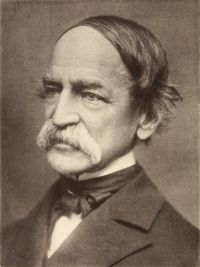 Isaac N. Arnold,
The Life of Abraham Lincoln — Chapter IV
(1885)
Isaac N. Arnold,
The Life of Abraham Lincoln — Chapter IV
(1885)
“ At the close of that struggle, nearly every adult male had been a participator in some of its scenes. The consequence was, that of those scenes, in the form of a husband, a father, a son, or a brother, a living history was to be found in every family--a history bearing the indubitable testimonies to its own authenticity, in the limbs mangled, in the scars of wounds received in the midst of the very scenes related ”
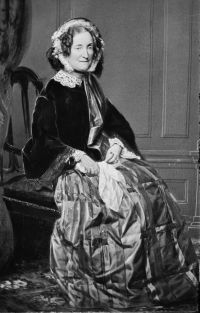 L. H. Sigourney,
Olive Leaves; Or, Sketches of Character
L. H. Sigourney,
Olive Leaves; Or, Sketches of Character
“ Those who are most familiar with unfolding infancy, agree, that incidents simplified from the Scriptures, delight it, though they may be frequently repeated.So, from the great storehouse of history, the young may entertain and enrich themselves at the same time. By extending their acquaintance through past ages and distant nations, the powers of thought expand themselves, an acquaintance with illustrious characters is formed, and knowledge gained which will be profitable through life, both for reflection and conversation. ”
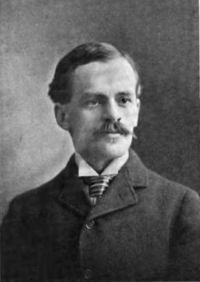 Alfred H. Lloyd,
The will to doubt
Alfred H. Lloyd,
The will to doubt
“ Out of the depth and breadth of his personal character, bounded only by the unity of experience, he must ever react against the narrowness and the factional ritual, and taking this ritual—or special professional technique—to be valid mediately rather than immediately, in spirit rather than merely in letter, must ever seek to translate his factional experience, its skill and its insight, to all parts of human life. ”
John RuskinSamuel JohnsonRalph Waldo EmersonMervin James CurlAlice B. EmersonHomer Eon FlintJohann Wolfgang von GoetheJ. Breckenridge EllisH. G. WellsEdward BellamyLouis TracyLaura Spencer PortorJohn FosterJosiah RoyceAndrew LangWillis Fletcher Johnson