Folding (geology)

Definition and stakes

William Harmon Norton,  The Elements of Geology

“ Mountain Peaks carved in Folded Strata, Rocky Mountains, Montana
But most of the mountain ranges of the earth, and some of the greatest, such as the Alps and the Himalayas, were originally mountains of folding. The earth’s crust has wrinkled into a fold; or into a series of folds, forming a series of parallel ridges and intervening valleys; or a number of folds have been mashed together into a vast upswelling of the crust, in which the layers have been so crumpled and twisted, overturned and [211] crushed, that it is exceedingly difficult to make out the original structure.
”
Source: Gutenberg

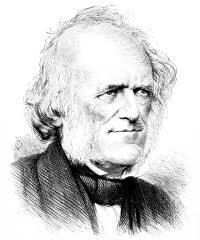
Portrait of Sir Charles Lyell Sir Charles Lyell,  The Student's Elements of Geology

“ Arrangement and Direction of Parallel Folds of Strata.—The possible causes of the folding of strata by lateral movements have been considered in a former part of this chapter. No European chain of mountains affords so remarkable an illustration of the persistency of such flexures for a great distance as the Appalachians before alluded to, and none has been studied and described by many good observers with more accuracy. ”
Source: Gutenberg

William J. Miller,  Geology: The Science of the Earth's Crust

“ As already suggested, however, folding is not the only method by which mountains are formed. Many ranges are either entirely due to the tilting of earth blocks by faulting or fracturing of the earth, or their present altitude, at least, is a direct result of faulting. Such may be called block mountains. They are wonderfully represented by the various north-south ranges rising some thousands of feet above the general level of the Great Basin region of Utah and Nevada. ”
Source: Gutenberg

Get perspective with Kwize: daily news enlightened by great literature