“ The internal heat associated with some young volcanic systems has been harnessed to produce geothermal energy. For example, the electrical energy generated from The Geysers geothermal field in northern California can meet the present power consumption of the city of San Francisco. ”
Geothermal energy
Definition and stakes
The theme of “geothermal energy” has been addressed by authors such as active 1883-1912 James Weir, Nikola Tesla, John Joly, Clive M. Countryman and John Arthur Thomson. It is often associated with terms like coal, heat, steam, gas and volcano.
Quotes about “geothermal energy”
Steven R. Brantley, Volcanoes of the United States
“ Groundwater heated by large, still-hot 3 magma bodies can be tapped for geothermal energy. And over many thousands of years, heated groundwater has concentrated valuable minerals, including copper, tin, gold, and silver, into deposits that are mined throughout the world. ”
United States. Congress, Energy Independence and Security Act of 2007…
“ In addition, the Secretary shall conduct such supporting activities including research, resource characterization, and technology development as necessary. (b) Geothermal Energy Production From Oil and Gas Fields— The Secretary shall implement a grant program in support of geothermal energy production from oil and gas fields. The program shall include grants for a total of not less than three demonstration projects of the use of geothermal techniques such as advanced organic rankine cycle systems at marginal, unproductive, and productive oil and gas wells. ”
United States. Congress, Energy Independence and Security Act of 2007…
“ Reservoir Performance Modeling— The Secretary shall support a program of research, development, demonstration, and commercial application of models of geothermal reservoir performance, with an emphasis on accurately modeling performance over time. Models shall be developed to assist both in the development of geothermal reservoirs and to more accurately account for stress-related effects in stimulated hydrothermal and enhanced geothermal systems production environments. ”
United States. Congress, Energy Independence and Security Act of 2007…
“ GEOTHERMAL— The term `geothermal' refers to heat energy stored in the Earth's crust that can be accessed for direct use or electric power generation. (6) HYDROTHERMAL— The term `hydrothermal' refers to naturally occurring subsurface reservoirs of hot water or steam. ”
active 1883-1912 James Weir, The Energy System of Matter: A Deduction from Terrestrial Energy Phenomena
“ The working of any evaporative cycle may also be spread over very large terrestrial areas by the free movement of the acting material. Aqueous vapour rising in equatorial regions may finally return to the earth in the form of ice-crystals at the poles. In every complete cycle, however, the total expenditure per unit mass of material initially evaporated is always the latent heat at the higher or evaporation temperature; in the final or return stages of the cycle, any energy not transmitted to the air masses is devoted to the heating of returning aqueous material. ”
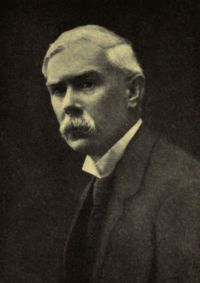 John Arthur Thomson,
Erik Semien — Part VIII
John Arthur Thomson,
Erik Semien — Part VIII
“ The impact of a falling stone generates heat; a waterfall is hotter at the bottom than at the top--the falling particles of water, on striking the ground, generate heat; and most chemical changes are attended by heat changes. Energy may remain latent indefinitely in a lump of wood, but in combustion it is liberated, and we have heat as a result. The atom of radium or of any other radio-active substance, as it disintegrates, generates heat. "Every hour radium generates sufficient heat to raise the temperature of its own weight of water, from the freezing point to the boiling point." ”
active 1883-1912 James Weir, The Energy System of Matter: A Deduction from Terrestrial Energy Phenomena
“ This fact, that energised material in the gaseous form is not susceptible to the thermal field, is of very great importance in the general economy of Nature. It is, in reality, the means whereby the great primary process of the transformation of the axial energy of the earth into the heat form is limited in extent. As will be explained later, it is the device whereby the planetary energy stability is conserved. It will be [Pg 58] apparent, of course, that heat energy may be readily applied to gaseous masses by other means, such as conduction or radiation from purely terrestrial sources. ”
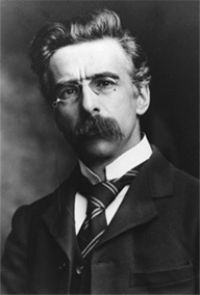 John Joly,
The Birth-Time of the World and Other Scientific Essays
John Joly,
The Birth-Time of the World and Other Scientific Essays
“ They show that as the sediments grow in depth there is a rising of the geotherm of plasticity—whatever its true temperature may be—gradually reducing the thickness of that part130of the upper crust which is bearing the simultaneously increasing compressive stresses. Below this geotherm long-continued stress resolves itself into hydrostatic pressure; above it (there is, of course, no sharp line of demarcation) the crust accumulates elastic energy. The final yielding and flexure occur when the resistant cross-section has been sufficiently diminished. ”
John Joly,
The Birth-Time of the World and Other Scientific Essays
“ The heat of the earth is not internal only, but rather a heat-source exists at the surface, which, as we have seen, cannot prevail to the same degree within; and when the conditions become favourable for the aggregation of the energy, the crust, heated both from beneath and from above, assumes properties more akin to those of its earlier stages of development, the secular heat-loss being restored in the radioactive supplies. ”
active 1883-1912 James Weir, The Energy System of Matter: A Deduction from Terrestrial Energy Phenomena
“ Work is thus done by the expanding gas, and in consequence of this work done, a definite quantity of atmospheric material gains energy of position or potential energy relative to the earth's surface. At the same time, the rise of temperature of the gas will indicate an accession of heat energy to its mass. These familiar phenomena of expansion under constant pressure serve to illustrate the important fact that, when heat energy is applied to a gaseous mass, it really manifests itself therein in two aspects, namely, heat energy and work energy. ”
John Joly,
The Birth-Time of the World and Other Scientific Essays
“ These events are slowly developed, and the temperature beneath is steadily rising in consequence of the conducted interior heat, and the steady accumulation of radioactive energy in the sedimentary rocks and in the buried radioactive layer of the Earth. The work expended on the crushed and sheared rock also contributes to the developing temperature. Thus the geotherms must move upwards, and the viscous conditions extend from below; continually diminishing the downward range of the translatory movements progressing in the higher parts. ”
John W. Judd, Volcanoes: What They are and What They Teach (1881)
“ Masses of soft clay, of the age of that upon which London is built, were by violent pressure reduced to the condition of roofing-slate, similar to that of North Wales. One of the most important discoveries of modern times is that which has resulted in the recognition of the fact of the mutual convertibility of different kinds of energy. We now know that mechanical force may - 297 - be transformed into heat-force or chemical force; and of such transformations we find abundant illustrations in the crushed and crumpled rock-masses of the Alpine chains. ”
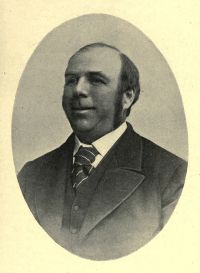 Robert S. Ball,
The Earth's Beginning
Robert S. Ball,
The Earth's Beginning
“ Such a collision would generate as much heat as could be produced by the combustion of twelve globes of solid coal, each as heavy as the earth. We may indeed remark that the coal-seams in our earth’s crust contain, in virtue of the fact that they partake of the earth’s orbital motion, twelve times as much energy as will ever be produced by their combustion. ”
Clive M. Countryman, Heat-Its Role in Wildland Fire… (1975)
“ For example, radiant energy from the sun is transformed by the process of photosynthesis to stored chemical energy in vegetation. When the vegetation is burned, the chemical energy is transformed to thermal energy, radiant energy, and the kinetic energy in the rising air in the convection column over the fire. The kinetic energy in falling water can be used to generate electrical energy, which in turn can be changed back to thermal and radiant energy by an electric heater, or to kinetic energy again through the use of an electric motor. ”
 Nikola Tesla,
The Problem of Increasing Human Energy
(1900)
Nikola Tesla,
The Problem of Increasing Human Energy
(1900)
“ The difficulties of sinking shafts and placing boilers at depths of, say, twelve thousand feet, corresponding to an increase in temperature of about 120 degrees C., are not insuperable, and we could certainly avail ourselves in this way of the internal heat of the globe. In fact, it would not be necessary to go to any depth at all in order to derive energy from the stored terrestrial heat. ”
A. Russell Bond, Mechanics: The Science of Machinery
“ Natural gas cannot last much longer and peat bogs are estimated at about half of one per cent of the coal supplies. Where shall we turn for heat and power when all these stores of energy are gone?It has been estimated that the water powers of the earth, if fully developed, would probably supply about half of the energy that we now get out of coal. This is a never-failing supply of energy, and no doubt before we have begun to scrape the bottom of our coal magazines every river on earth that is capable of turning a wheel will be doing so to the limit of its capacity. ”
John Arthur Thomson,
Erik Semien — Part VIII
“ The exhaustion of our coal deposits would mean, so far as our knowledge extends at present, the end of the world's civilisation. There are other known sources of energy, it is true. There is the energy of falling water; the great falls of Niagara are used to supply the energy of huge electric power stations. Perhaps, also, something could be done to utilise the energy of the tides--another instance of the energy of moving water. And attempts have been made to utilise directly the energy of the sun's rays. But all these sources of energy are small compared with the energy of coal. ”
Clive M. Countryman, Heat-Its Role in Wildland Fire… (1975)
“ Actually, your skin is losing more thennal radiation than it is receiving, and this produces the cold sensation. Because all substances radiate energy, they are always tending to move toward a common equilibrium temperature.Only absorbed radiation is converted to heat; the reflected and transmitted radiation is not. In opaque materials, such as wildland fuels, the conversion of radiant to thermal energy takes place in a very thin layer at the surface. Heating of deeper layers must usually be accomplished by conduction. ”
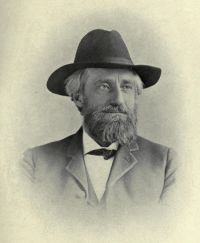 Nathaniel Southgate Shaler,
Outlines of the Earth's History…
Nathaniel Southgate Shaler,
Outlines of the Earth's History…
“ This energy, when it is released by the condensation of water into rain or snow, becomes again heat, and tends somewhat, as does the fire in the chimney, to accelerate the upward passage of the air. The result is that the water which ascends in the equatorial updraught becomes what we may term fuel to promote this important element in the earth's aërial circulation. Trades and counter trades would doubtless exist but for the efficiency of this updraught, which is caused by the condensation of watery vapour, but the movement would be much less than it is. ”
active 1883-1912 James Weir, The Energy System of Matter: A Deduction from Terrestrial Energy Phenomena
“ Since the temperature of the column remains unchanged at the base surface and only decreases in the ascent, it is clear that the entire heat and work energy of the originally liberated gaseous mass is not expended in the movement against gravity. Every gaseous particle—excepting those on the absolute outer surface of the gaseous envelope—has still the property of temperature. It is evident, therefore, that in the constitution of the column, only a portion of the total original heat and work energy of the gaseous substance is transformed into energy of position. ”
Clive M. Countryman, Heat-Its Role in Wildland Fire… (1975)
“ Heat Conduction Heat, or thermal energy, is one of the three ingredients essential to fire—the other two are oxygen and fuel. Enough oxygen for fire is almost always available in wildlands, and fuel is usually plentiful. But the mere presence of a heat source does not necessarily result in a wildland fire. Before a hot or flaming firebrand can ignite the fuel, some of its heat must be imparted to the fuel in some way. And for a fire to continue to burn and to spread, heat must be transferred from the fire to unburned fuel. ”
active 1883-1912 James Weir, The Energy System of Matter: A Deduction from Terrestrial Energy Phenomena
“ The latter would thus be still further expanded against gravity; the aqueous vapour itself would suffer a loss of energy equivalent to the work transmitted from it. It is therefore clear that in a composite atmosphere formed in the manner described, any gas possessed of energy properties superior to the other constituents is forced of necessity to transmit energy to these constituents. This phenomenon is merely a consequence of the natural disposition of the atmospheric gaseous substances towards a condition of equilibrium with more or less uniform temperature gradation. ”
Clive M. Countryman, Heat-Its Role in Wildland Fire… (1975)
“ The heat released when the vapor condenses can add significant amounts of energy to the convection column, increasing its strength and adding to the fire activity. The condensation of enough water vapor to form 8 pounds of liquid water releases about the same amount of heat as burning 1 pound of wildland fuel. As we shall see in a future report, the heat needed to vaporize the moisture in fuels has an important effect on the ignition of fuel and the rate at which it burns. ”
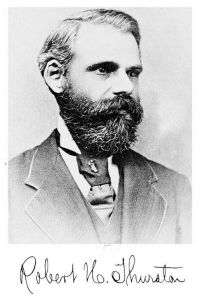 Robert Henry Thurston,
A History of the Growth of the Steam-Engine
Robert Henry Thurston,
A History of the Growth of the Steam-Engine
“ This potential energy becomes kinetic and available wherever and whenever the powerful chemical affinity of oxygen for carbon is permitted to come into play; and the fossil fuel stored in our coal-beds or the wood of existing forests is, by the familiar process of combustion, permitted to return to the state of combination with oxygen in which it existed in the earliest geological periods. ”
Luigi Palmieri, The Eruption of Vesuvius in 1872
“ The actual bocca of the volcanic vent whence the steam roars off constitute the cone a veritable hydro-electric machine. Mechanical energy in various forms is transformed into electric energy. Chemical action is going on both in the solid and in the vapourous and gaseous emanations as they rush into and remain in the air or descend from it, and chemical action is transformed in part into electric energy. ”
active 1883-1912 James Weir, The Energy System of Matter: A Deduction from Terrestrial Energy Phenomena
“ As an energy influence, it is itself persistent, and unaffected by the energy state of that material. On the other hand, the cohesion energy, being purely a property of the material which is the habitat of the energy process, is directly affected by its energy state. This point will be clearer by reference to the actual phenomena of the heat transformation. As the process proceeds, the temperature of the mass as the expansion increases will rise higher and higher, until, at a certain point, the solid material is so energised that change of state ensues. ”
Clive M. Countryman, Heat-Its Role in Wildland Fire… (1975)
“ Similarly, fuels in hot coals and ashes can be moved, or the hot material can be scraped away to deprive them of heat. Water is highly efficient as a cooling agent because of its great heat-absorbing capacity, in both liquid and vapor form. ”
William R. Keefer, The Geologic Story of Yellowstone National Park
“ Measurements taken in deep mines and oil wells show that the normal increase in the earth’s temperature with depth is about 1°F per 100 feet. This heat is generated by the decay of radioactive elements—chiefly uranium, thorium, and potassium—which are present in at least small amounts in virtually all rocks of the earth’s crust. Ordinarily, enough heat is conducted to the earth’s surface so that the deeply buried rocks do not become hot enough to melt. ”
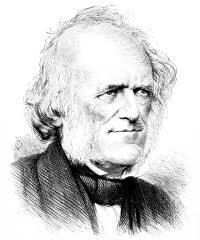 Sir Charles Lyell,
Principles of Geology
Sir Charles Lyell,
Principles of Geology
“ The hydrogen, thus generated, might permeate the crust of the earth in different directions, and become stored up for ages in fissures and caverns, sometimes in a liquid form, under the necessary pressure. Whenever, at any subsequent period, in consequence of the changes effected by earthquakes in the shell of the earth, this gas happened to come in contact with metallic oxides at a high temperature, the reduction of these oxides might be the result.No theory seems at first more startling than that which represents water as affording an inexhaustible supply of fuel to the volcanic fires ”

“ When we observe what effect can be produced by heat upon rocks, under little or no pressure, and how water percolating from above gradually changes the composition of some rock-masses, we may readily believe that at great depths, where the heat is excessive, such metamorphic action must often be intensified. Thus, for example, limestone heated in the usual way gives off its carbonic acid gas, and is reduced to quicklime; but, under sufficient pressure, this gas is not evolved, the limestone becoming converted into a crystalline marble. ”
Related terms
Authors who wrote about “geothermal energy”
active 1883-1912 James WeirNikola TeslaJohn JolyClive M. CountrymanJohn Arthur ThomsonJ. Arthur ThomsonJimmy Carter Albert EinsteinRobert S. Ball
 Barack ObamaUnited States. Congress
 Thomas Henry HuxleyA. Russell BondRobert I. TillingJohn W. JuddSteven R. BrantleyRobert Henry ThurstonNathaniel Southgate ShalerLuigi PalmieriRaphael Meldola
Nikola TeslaJohn JolyClive M. CountrymanJohn Arthur ThomsonJ. Arthur ThomsonJimmy CarterAlbert EinsteinRobert S. BallBarack ObamaUnited States. CongressThomas Henry HuxleyA. Russell BondRobert I. TillingJohn W. JuddSteven R. BrantleyRobert Henry ThurstonNathaniel Southgate ShalerLuigi PalmieriRaphael Meldola