“ The internal heat associated with some young volcanic systems has been harnessed to produce geothermal energy. For example, the electrical energy generated from The Geysers geothermal field in northern California can meet the present power consumption of the city of San Francisco. ”
Geothermal heat
Definition and stakes
The theme of “geothermal heat” has been addressed by authors such as Clive M. Countryman, by Sadi Carnot, Hermann von Helmholtz, Vitruvius and Babcock & Wilcox Company. It is often associated with terms like temperature, water, gas, Earth and atmosphere.
Quotes about “geothermal heat”
 Edwin J. Houston,
The Wonder Book of Volcanoes and Earthquakes
“ It must not be supposed because the rate of increase of temperature is not uniform that the argument of a highly heated interior is weakened. On the contrary, it would be very surprising if the rate continued uniform; for it is evident that the conducting power of different materials in the earth's crust for heat must necessarily make a great difference in the rate at which heat should increase, as we go farther down into the earth. ”
 John Arthur Thomson,
Erik Semien — Part VIII
“ The impact of a falling stone generates heat; a waterfall is hotter at the bottom than at the top--the falling particles of water, on striking the ground, generate heat; and most chemical changes are attended by heat changes. Energy may remain latent indefinitely in a lump of wood, but in combustion it is liberated, and we have heat as a result. The atom of radium or of any other radio-active substance, as it disintegrates, generates heat. "Every hour radium generates sufficient heat to raise the temperature of its own weight of water, from the freezing point to the boiling point." ”
 John Joly,
The Birth-Time of the World and Other Scientific Essays
“ The heat of the earth is not internal only, but rather a heat-source exists at the surface, which, as we have seen, cannot prevail to the same degree within; and when the conditions become favourable for the aggregation of the energy, the crust, heated both from beneath and from above, assumes properties more akin to those of its earlier stages of development, the secular heat-loss being restored in the radioactive supplies. ”
active 1883-1912 James Weir, The Energy System of Matter: A Deduction from Terrestrial Energy Phenomena
“ The working of any evaporative cycle may also be spread over very large terrestrial areas by the free movement of the acting material. Aqueous vapour rising in equatorial regions may finally return to the earth in the form of ice-crystals at the poles. In every complete cycle, however, the total expenditure per unit mass of material initially evaporated is always the latent heat at the higher or evaporation temperature; in the final or return stages of the cycle, any energy not transmitted to the air masses is devoted to the heating of returning aqueous material. ”
 Thomas Henry Huxley,
Discourses: Biological & Geological
“ I presume not; no geologist—no modern geologist—would for a moment admit the hypothesis that the present state of underground heat is due to a heating of the surface at so late a period as 20,000 years ago. If that is not admitted we are driven to a greater heat at some time more than 20,000 years ago. A greater heating all over the surface than 100° Fahrenheit would kill nearly all existing plants and animals, I may safely say. Are modern geologists prepared to say that all life was killed off the earth 50,000, 100,000, or 200,000 years ago? ”
Edward A. Martin, The Story of a Piece of Coal: What It Is…
“ Everybody knows that, in the majority of instances, material substances of all kinds expand under the influence of heat, and contract when the source of heat is withdrawn. If we can imagine movements in the quantity of heat contained in the solid crust, the explanation is easy, for if a certain tract of land receive an accession of heat beneath it, it is certain that the principal effect will be an elevation of the land, consequent on the expansion of its materials, with a subsequent depression when the heat beneath the tract in question becomes gradually lessened. ”
Clive M. Countryman, Heat-Its Role in Wildland Fire… (1975)
“ Similarly, fuels in hot coals and ashes can be moved, or the hot material can be scraped away to deprive them of heat. Water is highly efficient as a cooling agent because of its great heat-absorbing capacity, in both liquid and vapor form. ”
John Joly,
The Birth-Time of the World and Other Scientific Essays
“ These events are slowly developed, and the temperature beneath is steadily rising in consequence of the conducted interior heat, and the steady accumulation of radioactive energy in the sedimentary rocks and in the buried radioactive layer of the Earth. The work expended on the crushed and sheared rock also contributes to the developing temperature. Thus the geotherms must move upwards, and the viscous conditions extend from below; continually diminishing the downward range of the translatory movements progressing in the higher parts. ”
 Israel C. Russell,
North America
“ The degree of heat required is not definitely known, and probably varies according to the nature of the rocks, the presence or absence of water, etc., but is certainly less than that necessary to produce fusion, and is thought, in general, to be in the neighbourhood of 750° F. While heat alone is considered as sufficient to produce metamorphism, it is probable that in most instances two or more of the agencies just referred to have been in operation at the same time. ”
by Sadi Carnot, Reflections on the Motive Power of Heat (1897)
“ Vapors of water can be formed only through the intervention of a boiler, while atmospheric air could be heated directly by combustion carried on within its own mass. Considerable loss could thus be prevented, not only in the quantity of heat, but also in its temperature. This advantage belongs exclusively to atmospheric air. Other gases do not possess it. They would be even more difficult to heat than vapor of water. (3) In order to give to air great increase of volume, and by that expansion to produce a great change of temperature, it must first be taken under a sufficiently high pressure ”
Babcock & Wilcox Company, Steam, Its Generation and Use
“ In case air is allowed to leak into the flues, and mingle with the gases after they have left the heating surfaces, the temperature may be brought down to almost any point above that of the atmosphere, but without any reduction in the amount of heat wasted. It is in this way that those low chimney temperatures are sometimes attained which pass for proof of economy with the unobserving. All surplus air admitted to the fire, or to the gases before they leave the heating surfaces, increases the losses. ”
 Archibald Geikie,
The Ancient Volcanoes of Great Britain…
(1897)
“ The downward increment of temperature proves that our planet is continually losing heat. As the outer crust is comparatively cool, and does not become sensibly hotter by the uprise of heat from within, the hot nucleus must cool faster than the crust is doing. Now cooling involves contraction. The hot interior is contracting faster than the cooler shell which encloses it, and that shell is thus forced to subside. In its descent it has to adjust itself to a constantly diminishing diameter. It can do so only by plication or by rupture. ”
Clive M. Countryman, Heat-Its Role in Wildland Fire… (1975)
“ Under windy conditions or on steep slopes, heat transfer by convection is likely to be most important. But with light winds and gentle terrain, the fire convection column is nearly vertical, and radiation becomes the major method of heat transfer. ”
Clive M. Countryman, Heat-Its Role in Wildland Fire… (1975)
“ When heated, the fuels first produce water vapor and other gases that are mostly noncombustible. Not until the fuel temperature reaches 400° F or more does significant amounts of combustible gas begin to appear. At about this temperature too, the chemical reactions themselves begin to generate heat; then if heat losses are small, the pyrolysis may become self-sustaining, the temperature continuing to rise without an outside heat source. These heat-producing reactions at relatively low temperatures are important in the spontaneous combustion of fuels. ”
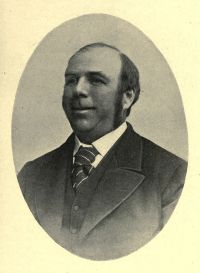 Robert S. Ball,
Time and Tide: A Romance of the Moon
“ But whichever view we may adopt, it is at least obvious that the earth is in part, at all events, a heated body, and that the heat is not in the nature of a combustion, generated and sustained by the progress of chemical action. No doubt there may be local phenomena of this description, but by far the larger proportion of the earth's internal heat seems merely the fervour of incandescence. It is to be likened to the heat of the molten iron which has been run into the sand, rather than to the glowing coals in the furnace in which that iron has been smelted. ”
Clive M. Countryman, Heat-Its Role in Wildland Fire… (1975)
“ In turn, relative humidity in a given air mass is controlled almost entirely by air temperature, and decreases as the temperature rises and increases as the temperature goes down. Because of the strong tie between air temperature and relative humidity, and between air temperature and solar radiation intensity, we can expect that whatever affects radiation intensity will also affect fuel moisture. Thus, the moisture content of dead fuel is normally higher at night than during the day, and greater in the shade than in the open. ”
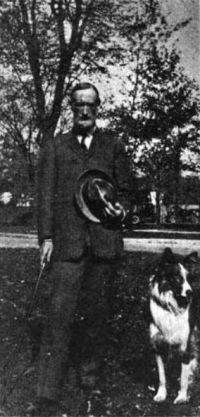 William Herbert Hobbs,
Earth Features and Their Meaning
“ The capacity of space to hold moisture increases with its temperature, and hence any lowering of this temperature will reduce the capacity. If lowered sufficiently, the point of complete saturation will be reached and further cooling must result in precipitation. Hence, anything which forces an air current to rise into more rarefied zones above, will lower the pressure upon it and so bring about a cooling effect in which no heat is abstracted. ”
Various, Encyclopaedia Britannica, 11th Edition…
“ As already pointed out, the combined effect will be nearly proportional to the excess of temperature in any given case provided that the excess is small, but it is not necessarily proportional to the extent of surface exposed except in the case of pure radiation. The rate of loss by convection and conduction varies greatly with the form of the surface, and, unless the enclosure is very large compared with the cooling body, the effect depends also on the size and form of the enclosure. Heat is necessarily communicated from the cooling body to the layer of gas in contact with it by conduction. ”
Babcock & Wilcox Company, Steam, Its Generation and Use
“ If heat be added to water at 212 degrees under atmospheric pressure, the water will not become hotter but will be evaporated into steam, the temperature of which will also be 212 degrees. The heat so utilized is called the latent heat of evaporation and is the heat which apparently disappears in causing the substance to pass from a liquid to a gaseous state. [Pg 85] Latent heat is not lost, but reappears whenever the substances pass through a reverse cycle, from a gaseous to a liquid, or from a liquid to a solid state. ”
Clive M. Countryman, Heat-Its Role in Wildland Fire… (1975)
“ The heat released when the vapor condenses can add significant amounts of energy to the convection column, increasing its strength and adding to the fire activity. The condensation of enough water vapor to form 8 pounds of liquid water releases about the same amount of heat as burning 1 pound of wildland fuel. As we shall see in a future report, the heat needed to vaporize the moisture in fuels has an important effect on the ignition of fuel and the rate at which it burns. ”
Clive M. Countryman, Heat-Its Role in Wildland Fire… (1975)
“ For example, radiant energy from the sun is transformed by the process of photosynthesis to stored chemical energy in vegetation. When the vegetation is burned, the chemical energy is transformed to thermal energy, radiant energy, and the kinetic energy in the rising air in the convection column over the fire. The kinetic energy in falling water can be used to generate electrical energy, which in turn can be changed back to thermal and radiant energy by an electric heater, or to kinetic energy again through the use of an electric motor. ”
Babcock & Wilcox Company, Steam, Its Generation and Use
“ Moisture in coal may be more detrimental than ash in reducing the temperature of a furnace, as it is non-combustible, absorbs heat both in being evaporated and superheated to the temperature of the furnace gases. In some instances, however, a certain amount of moisture in a bituminous coal produces a mechanical action that assists in the combustion and makes it possible to develop higher capacities than with dry coal. ”
Clive M. Countryman, Heat-Its Role in Wildland Fire… (1975)
“ Under similar conditions, the heat capacity of dry soil and rock is 19 to 20 Btu/ft3/°F, and that of water is about 62 Btu/ ft3/°F. The high heat capacity of water is one of the reasons why the climate near oceans and large lakes is often more moderate than that of the climate further inland. The water absorbs and stores large quantities of heat during the summer without much change in temperature, and this tends to keep the air over the adjacent land relatively cool. In the winter the stored heat is released and warms the air over nearby land areas. ”
Clive M. Countryman, Heat-Its Role in Wildland Fire… (1975)
“ The heat of vaporization of water is important in natural processes also. Many living creatures, including man, depend on the cooling effect of water evaporating from the skin or lungs to regulate their internal body temperature. The evaporation of water into vapor and the condensation of the vapor back into water in the form of clouds or precipitation has a major effect on our weather and climate. Because of the large volumes of water and vapor involved, enormous amounts of thermal energy can be released or stored. ”
Allen Howard Godbey, Great Disasters and Horrors in the World's History
“ One other theory is, that the slow contraction of the globe from the radiation of heat into space necessarily affects the outer portion most directly, and in consequence, the shrinking of the crust at the weakest points produces unusual pressure there, which can evolve intense heat, as{416} is shown by the fact that nearly all rocks so twisted or strained are more or less changed in their internal structure by heat. ”
active 1883-1912 James Weir, The Energy System of Matter: A Deduction from Terrestrial Energy Phenomena
“ This fact, that energised material in the gaseous form is not susceptible to the thermal field, is of very great importance in the general economy of Nature. It is, in reality, the means whereby the great primary process of the transformation of the axial energy of the earth into the heat form is limited in extent. As will be explained later, it is the device whereby the planetary energy stability is conserved. It will be [Pg 58] apparent, of course, that heat energy may be readily applied to gaseous masses by other means, such as conduction or radiation from purely terrestrial sources. ”
Various, Scientific American Supplement…
“ It seems probable that when the radiation is strong, that soil, especially if it is loose and not in good heat-communication with the ground, will get cooled below the dew-point, and have vapor condensed upon it. On some occasions the soil certainly got wetter on the surface, but the question still remains, Whence the vapor? Came it from the air, or from the soil underneath? The latter seems the more probable source; the vapor rising from the hot soil underneath will be trapped by the cold surface-soil, in the same way as it is trapped by grass over grass-land. ”
Clive M. Countryman, Heat-Its Role in Wildland Fire… (1975)
“ Actually, your skin is losing more thennal radiation than it is receiving, and this produces the cold sensation. Because all substances radiate energy, they are always tending to move toward a common equilibrium temperature.Only absorbed radiation is converted to heat; the reflected and transmitted radiation is not. In opaque materials, such as wildland fuels, the conversion of radiant to thermal energy takes place in a very thin layer at the surface. Heating of deeper layers must usually be accomplished by conduction. ”
Chautauqua Institution, The Chautauquan, Vol. 04, October 1883
“ The burning of coal and wood produces heat, and the heat thus given out warms the air. Hence it is by the giving off or radiation of the heat from some burning substance that the air of our houses is made warmer than the air outside.Now, it is really by radiation from a heated body that the air outside gets its heat. In summer, this air is sometimes far hotter than is usual in dwelling-houses in winter. All this heat comes from the sun, which is an enormous hot mass, continually sending out heat in all directions. ”
by Sadi Carnot, Reflections on the Motive Power of Heat (1897)
“ Coal being capable of producing, by its combustion, a temperature higher than 1000°, and the cold water, which is generally used in our climate, being at about 10°, we can easily procure a fall of caloric of 1000°, and of this only 120° are utilized by steam-engines. Even these 120° are not wholly utilized. There is always considerable loss due to useless re-establishments of equilibrium in the caloric. ”
Related terms
Authors who wrote about “geothermal heat”
Clive M. Countrymanby Sadi Carnot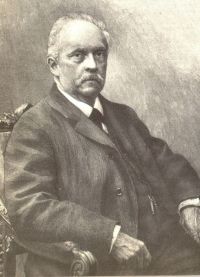 Hermann von Helmholtz
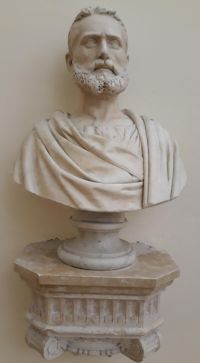 VitruviusBabcock & Wilcox Company
 Balfour StewartCharles Augustus YoungRobert HuntJean-Charles Rodolphe RadauJohn JolyRobert S. Ball
 Robert Stawell BallAndrew Gray
 Matthew Fontaine MauryJ. M. Woodman
 Mary SomervilleThomas Wood
 Richard A. ProctorEdward A. MartinWilliam S. Monroe
Hermann von HelmholtzVitruviusBabcock & Wilcox CompanyBalfour StewartCharles Augustus YoungRobert HuntJean-Charles Rodolphe RadauJohn JolyRobert S. BallRobert Stawell BallAndrew GrayMatthew Fontaine MauryJ. M. WoodmanMary SomervilleThomas WoodRichard A. ProctorEdward A. MartinWilliam S. Monroe