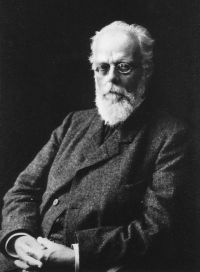
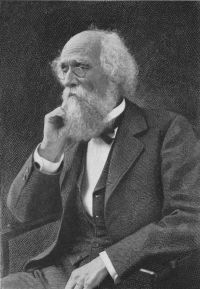
Hermaphroditism refers to the presence of both male and female reproductive organs within a single organism, a phenomenon found across a wide range of species. William John Fielding observed its occurrence in simpler life forms, where individuals are capable of self-reproduction, while Albert Moll differentiated between rare true hermaphroditism and more frequently encountered pseudo-hermaphroditism in humans.
C. Gasquoine Hartley regarded it as an evolutionary intermediary, providing examples such as snails and tadpoles, and August Weismann associated it with the role of cross-fertilization in promoting genetic diversity. These viewpoints highlight hermaphroditism as a significant biological and evolutionary concept, linking reproductive strategies across different species.