
“ Honey-Bee lay with folded hands on her little mossy bed and watched the light of the first stars tremble in the pale sky; then her eyes half closed, and yet it seemed to her as if overhead she saw a little dwarf mounted on a raven. ”
Honey bee
Definition and stakes
The theme of “honey bee” has been addressed by authors such as Edward Bevan, William Hetherington Harris, J. H. Payne, Frank Benton and Alfred Neighbor. It is often associated with terms like insect, pollen, sting, hive and comb.
Quotes about “honey bee”
Edward Bevan, Hints on the History and Management of the Honey Bee (1851)
“ So I here take leave of my brief history of the honey-bee—that wonderful, that useful insect, which, though not possessed of the advantages with which man is gifted, having neither religion nor reason for its guide, affords nevertheless an example to man of the most perfect order, the most unremitting industry, the greatest harmony, and the most undeviating attention to the welfare of all. ”
 Maurice Maeterlinck,
The Life of the Bee
“ Certain as it may seem that the bees communicate with each other, we know not whether this be done in human fashion. It is possible even that their own refrain may be inaudible to them: the murmur that comes to us heavily laden with perfume of honey, the ecstatic whisper of fairest summer days that the bee-keeper loves so well, the festival song of labour that rises and falls around the hive in the crystal of the hour, and might almost be the chant of the eager flowers, hymn of their gladness and echo of their soft fragrance, the voice of the white carnations, the marjoram, and the thyme. ”
Various, The American Bee Journal. Vol. XVII. No…
“ But how many will miss the cheerful hum of the myriads of toiling bees, whose flitting wings were wont to bear them from flower to flower, where they gathered nectar fit for a banquet of the gods.We can scarcely wonder that many have become discouraged and almost doubt whether bee-keeping pays, when they think of the meager honey yields of two successive summers, and view the untenanted hives and soiled combs which are left as the sequel to their cherished hopes for the future. However, none should be too hasty in passing judgment. ”
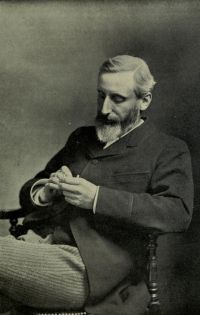 Grant Allen,
Science in Arcady
“ For the honey-bees are neuters, sexless purveyors of the hive, with no interest on earth save the storing of honey for the common benefit of the phalanstery to which they belong. But the butterflies are full-fledged males and females, on the hunt through the world for suitable partners: they think far less of feeding than of displaying their charms: a little honey to support them during their flight is all they need:—'For the bee, a long round of ceaseless toil ”
Laurence B. White, Life in the Shifting Dunes
“ The bee makes its nest in old mouse nests on the ground and a careful search for such nests will generally result in discovery of a Bumblebee’s home.Honey Bee (Apis mellifera) : The well-known Honey Bee was brought to this country from Europe. It has now become a common “wild” bee as well as a domesticated species. You may find some wild-bee colonies in hollow trees, particularly on Castle Hill. INSECT COLLECTING—AN INEXPENSIVE HOBBYInsects are everywhere and it is easy to collect them. Practically no expense is required to produce a very beautiful collection. ”
Louise Jamison, The Real Fairy Folk
“ For the bee who takes it so carries away no pollen, and an honest bee should never act so. Now perhaps you would like to know how we bumble bees began life? I am sure the little girl would.” And Ruth nodded an emphatic “Yes.”“We do not live all Winter, as honey bees do. Only a few queens sleep through the cold months, and they do not need food; so while we make a little honey to eat in Summer, we do not lay by any stores for Winter, and naturally we make no combs. What looks like them are the silken cocoons our babies spin. ”
Various, Chambers's Journal of Popular Literature…
“ I have heard that bees like monkshood, and will gather from it, but I have never seen them do so. If they did, their honey would be poisonous. Bees are passionately fond of clover and certain vetches, and they will desert any garden flowers for such natural feeding. Wild thyme and heather, which improve the flavour of the honey, bees perfectly revel in. Garden primroses, they do not care much for; and auriculas, however gaudy in colour, form no kind of attraction. The polyanthus they have a languid liking for. I have seen the wild-bees attack the cowslip; but not the honey-bee of our hives. ”
Edward Bevan, Hints on the History and Management of the Honey Bee (1851)
“ Of all the various members of the insect race, there is none which so abounds with useful lessons, or is more fraught with wonder, than the honey bee From the earliest ages it is found to have occupied the thoughts and the pens of the philosopher, the poet, and the moralist; and whether we consider its instincts, or its contributions to our comfort and convenience, there is scarcely one that can compete with it. In testimony of the early notice which it attracted, we have the evidence of Holy Writ, from which it may fairly be inferred that honey must have been one of man's earliest luxuries ”
William Hetherington Harris, The honey-bee: its nature, homes and products (1887)
“ The honey-bee differs from nearly all the wild varieties, as well as from hornets and wasps, in being adapted to live always in societies. Most other insects of the hymenopterous order become torpid in winter, or perish, with the exception of some queens, who survive to continue the race. Those which really hybernate are able to endure a considerable degree of cold; and, thawing under the influence of warmth, they can resume the functions of life. It is not so, however, with bees. ”
J. H. Payne, Bee-keeping for the Many; or, The management of the common and Ligurian honey bee (1870)
“ Purchase, who was a very careful observer, says, in his Treatise on Bees, published in 1657, "It is manifest that the Honey-Bees are but yearly creatures; they live but a year and a quarter at most; for those Bees that are seen in May, lusty, full, brown, smooth, and well-winged, will, by the end of July following, begin to wither, becomes less, look grey, and have their wings tattered and torn, and be all dead before the end of August." ”
Various, Robert Merry's museum, Volumes III-IV… (1842)
“ There are several kinds of bees; the most interesting species of which is the honey bee. Small and insignificant as this little creature might appear to be, it is one of the most wonderful animals in the world. Many of them live in a wild state and make their hives in hollow trees. In America, and other countries, there are persons who devote themselves to finding these hives for the sake [Pg 70] of the honey. One of the most common methods adopted is to place some bee-bread, in order to tempt the bees, on a flat board or tile, and draw a circle round it with white paint. ”
 James Duncan,
The Naturalist's Library, Bees
(1840)
“ The domestic Honey-Bee has excited a lively and almost universal interest from the earliest ages. The philosopher and the poet have each delighted in the study of an insect whose nature and habits afford such ample scope for inquiry and contemplation ”
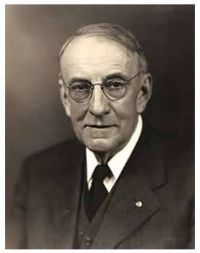 Everett Franklin Phillips,
Bees
“ From its very nature it can never become one of the leading agricultural pursuits, but that there is abundant opportunity for its growth can not be doubted. Not only is the honey bee valuable as a producer, but it is also one of the most beneficial of insects in cross-pollinating the flowers of various economic plants. ”
Alfred Neighbor, The apiary; or, bees, bee-hives… (1878)
“ That honey bees should live in society, as they do in hives, is absolutely needful. A bee in an isolated condition is a very helpless delicate little creature, soon susceptible of cold, and paralysed thereby unless able to join her companions before night comes on. By congregating in large numbers bees maintain warmth, whatever the external temperature may be.The three classes of bees are—the queen bee, or perfect female; the working bees, or undeveloped females; and the drones, or male bees. ”
William Hetherington Harris, The honey-bee: its nature, homes and products (1887)
“ The queen among bees, unlike her representative among wasps, is quite unable to perform any of the processes preliminary to egg-laying. She cannot secrete wax or build comb. She cannot fly abroad to collect honey. She has no means of gathering pollen. She can neither procure nor use propolis. So helpless, indeed, is she, that, bereft of attendants, she is unable to feed herself sufficiently to maintain life. ”
William Hetherington Harris, The honey-bee: its nature, homes and products (1887)
“ Speedily awakened to its responsibilities, the young bee assumes, as its earliest duties, the tending of the brood-cells, the feeding of the larvæ, and the various offices so recently performed for itself by its slightly older sisters. Then, as strength increases, the wings are tried in flight; the locality of its home is reconnoitred, and in two or three days after its emergence into its complete condition it issues forth on journeys, nearer or more remote, in search of stores for the perpetually recurring wants of the succession of children continually being reared in the hive. ”
Somerville Hastings, Summer Flowers of the High Alps
“ It is interesting to note that the humble-bees do not, in all cases, obtain the honey in the way intended by the plant. A dark spot is often to be seen near the tip of the helmet where a humble-bee has nibbled through the flower leaf and obtained access to the nectary direct. In this way the designs of the plant for cross fertilisation may be frustrated, for where the honey is obtained in this manner no pollen is carried from flower to flower by the insect visitor. ”
Various, The American Bee Journal, Volume XXXIII, No…
“ A bee-tree was cut in the early summer, the bees were put into a hive, but the queen was killed. The dead queen was suspended in the hive against the cover. The bees filled the hive one-third full of comb and honey.—M. Mahin.1. Some irritable bees will swarm out, but they usually return and assume the same attitude of other queenless bees. 2. Yes, they store honey, but probably with not as much vim as with a laying queen, but usually they store more honey, as none is used in brood-rearing. ”
Mervin James Curl, Expository Writing
“ In the woods, the hunter must stop, every little while, to test his "line." Sometimes he is baffled, because the bees do not know the woods from the ground side. Bees hunt for honey far from home. Usually it is easier to find a tree half a mile away than from only a few yards. Since bees like water, a careful hunter looks along creeks and near springs. Wild honey is better than tame because it tastes of the adventure of finding it. Second Outline of "An Idyl of the Honey-Bee" The presence of a colony of bees in a wood gives it interest. ”
Terry L. Biery, Venomous Arthropod Handbook
“ Since these insects are not native to this continent, north of Mexico, all original honey bee colonies in the United States were imported. Apis mellifera, the cosmopolitan bee of commerce, is responsible for most bee stings and many 18 deaths.10 This species is separated into several races, with the gold Italian and the black or gray Caucasian races making up the majority of the bees found in this country.5 The aggressive Brazilian (hybrid African) bee is currently restricted to the South American continent. Honey bees are highly social insects. ”
Various, St. Nicholas Magazine for Boys and Girls…
“ No bee ever makes such a mistake as to settle on a poisonous flower, and I believe that this bee went to the anemone for water and not for honey. Bees will settle on pieces of straw afloat in the water, when seeking for water, and I believe they know, even while on the wing, where to find honey. ”
The Circle of Knowledge: A Classified…
“ Many of the points in the structure of the honey-bee fit it for the performance of its complex activities. Upon the head there are two large compound eyes, used for near vision, and three small simple eyes, by which objects at a distance can be perceived. There is a well-developed sense of color, and flowers which specially lay themselves out to attract bees are mostly of blue or purple hue. Bees have also a keen sense of smell, which not only attracts them to fragrant flowers, but also helps them to detect the presence of nectar. ”
J. G. Wood, The uncivilized races of men in all countries of the world… (1875)
“ When a native sees a bee about the flowers, and wishes to find the honey, he repairs to the nearest pool, selects a spot where the bank shelves very gradually, lies on his face, fills his mouth with water, and patiently awaits the arrival of a bee. These insects require a considerable amount of moisture, as every one knows who has kept them, and the bee-hunter reckons on this fact to procure him the honey which he desires. ”
William Hetherington Harris, The honey-bee: its nature, homes and products (1887)
“ For her majesty, finding it impossible to reach the bottom of the cells to place her eggs as she has been accustomed to do, will retire to the lower boxes, where she finds places perfectly adapted to her instincts or her needs. The honey is thus kept free from brood, and it presents a massive and rich appearance. Bees seem greatly - 166 - to appreciate this form of hive, and a strong swarm will often fill the two lower boxes with comb in ten days. ”
William Hetherington Harris, The honey-bee: its nature, homes and products (1887)
“ If they be kept asunder a few days by slides with perforations, to let their odours commingle, they may be allowed to join their forces, and the queens will settle the sovereignty by a battle, ending in the death of the weaker. When the stock-boxes have become well filled with bees, admission may be given to the honey-box, and, in a good season, splendid combs of honey may be secured in this way. We have seen supers of great weight and beauty taken from the Stewarton hive. ”
William Hetherington Harris, The honey-bee: its nature, homes and products (1887)
“ In all the processes of queen rearing described, we cannot but be struck with the inextinguishable love shown to the undeveloped young, and the passionate yearning for a mother-bee displayed by the workers. It matters not whether the brood presented to them be taken from their own stock or from another community; they will at once cluster upon the cells containing larvæ, and devotedly tend them till they come forth as perfect insects. The emerging progeny may even belong to another variety, Ligurian, Cyprian, or Carniolan ”
Edward Bevan, Hints on the History and Management of the Honey Bee (1851)
“ In the generality of seasons the bees obtain their principal stores of honey from the flowers of the fields, but they also, in some seasons, collect it much more abundantly from the leaves of several sorts of trees, on which it is deposited in the form of honey-dew, a very sweet substance which, having been sucked from the aforesaid leaves by an insect called the aphis or tree-louse, passes through its body nearly unchanged, covers those leaves which are beneath, and thus affords a delicious repast to bees, butterflies, and other insects. ”
Various, The American Bee Journal, Vol. VI, No…
“ A neighbor says the way we follow the bees across fields and through woods, and delve into the subject and remove obstructions, it is no wonder they get honey if it be on the face of the earth—and perhaps that is so.But, look here, my dear reader, did you understand us to say that our bees were building combs? Not at all; “nary” comb will they build, with a few exceptions, and certainly none in those old-fashioned traps called boxes. It is this way. Where there are empty combs right above the brood, they will fill them with honey; as, for instance, in the upper story of the Langstroth hive. ”
William Edward Shuckard, British Bees
“ The female insects themselves have, at the first glance, very much the appearance of the working honey-bee, but they are considerably smaller, and, upon a very slight inspection, they are found to be exceedingly distinct. The respective males of the species are conspicuously smaller than their females, but their specific characteristics are very much alike, and there is some difficulty in separating and determining the species. ”
William Hetherington Harris, The honey-bee: its nature, homes and products (1887)
“ In our English species, of which we are now especially speaking, her colour is yellowish underneath; her head is rounder, her legs are longer, her tongue is more slender and not so extensile as that of the other bees; and her sting is curved instead of being straight, like the formidable weapon of the workers. It is asserted by some writers that she - 19 - has a peculiar odour readily distinguishable, and so powerfully attractive to her people, that they will alight on the finger of any one who has been handling their queen. ”
Edward Bevan, The Honey-Bee: Its Natural History… (1827)
“ It is of great importance to apiarians who reside in the vicinity of such trees as are apt to be affected with honey-dew, to keep their bees on the storifying plan, where additional room can at all times be provided for them at pleasure, as - 79 - during the time of a honey-dew, more honey will be collected in one week than will be afforded by flowers in several. So great is the ardour of the bees on these occasions, and so rapid are their movements, that it is often dangerous to be placed betwixt the hives and the dews. ”
Related terms
Authors who wrote about “honey bee”
Edward BevanWilliam Hetherington HarrisJ. H. Payne Frank BentonAlfred NeighborJohn CummingThomas Nutt
 Anna Botsford ComstockEverett Franklin PhillipsEllison HawksWilliam Edward ShuckardH. C. HermannMervin James CurlJames Duncan
 Mary Rogers MillerFrank Cowan
 Jean-Henri FabreTerry L. BieryLouise JamisonMason Augustus Walton
Frank BentonAlfred NeighborJohn CummingThomas NuttAnna Botsford ComstockEverett Franklin PhillipsEllison HawksWilliam Edward ShuckardH. C. HermannMervin James CurlJames DuncanMary Rogers MillerFrank CowanJean-Henri FabreTerry L. BieryLouise JamisonMason Augustus Walton