Polyanthus

Definition and stakes

1911 Encyclopædia Britannica (1911)

“ The florists’ polyanthus has a golden margin, and is known as the gold-laced polyanthus, the properties being very distinctly laid down and rigidly adhered to. The chief of these are a clear, unshaded, blackish or reddish ground colour, an even margin or lacing of yellow extending round each segment and cutting through its centre down to the ground colour, and a yellow band surrounding the tube of exactly the same hue as the yellow of the lacing. The plants are quite hardy, and grow best in strong, loamy soil tolerably well enriched with well-decayed dung and leaf-mould ”
Source: Wikisource

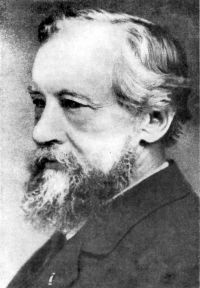
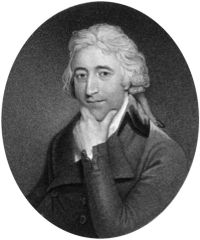
Portrait of Charles Darwin Charles Darwin,  The Different Forms of Flowers on Plants of the Same Species

“ The degree of infertility of a cross is liable to much fluctuation. Pollen from the cowslip at first appears rather more efficient on the primrose than that of the polyanthus; for 12 flowers of both forms of the primrose, fertilised legitimately and illegitimately with pollen of the cowslip gave five capsules, containing on an average 32.4 seeds; whilst 18 flowers similarly fertilised by polyanthus-pollen yielded only five capsules, containing only 22.6 seeds. ”
Source: Gutenberg

J. G. Wood,  Hardy Perennials and Old Fashioned Flowers

“ Sometimes the leaves are as large as a full-grown polyanthus leaf, whilst other plants, which have flowered equally well, have not produced foliage larger than that of primroses, when having their earliest flowers.
It makes a fine pot subject, but will not endure a heated greenhouse. It should be kept in a cold frame, with plenty of air. It may be planted on rockwork where it will not get the midday sun. I hear that it grows like grass with a correspondent whose garden soil is stiff loam; there it seeds and increases rapidly.
”
Source: Gutenberg

Get perspective with Kwize: daily news enlightened by great literature