Horn (animal)

Definition and stakes

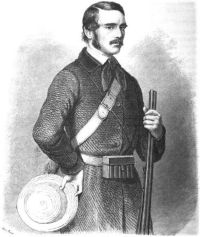
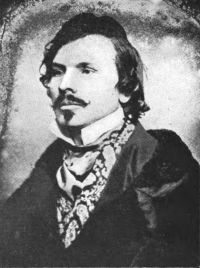
Portrait of James Bruce James Bruce,  Select Specimens of Natural History Collected in Travels to Discover the Source of the Nile…

“ As for that species bearing the monstrous horns, of which I have often spoke in my narrative, their size is not to be estimated by that of their horns; the animal itself is not near so big as a common English cow; the growth of the horn is a disease which proves fatal to them, because encouraged for a peculiar purpose. Whether it would be otherwise curable, has not yet, I believe, been ever ascertained by experiment. ”
Source: Gutenberg

Frank E. Beddard,  The Cambridge natural history, Vol…

“ Horns as weapons are, however, particularly effective in this group wherever they exist. A Ruminant is most frequently a large and heavy animal without the agility and litheness of the Carnivore. It is precisely to this sort of animal, where weight is an important consideration, that horns are the most suitable weapons. This is further shown by the fact that although the general term horn is used to describe the weapons of the Ungulate mammals, there is more than one kind of structure included under this general term ”
Source: Gutenberg

Portrait of Robert Munro Robert Munro,  Ancient Scottish Lake-Dwellings or Crannogs

“ Several portions of deer horns, consisting of tines and thick portions of the body of the horn, together with a few of the roe-deer, presenting sometimes marks of a saw and sometimes those of a sharp-cutting tool, were found in the refuse-heap. The few worked objects I have to record were all made from horns of the former animal. One large antler, having portion of the skull attached to it, and the entire lateral half of the skull of a roe-deer with the horn still adherent, show that the horns were not shed ones, but those of animals actually caught and killed. ”
Source: Gutenberg

Get perspective with Kwize: daily news enlightened by great literature