“ The human faculties of perception, judgment, discriminative feeling, mental activity, and even moral preference, are exercised only in making a choice. He who does anything because it is the custom, makes no choice. ”
Human faculties
Definition and stakes
The theme of “human faculties” has been addressed by authors such as Mihai Nadin, Josephus Nelson Larned, Maurice Maeterlinck, Theodore Parker and Thomas Henry Huxley. It is often associated with terms like society, knowledge, civilization, moral and duty.
Quotes about “human faculties”
 Victor Cousin,
Lectures on the true, the beautiful and the good
Victor Cousin,
Lectures on the true, the beautiful and the good
“ The first of these faculties is activity, voluntary and free activity, in which human personality especially appears, and without which the other faculties would be as if they were not, since we should not exist for ourselves. ”
 Johann Arndt,
True Christianity
Johann Arndt,
True Christianity
“ This lower faculty works night and day, for the security and preservation of the others. For such is the constitution of human bodies, that if the lower faculties be out of order, or cease to operate, the superior, which depend upon them, cannot subsist. ”
 Harriet Martineau,
Household Education
Harriet Martineau,
Household Education
“ Such being the varieties in the strength of the natural faculty, the training of it must vary accordingly.As I have said before, no human faculty needs to be repressed; because no human faculty is in itself bad. Where any one power appears to be excessive, we are not to set to work to vex and mortify it: but rather, to bring up to it those antagonist faculties which ought to balance it, and which, in such a case, clearly want strengthening. ”
M. Valentine, Theoretical Ethics
“ In different nations and times its indications of duty fail to agree. Advance in civilization, knowledge and culture is marked by higher ethical standards, modifying, if not reversing, former judgments. But this large fact, so unquestionable and, apparently, so formidable, becomes, when analyzed, easily reconcilable with the position of authority given to the conscience-discernments and imperatives. For a faculty may be highest in human nature, and yet, like every other capacity, limited. ”
 Lester Frank Ward,
The American Journal of Sociology
(1896)
Lester Frank Ward,
The American Journal of Sociology
(1896)
“ It should be fed to the mind with an intelligent purpose in view, and that purpose should be the preparation of the mind for ultimately entering the last and most difficult as well as most important field of human thought, that of sociology. Therefore history, political economy, and the other generic branches should first be prosecuted as constituting the necessary preparation for the study of the higher ordinal principles. ”
 Fanny Kemble,
Records of a Girlhood
Fanny Kemble,
Records of a Girlhood
“ Political and social, religious and civil, mental and moral government, according to him, hinged upon the study and knowledge of the different organs of the human brain, and he labored incessantly to elucidate and illustrate this subject, upon which he thought the salvation of the world depended. ”
 Josephus Nelson Larned,
Popular Science Monthly
(1877)
Josephus Nelson Larned,
Popular Science Monthly
(1877)
“ We are brought, then, face to face with the fact that there are certain directions in which the process of civilization appears to be much more certainly a process of moral development, as evinced in human conduct and character, than it does in others; certain particulars of conduct, that is, in which the fact of moral progress is undeniable, and certain others in which, at least, it is open to doubt. ”
 Francis Bacon,
Of the Proficience and Advancement of Learning…
(1605)
Francis Bacon,
Of the Proficience and Advancement of Learning…
(1605)
“ Wherefore the main and primitive division of moral knowledge seemeth to be into the exemplar or platform of good, and the regiment or culture of the mind: the one describing the nature of good, the other prescribing rules how to subdue, apply, and accommodate the will of man thereunto. ”
A. S. Draper, Report of the Committee of Fifteen
“ Your Committee is of the opinion that psychology of both kinds, physiological and introspective, can hold only a subordinate place in the settlement of questions relating to the correlation of studies. The branches to be studied, and the extent to which they are studied, will be determined mainly by the demands of one’s civilization. These will prescribe what is most useful to make the individual acquainted with physical nature and with human nature so as to fit him as an individual to perform his duties in the several institutions—family, civil society, the state, and the Church. ”
 William McDougall,
The Group Mind: A Sketch of the Principles of Collective Psychology
William McDougall,
The Group Mind: A Sketch of the Principles of Collective Psychology
“ But, as I have pointed out in the Introduction to my Social Psychology, those who approached these problems were generally stimulated to do so by their interest in questions of right and wrong, in questions of norms and standards of conduct, the urgency of which demanded immediate answers for the practical guidance of human life in all its spheres of activity, for the shaping of laws, institutions, governments, and associations of every kind ”
 Charles Sumner,
Charles Sumner: his complete works…
Charles Sumner,
Charles Sumner: his complete works…
“ When I speak of all the faculties, I mean all those which enter into and form the character created in the image of God, not merely those which minister to the selfish ends of life. There are faculties for business; there are others which open to us the avenues of knowledge,—others which connect us by chains soft as silk, but strong as iron, to the social and domestic circle,—others still which reveal to us, in vistas of infinite variety and inconceivable extension, our duties to God and man. ”
George John Romanes, Mental Evolution in Man: Origin of Human Faculty
“ Many other authorities having been quoted in support of these general statements, and also for the purpose of tracing the evolution of predicative utterance in more detail, I proceeded to give illustrations of different phases of its development in the still existing languages of savages; and thus proved that they, no less than primitive man, are unable to “supply the blank form of a judgment,” or to furnish what my opponents regard as the criterion of human faculty. ”
 Enrico Ferri,
Socialism and Modern Science (Darwin…
Enrico Ferri,
Socialism and Modern Science (Darwin…
“ The anthropological, physical and social factors, all, always, act concurrently in the determination of all offences, the lightest as well as the gravest—as, moreover, they do in the case of all other human actions. ”
Josephus Nelson Larned,
Popular Science Monthly
(1877)
“ Whatever else there may be of distinguishable moral qualities appearing to be incident to the direct relations of human fellowship, I am sure that they will be found reducible to the two radicals of benevolence and justice, or to their combination with those other radicals—courage and truthfulness—which we found to have an intrinsic source in the constitution of man, as qualitative factors in human conduct. ”
 Alfred H. Lloyd,
The will to doubt
Alfred H. Lloyd,
The will to doubt
“ The class life stands for analysis and special development and establishment; personal life for synthesis and vitality. The factional life of the class is specialistic, and reaps for human nature all the familiar advantages of specialism; the personal life is general or universal, and saves human nature from the disruption and the stagnation to [p.164] which specialism and its formal establishment always tend. The factional life is mediative and instrumental; the personal life is initiative and purposive. ”
 Herbert Spencer,
Popular Science Monthly
(1873)
Herbert Spencer,
Popular Science Monthly
(1873)
“ To see how things stand, apart from personal and national interests, is essential before there can be reached those balanced judgments respecting the course of human affairs in general, which constitute Sociology. ”
W. Grant Hague, The Eugenic Marriage, Volume 3…
“ These laws show that there are fixed rules, by which mental effort is regulated, systematized and classified, and that the human mind conforms to these laws even when working in ignorance of them. No matter how we may deduce facts, or reason from analogy, we obey fundamental principles. ”
G. W. Foote, Salvation Syrup; Or, Light On Darkest England
“ These “spiritual,” and nearly always hysterical, agencies for human improvement, are based upon a denial of the physical basis of life, and of the doctrine of moral causation. They attract great attention, and their leaders gain tremendous applause. ”
 Joseph Jacobs,
Literary studies by Joseph Jacobs
(1896)
Joseph Jacobs,
Literary studies by Joseph Jacobs
(1896)
“ These facts which compel obedience are declared to be 'the part which is played in the general human lot by hereditary conditions in the largest sense and the fact that what we call duty is entirely made up of such conditions.' The scientific conception of law in human nature was combined by her with the moral or religious fact of duty. ”
 Benjamin Rush,
Medical Inquiries and Observations…
Benjamin Rush,
Medical Inquiries and Observations…
“ The moral faculty is what the school men call the “regular raglans;” the conscience is their “regular regulate;” or, to speak in more modern terms, the moral faculty performs the office of a law-giver, while the business of conscience is to perform the duty of a judge. ”
“ Had they been properly appreciated and further expanded by others it would have eventually become possible to develop all our faculties to the full extent of their ability, and to correct faults, errors, and defects caused by wrong education or heredity, through the application of laws at the very root of our existence ”
 Auguste Comte,
A General View of Positivism
Auguste Comte,
A General View of Positivism
“ There are three successive states of morality answering to the three principal stages of human life; the personal, the domestic, and the social stage. ”
Various, Popular Science Monthly (1884)
“ Much room, then, is left for circumstances and liberty in the employment of the faculties which one has received. "The man endowed with marked traits of perseverance, attention, and judgment, with no considerable defect in his other faculties, will become a jurist, historian, scholar, chemist, geologist, or physician, according as his will is influenced by a host of circumstances. ”
Henry F. Lutz, To Infidelity and Back
“ Take, for example, the appetite for different kinds of food, the faculty of music, judgment of color, beauty, etc.; and you will see at once that they have selective power, but that this power can become perverted, and thus lead to great difference of opinion. Notice that while these faculties are not infallible guides, and need the earnest help of other faculties to be the most useful to us, no one can deny that they point toward truth on these subjects, and are our proper and only guides along these lines. ”
Mihai Nadin, The Civilization of Illiteracy
“ The pragmatic framework of current human praxis is based on the structural characteristics of this higher scale of humankind. It affects the nature of human work and the nature of social, political, and national organization within emerging national states. ”
G. A. Johnston, An Introduction to Ethics, for Training Colleges… (1915)
“ We believe that if we could have a complete record of a man's conduct in every department of life and at every stage in life—through childhood, youth, manhood, and old age, as son, brother, husband, and father, as an inferior, superior, and equal, in friendship and enmity, at work and play, in prosperity and adversity, as a citizen of a State and a member of a Church—we should have a complete expression of his character. We assume that all his actions have been produced by his character. ”
 Charles Horton Cooley,
Human nature and the social order
(1902)
Charles Horton Cooley,
Human nature and the social order
(1902)
“ What we are all forced to do is to choose a field of action which for some reason we look upon as specially interesting or important, and exercise 34our choice in that; in other matters protecting ourselves, for the most part, by some sort of mechanical control—some accepted personal authority, some local custom, some professional tradition, or the like. ”
Josephus Nelson Larned,
Popular Science Monthly
(1877)
“ It is upon that discipline chiefly that those qualities which I have called the moral qualities of the personal order, and which have their root in truthfulness and courage, depend for their evolution. ”
P. Coffey, Ontology, or the Theory of Being
“ Logic, Ethics and Esthetics.—In the domain of human activities, to the right regulation of which practical philosophy is directed, we may distinguish two departments of mental activity, namely intellectual and volitional, and besides these the whole department of external, executive or bodily activity. In general the right regulation of acts may be said to consist in directing them to the realization of some ideal ”
Richard Olding Beard, Popular Science Monthly (1883)
“ Does society take the measure of his social standing, or estimate the quality of his moral character and training? Do his prospective patients seek evidence of his professional ability, his special acquirements, or his general scientific culture? ”
 Edward Alsworth Ross,
The American Journal of Sociology
(1896)
Edward Alsworth Ross,
The American Journal of Sociology
(1896)
“ Their social units they endow with religious beliefs, moral distinctions, a full-fledged ethical code, a sense of honor and self-respect, various ideals and valuations of conduct, and Heaven knows what besides—all of which, far from being instinctive, are products of education, and by their presence give signal proof that the more delicate devices of control have done their work so well that the cruder and more vigorous machinery need not be put into motion. ”
Sepharial, Second Sight: A Study of Natural and Induced Clairvoyance
“ To what use are we employing the faculties we already have, all of them acquired with as much pain and suffering, it may be, as any new ones we are ever likely to evolve? If we are using these faculties for the benefit of the race we shall employ others that are higher to even greater effect. ”
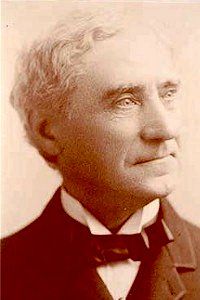 Octavius Brooks Frothingham,
Transcendentalism in New England…
Octavius Brooks Frothingham,
Transcendentalism in New England…
“ The personal moral faculties cannot stand without the aid of the universal moral faculties, any more than the branches can grow without the roots.Education, to be decidedly religious, should reach man's universal faculties, those faculties which contain the laws that connect man with his maker. ”
Herbert Spencer,
Illustrations of Universal Progress…
“ Or, again, how can the three mental functions, memory, reason, and will, be severally analogous, the first to counsellors, who are a class of public officers, and the other two to equity and laws, which are not classes of officers, but abstractions? Or, once more, if magistrates are the artificial joints of society, how can reward and punishment be its nerves? Its nerves must surely be some class of persons. Reward and punishment must in societies, as in individuals, be conditions of the nerves, and not the nerves themselves. ”
 John Stuart Mill,
A System of Logic, Ratiocinative and Inductive
(1843)
John Stuart Mill,
A System of Logic, Ratiocinative and Inductive
(1843)
“ All the doctrines which ascribe absolute goodness to particular forms of government, particular social arrangements, and even to particular modes of education, without reference to the state of civilization and the various distinguishing characters of the society for which they are intended, are open to the same objection—that of assuming one class of influencing circumstances to be the paramount rulers of phenomena which depend in an equal or greater degree on many others. ”
Cora May Williams, A Review of the Systems of Ethics Founded on the Theory of Evolution
“ That which, when we become capable of reflection, we term conscience, consists in pleasure in forms of action furthering the welfare of society—forms gradually moulded to habit with the development of social relations,—and in a corresponding pain at the realization of having failed of such action; the knowledge of the demand, by society as a whole or by a part of society, of action in accord with the general welfare, and the sense of the justice of this demand, constituting the feeling of obligation and duty. ”
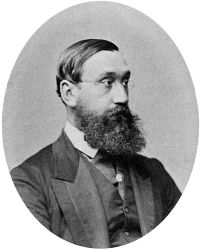 William Robert Cornish,
Convocation Addresses of the Universities of Bombay and Madras
(1892)
William Robert Cornish,
Convocation Addresses of the Universities of Bombay and Madras
(1892)
“ They bring before yon the numbers, sexes and ages of the people, their civil and conjugal condition, their degree of education, language, religion, caste, or nationality, and occupations. Your first duty should be to make yourselves thoroughly acquainted with the actual condition of the people in these respects, as without such knowledge your personal influence and activity may be employed in wrong directions, and become positively mischievous, instead of beneficial. ”
Herbert Spencer,
Popular Science Monthly
(1873)
“ It is assumed, in the first place, that adequate guidance for conduct in life, private and public, could be had; and that a moral code, rationally elaborated by men as they now are, would be duly operative upon them. ”
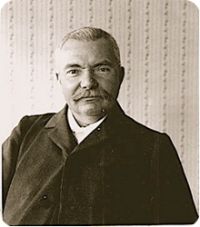 Charles Wagner,
The Simple Life
Charles Wagner,
The Simple Life
“ WHEN one passes in review the individual causes that disturb and complicate our social life, by whatever names they are designated, and their list would be long, they all lead back to one general cause, which is this: the confusion of the secondary with the essential. Material comfort, education, liberty, the whole of civilization—these things constitute the frame of the picture ”
 Johann Gottlieb Fichte,
The Vocation of the Scholar — Lecture II. The Vocation of Man in Society
(1794)
Johann Gottlieb Fichte,
The Vocation of the Scholar — Lecture II. The Vocation of Man in Society
(1794)
“ And in order to fulfil this vocation, and fulfil it always more and more thoroughly, we need a qualification which can only be acquired and improved by culture; and indeed a qualification of a double nature: an ability to give, or to act upon others as upon free beings; and an openness to receive, or to derive the greatest advantage from the action of others upon us. ”
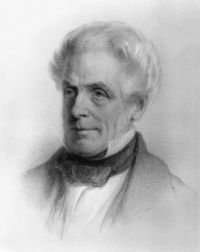 Isaac Taylor,
Natural History of Enthusiasm
Isaac Taylor,
Natural History of Enthusiasm
“ Amid the whirl of myriads of fortuities, the means are selected and combined for constructing as many independent machineries of moral discipline as there are moral agents in the world; and each apparatus is at once complete in itself, and complete as part of a universal movement. ”


