Summary

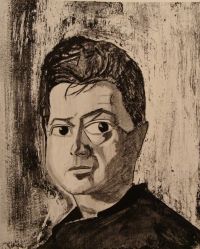
Portrait of Francis Bacon Francis Bacon Of the Proficience and Advancement of Learning… (1605)

Was not the Persian magic a reduction or correspondence of the principles and architectures of nature to the rules and policy of governments? Is not the precept of a musician, to fall from a discord or harsh accord upon a concord or sweet accord, alike true in affection? Is not the trope of music, to avoid or slide from the close or cadence, common with the trope of rhetoric of deceiving expectation? Is not the delight of the quavering upon a stop in music the same with the playing of light upon the water?
Source: Wikisource

Portrait of Francis Bacon Francis Bacon Of the Proficience and Advancement of Learning… (1605)

In this third part of learning, which is poesy, I can report no deficience; for being as a plant that cometh of the lust of the earth, without a formal seed, it hath sprung up and spread abroad more than any other kind. But to ascribe unto it that which is due, for the expressing of affections, passions, corruptions, and customs, we are beholding to poets more than to the philosophers’ works; and for wit and eloquence, not much less than to orators’ harangues. But it is not good to stay too long in the theatre.
Source: Wikisource

Portrait of Francis Bacon Francis Bacon Of the Proficience and Advancement of Learning… (1605)

Out of which several inquiries there do arise three knowledges - divine philosophy, natural philosophy, and human philosophy or humanity. For all things are marked and stamped with this triple character - the power of God, the difference of nature and the use of man. But because the distributions and partitions of knowledge are not like several lines that meet in one angle, and so touch but in a point, but are like branches of a tree that meet in a stem, which hath a dimension and quantity of entireness and continuance before it come to discontinue and break itself into arms and boughs
Source: Wikisource

Get perspective with Kwize: daily news enlightened by great literature