Image (psychology)

Definition and stakes

William James,  The Principles of Psychology, Volume 1…

“ It is just this free water of consciousness that psychologists resolutely overlook. Every definite image in the mind is steeped and dyed in the free water that flows round it. With it goes the sense of its relations, near and remote, the dying echo of whence it came to us, the dawning sense of whither it is to lead. The significance, the value, of the image is all in this halo or penumbra that surrounds and escorts it,—or rather that is fused into one with it and has become bone of its bone and flesh of its flesh ”
Source: Gutenberg

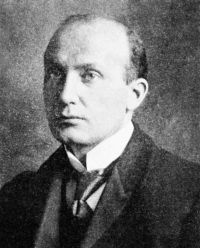
Portrait of Boris Sidis Boris Sidis,  The Foundations of Normal and Abnormal Psychology… (1914 | notes)

“ There is another view which finds the fundamental difference between percept and image in what is and what is not common to all selves. Perceptual experience is common, while ideational experience is not common to all fellow-beings. I see the sun and other people can share it with me, while my image of the sun is experienced by myself. ”
Source: Wikisource

William James,  The Principles of Psychology, Volume 1…

“ Attention being the condition of analysis, and separate imagination being the condition of attention, it follows also that separate imagination is the condition of analysis. Only such elements as we are acquainted with, and can imagine, separately, can be discriminated within a total [Pg 504] sense-impression. The image seems to welcome its own mate from out of the compound, and to heighten the feeling thereof; whereas it dampens and opposes the feeling of the other constituents; and thus the compound becomes broken for our consciousness into parts. ”
Source: Gutenberg

Get perspective with Kwize: daily news enlightened by great literature