Prototype

Definition and stakes

James Gall,  A Practical Enquiry into the Philosophy of Education

“ For it is a remarkable fact, that there is scarcely a useful mechanical invention to which genius has laid claim,—and deservedly laid claim,—that has not its prototype somewhere in nature. The same principles, working perhaps in the same manner, have been silently in operation, thousands of years before the inventor was born; but which, from want of observation, or the neglect of its practical application to useful purposes, lay concealed and useless. ”
Source: Gutenberg

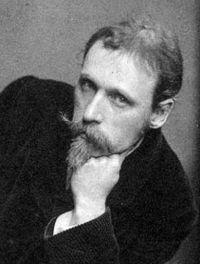
Portrait of Walter Crane Walter Crane,  The Bases of Design

“ In the primitive ornament of all peoples we find the same or similar typical forms constantly recurring, the germs of pattern design afterwards developed, complicated, and refined upon: the chequer, the zigzag, the fret, the circle, the spiral volute, the twisting scroll—can we ascribe their invention to any individual mind or hand? Can the mechanician tell us who were the inventors of the wheel, the lever, the mode of producing fire, the canoe, the paddle, the spade, the plough, the vessel of clay, the axe, the hammer, the needle, or even spinning and weaving? ”
Source: Gutenberg

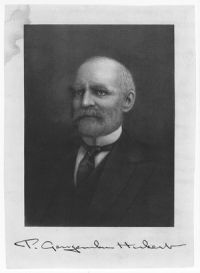
Portrait of Philip Gengembre Hubert Philip Gengembre Hubert,  Inventors

“ In a discovery there must be an element of the accidental, and an important one, too; while an invention is purely deductive. In my own case but few, and those the least important, of my inventions owed anything to accident. Most of them have been hammered out after long and patient labor, and are the result of countless experiments all directed toward attaining some well-defined object. All mechanical improvements may safely be said to be inventions227 and not discoveries. The sewing-machine was an invention. So were the steam-engine and the typewriter. ”
Source: Gutenberg

Get perspective with Kwize: daily news enlightened by great literature