Inheritance tax

Definition and stakes

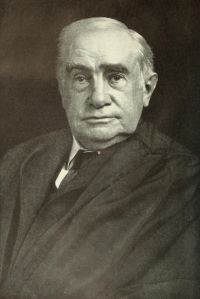
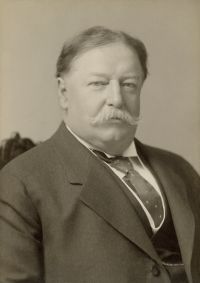
Portrait of William R. Day William R. Day,  Chanler v. Kelsey — Opinion of the Court

“ A state succession tax stands on different grounds from a similar tax by the United States or a general state tax upon transfers. It is more unlimited in its possible extent, if not altogether unlimited, and therefore it is necessary that the boundaries of the power to levy such taxes should be accurately understood and defined.
I have always believed that a state inheritance tax was an exercise of the power of regulating the devolution of property by inheritance or will upon the death of the owner,-a power which belongs to the states
”
Source: Wikisource

Roswell H. Johnson,  Applied Eugenics

“ The inheritance tax seems less open to criticism. Very large inheritances should be taxed to a much greater degree than is at present attempted in the United States, and the tax should be placed, not on the total amount of the inheritance, but on the amount received by each individual beneficiary. This tends to prevent the unfair guarantee of riches to individuals regardless of their own worth and efforts. ”
Source: Gutenberg

Geo. T. Fairchild,  Rural Wealth and Welfare: Economic Principles Illustrated and Applied in Farm Life

“ Inheritance taxes.—A device much employed for making large accumulations of wealth bear a larger portion of the community's burdens is a heavy tax upon inheritance. Since such inheritance requires the guardianship of law for security of transfer, government is suffered to take a liberal fee for such transfer. Moreover, the inheritor is assumed to have no such property interest in what has been accumulated by another as to claim that he can be wronged if government takes a portion. It is defended also by socialists on the ground that large estates are dangerous to the general welfare. ”
Source: Gutenberg

Get perspective with Kwize: daily news enlightened by great literature