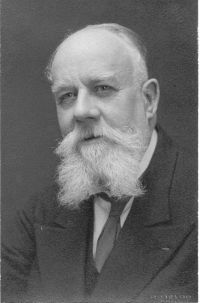
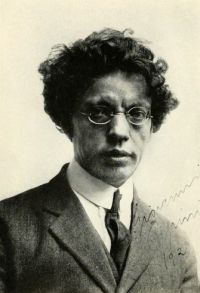
Intuitionism, a philosophical concept emphasizing direct, non-rational knowledge, holds that certain truths or perceptions emerge independently of logical deduction. Benedetto Croce associated it with aesthetic experience, portraying intuition as a "pure experience" preceding intellectual categories, while G. E. Moore emphasized its significance in moral judgment, claiming that duties can be "intuitively certain.
" Johann Gottlieb Fichte characterized intuition as an inherent, external awareness that shapes perception, and William Walker Atkinson viewed it as a mental faculty producing "primary truths" such as space and time. These diverse perspectives highlight intuitionism’s function as a link between immediate experience and systematic reasoning, as demonstrated by its relevance across aesthetics, ethics, and epistemology.
 Benedetto Croce,
Logic as the Science of the Pure Concept
Benedetto Croce,
Logic as the Science of the Pure Concept