Business Administration: Theory…
“ In theory the labor contract is a perfectly free contract, entered into voluntarily by both employer and wage-earner, and the courts have generally insisted that this theoretical freedom must be maintained. ”
Business Administration: Theory…
“ In theory the labor contract is a perfectly free contract, entered into voluntarily by both employer and wage-earner, and the courts have generally insisted that this theoretical freedom must be maintained. ”
Business Administration: Theory…
“ Many labor leaders are again asking for an effectual control of the labor contract, not by the action of trade unions, but by the direct legislation of the state. What shall be our attitude to this demand? Before we can fairly answer this question we must consider somewhat more fully the character of the bargain that takes place between an employer and an individual workman, and the nature of the commodity that the laborer has to sell. ”
Standing Committee of the National People's Congress, Labor Contract Law of the People's Republic of China… (2007)
“ Article 16 A labor contract shall become effective when the employing unit and the worker reach agreement through consultation thereon and both parties sign or affix their seals on the copies of the contract. ”
Various, Watson's Magazine, Vol. IV, No…
“ As I have stated before, the laws of these countries recognize this condition of the field of labor and uphold the employer just as our laws recognize a man’s liability when he signs a note agreeing to repay money advanced to him. When the laborer has repaid by his services the money advanced to him he can no longer be [103] held to his contract, but just so long as the laborer demands the advance of money before doing any work, just so long must he expect to be forced, if necessary, to carry out his agreement, and his services as laborer being his only asset he must give those services. ”
Standing Committee of the National People's Congress, Labor Contract Law of the People's Republic of China… (2007)
“ Where an employing unit fails to conclude an open-ended labor contract with a worker in violation of the provisions of this Law, it shall pay the worker two times his salary for each month, starting from the date on which an open-ended labor contract should be concluded. ”
Standing Committee of the National People's Congress, Labor Contract Law of the People's Republic of China… (2007)
“ In addition to the requisite terms mentioned above, an employing unit and a worker may agree to have other matters stipulated in the labor contract, such as probation period, training, confidentiality, supplementary insurance and welfare benefits. ”
Robert H. Jackson, Case Company v. National Labor Relations Board…
“ Contract in labor law is a term the implications of which must be determined from the connection in which it appears. Collective bargaining between employer and the representatives of a unit, usually a union, results in an accord as to terms which will overn hiring and work and pay in that unit. The result is not, however, a contract of employment except in rare cases; no one has a job by reason of it and no obligation to any individual ordinarily comes into existence from it alone. ”
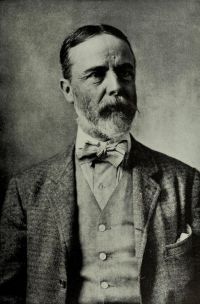 Frederic Jesup Stimson,
Popular Law-making
Frederic Jesup Stimson,
Popular Law-making
“ One journeyman shall be kept for each three apprentices; disputes are to be settled by the justices of the peace, and indeed the whole labor contract is regulated as carefully as the most statute-mad of modern labor leaders could desire, though hardly, perhaps, then, in the sole interest of the workingman. ”
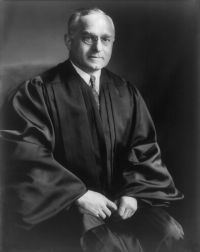 Felix Frankfurter,
Textile Workers Union of America v…
Felix Frankfurter,
Textile Workers Union of America v…
“ One of the purposes of organizing and collective bargaining is to make a contract by management and the workers. This bill provides that management and labor each shall fairly and honestly live up to the terms of their contract and if either party breaks the contract and the other suffers loss or damage thereby, the party who is at fault must respond in fair and just damages. If the parties do not intend to live up to their contract, why should they take the time, trouble, and incur expense of making a contract? ”
Robert Henry Vickers, Zawis and Kunigunde (1895)
“ Few employers and few of those in their employ have very definite ideas as to the implied agreements which legally attach to the ordinary verbal contract to work for so many dollars a week, and still fewer have any definite ideas as to how the law might be improved. The anonymous writer of this book gives much valuable information as to the present status of the labor contract, and he advocates certain legal reforms the discussion of which can not fail to do good. ”
Various, Popular Science Monthly (1904)
“ Previous to 1885, large employers of labor imported workmen under contract for less than the American standard of wages, and through the combined efforts of the labor organizations, legislation was enacted in 1885 to prevent the entrance of these contract laborers. ”
 Edmund Burke,
The Works of the Right Honourable Edmund Burke…
Edmund Burke,
The Works of the Right Honourable Edmund Burke…
“ There is an implied contract, much stronger than any instrument or article of agreement between the laborer in any occupation and his employer,—that the labor, so far as that labor is concerned, shall be sufficient to pay to the employer a profit on his capital and a compensation for his risk: in a word, that the labor shall produce an advantage equal to the payment. ”
Robert H. Jackson, Case Company v. National Labor Relations Board…
“ We know of nothing to prevent the employee's, because he is an employee, making any contract provided it is not inconsistent with a collective agreement or does not amount to or result from or is not part of an unfair labor practice. But in so doing the employer may not incidentally exact or obtain any diminution of his own obligation or any increase of those of employees in the matters covered by collective agreement. ”
Samuel Thomas, Circular no. 2 (1866)
“ Your contracts were explained to you, and their sacredness impressed upon you again and again. You know that when you make a contract you are bound to give all the labor for which your employer agrees to pay. Efforts have been made by my officers to compel you to perform labor according to agreements, that employers might have no excuse for failing to do their part. ”
Academy of Political Science in the City of New York, The economic position of women (1910)
“ The difficulty which American courts have experienced with regard to the treatment of hours of labor is easily understood. They assume the existence of a constitutional principle which protects what is called the freedom of contract. This means that the state must leave the economic side of the labor contract to the free bargaining of the parties concerned ”
Robert H. Jackson, Case Company v. National Labor Relations Board…
“ Care has been taken in the opinions of the Court to reserve a field for the individual contract, even in industries covered by the National Labor Relations Act, not merely as an act or evidence of hiring, but also in the sense of a completely individually bargained contract setting out terms of employment, because there are circumstances in which it may legally be used, in fact, in which there is no alternative. ”
Various, Watson's Magazine, Vol. IV, No…
“ The employer of labor signs up a number of men and the men ask for, expect and receive an advance of money against their future services of an amount equal to from two to four months’ wages. There is a form of contract signed in which the laborer acknowledges the receipt of so much money paid him for future work to be done by him under the contract, by which he also agrees to work for the employer for a specified time at the rate of so much per month. ”
“ Require any bidder, offeror, contractor or subcontractor to enter into, adhere to, or enforce any agreement that requires its employees, as a condition of employment, to: (i) become members of or affiliated with a labor organization; or (ii) pay dues or fees to a labor organization, over an employee's objection, in excess of the employee's share of labor organization costs relating to collective bargaining, contract administration, or grievance adjustment. ”
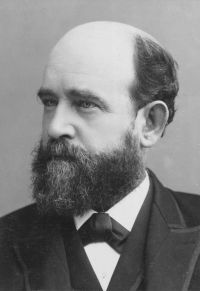 Henry George,
Progress and Poverty, Volumes I and II
Henry George,
Progress and Poverty, Volumes I and II
“ When wages are fixed, the employer takes the whole risk and is compensated for this assurance, for wages when fixed are always somewhat less than wages contingent. But though when fixed wages are stipulated the laborer who has performed his part of the contract has usually a legal claim upon the employer, it is frequently, if not generally, the case that the disaster which prevents the employer from reaping benefit from the labor prevents him from paying the wages. ”
Felix Frankfurter,
Textile Workers Union of America v…
“ The minority believes this provision, imposing equal responsibility on both parties to such contracts, is absolutely essential to the stability of labor relations. The only argument so far advanced against it is that some employers might embarrass unions by suits for enforcement of contract. ”
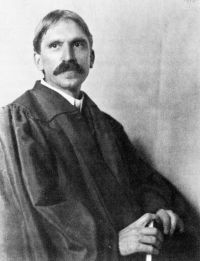 John Dewey,
The public and its problems
(1927)
John Dewey,
The public and its problems
(1927)
“ In general, labor legislation is justified against the charge that it violates liberty of contract on the ground that the economic resources of the parties to the arrangement are so disparate that the conditions of a genuine contract are absent; action by the state is introduced to form a level on which bargaining takes place. ”
 William Graham Sumner,
What Social Classes Owe to Each Other
(1883)
William Graham Sumner,
What Social Classes Owe to Each Other
(1883)
“ Employers and employed make contracts on the best terms which they can agree upon, like buyers and sellers, renters and hirers, borrowers and lenders. Their relations are, therefore, controlled by the universal law of supply and demand. The employer assumes the direction of the business, and takes all the risk, for the capital must be consumed in the industrial process, and whether it will be found again in the product or not depends upon the good judgment and foresight with which the capital and labor have been applied. Under the wages system the employer and the employé contract for time. ”
William J. Brennan, Jr., Wirtz v. Local 153, Glass Bottle Blowers Association…
“ Under the National Labor Relations and Railway Labor Acts the union which is the bargaining representative has power in conjunction with the employer, to fix a man's wages, hours, and conditions of employment. The individual employee may not lawfully negotiate with his employer. He is bound by the union contract. In practice, the union also has a significant role in enforcing the grievance procedure where a man's contract rights are enforced. ”
 Harold Hitz Burton,
Mastro Plastics Corp v. National Labor Relations Board…
Harold Hitz Burton,
Mastro Plastics Corp v. National Labor Relations Board…
“ Petitioners argue that the words 'any strike' leave no room for interpretation and necessarily include all strikes, even those against unlawful practices destructive of the foundation on which collective bargaining must rest. We disagree. We believe that the contract, taken as a whole, deals solely with the economic relationship between the employers and their employees. [12] It is a typical collective-bargaining contract dealing with terms of employment and the normal operations of the plant. It is for one year and assumes the existence of a lawfully designated bargaining representative. ”
 Ambrose Bierce,
The Collected Works of Ambrose Bierce…
(1911)
Ambrose Bierce,
The Collected Works of Ambrose Bierce…
(1911)
“ The need of such a law is apparent: labor contracts would then be drawn for a certain time, securing both employer and employee and (which is more important) helpless persons in related and dependent industries—the whole public, in fact—against sudden and disastrous action by either “capital” or “labor” for accomplishment of a purely selfish and frankly impudent end. ”
 William O. Douglas,
Textile Workers Union of America v…
William O. Douglas,
Textile Workers Union of America v…
“ Thus collective bargaining contracts were made 'equally binding and enforceable on both parties.' Id., p. 15. As stated in the House Report, supra, p. 6, the new provision 'makes labor organizations equally responsible with employers for contract violations and provides for suit by either against the other in the United States district courts.' To repeat, the Senate Report, supra, p. 17, summed up the philosophy of § 301 as follows: 'Statutory recognition of the collective agreement as a valid, binding, and enforceable contract is a logical and necessary step. ”
 Theodore Roosevelt,
Eighth State of the Union Address
(1908)
Theodore Roosevelt,
Eighth State of the Union Address
(1908)
“ Progress in civilization has everywhere meant a limitation and regulation of contract. I call your especial attention to the bulletin of the Bureau of Labor which gives a statement of the methods of treating the unemployed in European countries, as this is a subject which in Germany, for instance, is treated in connection with making provision for worn-out and crippled workmen. ”
Beatrice Webb, The History of Trade Unionism
“ The adoption of one material rather than another, the choice between alternative processes or alternative ways of organising the factory, the selection of particular grades of workers, or even of a particular foreman, may affect, for the worse, the Standard of Life of the operatives concerned. This indirect influence on the conditions of employment passes imperceptibly into the direct determination of the wages, hours, and other terms of the wage contract. ”
Byron White, United Mine Workers of America v…
“ But there is nothing in the labor policy indicating that the union and the employers in one bargaining unit are free to bargain about the wages, hours and working conditions of other bargaining units or to attempt to settle these matters for the entire industry. ”
Nathan Clifford, Hudson Canal Company v. Pennsylvania Coal Company…
“ So if one person engages to work and render services which require great outlay of money, time, and trouble, and he is only to be paid according to the work he performs, the contract necessarily implies an obligation on the part of the employer to supply the work. ”
Mahlon Pitney, Hitchman Coal Coke Company v. Mitchell…
“ The employer may sign the union agreement for fear that labor may not be otherwise obtainable; the workman may sign the individual agreement, for fear that employment may not be otherwise obtainable. But such fear does not imply coercion in a legal sense.In other words an employer, in order to effectuate the closing of his shop to union labor, may exact an agreement to that effect from his employes. The agreement itself being a lawful one, the employer may withhold from the men an economic need-employment-until they assent to make it. ”
Ward Hunt, United States v. Martin — Opinion of the Court
“ At that time ordinary laborers under the same government received but $1.75 per day at the same place, and those engaged in the same department with the claimant in a private establishment, at the same place, received but $2 for a day's work of twelve hours, and the finding adds, 'they had more work to do than the claimant had while similarly employed.' The claimant's contract was a voluntary and a reasonable one, by which he must now be bound. ”
George Haw, From Workhouse to Westminster: The Life Story of Will Crooks…
“ That all contractors be compelled to sign a declaration that they pay the trade union rate of wages and observe the hours of labour and conditions recognised by the London Trade Unions, and that the hours of labour be inserted in and form part of the contract by way of schedule, and that penalties be enforced for any breach of agreement. ”
 Earl Warren,
Fibreboard Paper Products Corporation v…
Earl Warren,
Fibreboard Paper Products Corporation v…
“ The basic question is whether the employer failed to 'confer in good faith with respect to * * * terms and conditions of employment' in unilaterally deciding to subcontract this work. This question goes to the scope of the employer's duty in the absence of a collective bargaining agreement. [13] It is true, as the Court's opinion points out, that industrial experience may be useful in determining the proper scope of the duty to bargain. See National Labor Relations Board v. ”
 Hugo Black,
National Labor Relations Board v…
Hugo Black,
National Labor Relations Board v…
“ For illustration, factory workers are customarily employed at will, without obligation of employer or employed to continue the relationship when the day's work is done; or, if there is an agreement fixing salary or wages per unit of service, at so much per day, week or month, there may be an indefinite employment terminable by either party at the end of any unit period. ”
by Sidney Webb and Beatrice Webb, The History of Trade Unionism (1920)
“ Mediaeval regulation acted not only in restriction of free competition in the labour market to the pecuniary loss of the employers, but also in restriction of free contract to the loss of the employees, who could only obtain the best terms for their labour by collective instead of individual bargaining. ”
 William Pember Reeves,
The Long White Cloud: "Ao Tea Roa"
William Pember Reeves,
The Long White Cloud: "Ao Tea Roa"
“ Two more enactments deal with the earnings of the workmen of contractors and sub-contractors, make them a first charge on all contract money, give workers employed on works of construction a lien thereon, and compel a contractor's employer to hold back at least one-fourth of the contract money for a month after the completion of a contract, unless he shall be satisfied that all workmen concerned have been paid in full. A Wages Attachment Act limits without entirely abolishing a creditor's right to obtain orders of court attaching forthcoming earnings. ”
George Sutherland, Carter v. Carter Coal Company…
“ A consideration of the foregoing, and of many cases which might be added to those already cited, renders inescapable the conclusion that the effect of the labor provisions of the act, including those in respect of minimum wages, wage agreements, collective bargaining, and the Labor Board and its powers, primarily falls upon production and not upon commerce ”
Henry George Lafayette M. HershawHarold Hitz BurtonRobert H. Jackson
 Lysander SpoonerVariousFrederic Jesup StimsonTheodore Roosevelt
 Karl MarxFelix FrankfurterMahlon PitneyByron WhiteWilliam J. Brennan, Jr.
 Eugene V. DebsNathan CliffordHugo Black
 Frédéric Bastiat8th National People's Congress of the People's Republic of China