Law of universal gravitation

Definition and stakes

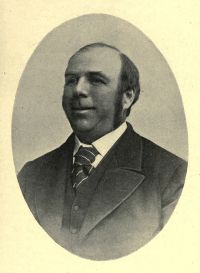
Portrait of Orson Pratt Orson Pratt Journal of Discourses — Volume 2…

You see a stone or other substances fall to the ground, and you ask, What makes them fall, and what controls them? Why will they not rise? Has any person ever found out the cause of this? No; even Sir Isaac Newton's principles of gravitation have failed to show it; as learned a man as he was, he has only given us an index or key to the effects, but not the cause of those effects. He has taken great pains to show us that when anything falls to the ground, it is the effect of the law of universal gravitation
Source: Wikisource

Geo. W. Warder The Universe a Vast Electric Organism

On the contrary, the size and weight of every sun and star that floats in the broad expanse of ether would under the law of gravity tend to bring about just such a universal catastrophe.
If the boasted law of gravitation prevailed to-day, or ever did prevail, such would be the disastrous results. The law of gravitation tends to aggregate all bodies into one. If the universe was under the dominion of gravity there would be but one vast globe in all the universe, and if there was a man on it there would be but one enormous giant. Newton's law of gravitation is "large bodies attract small ones."
Source: Gutenberg

Portrait of William Whewell William Whewell Astronomy and General Physics Considered with Reference to Natural Theology

Such is the law of universal gravitation. Now, the question is, why do either the attractions of masses, or those of their component particles, follow this law of the inverse square of the distance rather than any other? When the distance becomes one, two, and three, why should not the force also become one, two, and three?—or if it must be weaker at points more remote from the attracting body, why should it not be one, a half, a third?
Source: Gutenberg

Get perspective with Kwize: daily news enlightened by great literature