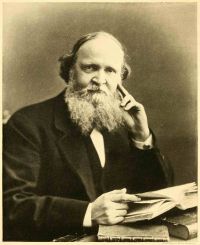
 William Dwight Whitney,
Language and the Study of Language
(1867)
William Dwight Whitney,
Language and the Study of Language
(1867)
“ Thus there come to exist among the same people two separate tongues; the one an inheritance from the past, becoming ever more stiff and constrained, and employable only for special uses; the other the production of the present, growing constantly more unlike the other by the operation of the ordinary processes of linguistic change; full of inaccuracies and corruptions, if we choose to call them so, but also full of a healthy and vigorous life, which enables it finally to overthrow and replace the learned or sacred dialect of which it is the offspring. ”