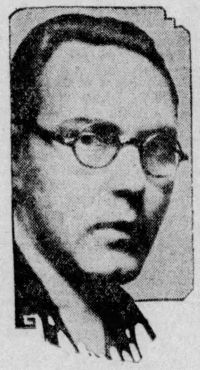
 Hervey Allen,
Carolina Chansons
Hervey Allen,
Carolina Chansons
“ Local color has a fatal tendency to remain local; but it is also true that the universal often borders on the void. ”
Hervey Allen,
Carolina Chansons
“ Local color has a fatal tendency to remain local; but it is also true that the universal often borders on the void. ”
 Arlo Bates,
Talks on Writing English. First Series
Arlo Bates,
Talks on Writing English. First Series
“ By local color is now meant the bringing out of the peculiarities of the locality where the scene of a tale is laid. It is evident that there is no spot so poor as not to have characteristics which distinguish it from all others. It is the aim of many modern story-tellers to give this especial local flavor with the most faithful and often painful vividness. Indeed, there are not a few recent stories which seem to exist for no other reason than to exploit the accidental qualities of remote and hitherto undescribed places. ”
Sterling A. Brown, The Negro in American fiction (1938)
“ Local Color. Following Bret Harte’s discovery of the picturesque and quaint in California’s past, local colorists sprang up all over the nation. Many southern regions were staked out as claims worth mining. Charles Egbert Craddock in the Tennessee mountains, Mark Twain in the Mississippi valley, George Washington Cable in fabulous New Orleans brought the wealth of their discoveries to a literature that had fallen on lean years. Coincidentally with the rise of the local colorists, a new interest in the South, the scene of America’s greatest war, was awakening. ”
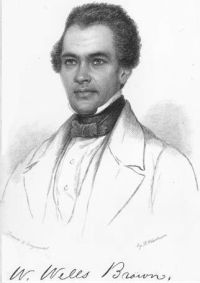 William Wells Brown,
The Rising Son; or, the Antecedents and Advancement of the Colored Race
William Wells Brown,
The Rising Son; or, the Antecedents and Advancement of the Colored Race
“ Look at the hundreds of advertised hair-dyes, used for the purpose of changing Nature! See men with their gray beards dyed black; women with those beautiful [Pg 388] black locks, which but yesterday were as white as the driven snow! Not only this, but even those with light or red whiskers run to the dye-kettle, steal a color which Nature has refused them, and an hour after curse the negro for a complexion that is not stolen. If black is so hateful, why do not gentlemen have their boots whitewashed? If the slaves of the South had been white, the same prejudice would have existed against them. ”
Hubert H. Harrison, When Africa awakes (1920)
“ But what is the Color Line? It is the practice of the theory that the colored and “weaker” races of the earth shall not be free to follow “their own way of life and of allegiance,” but shall live, work and be governed after such fashion as the dominant white race may decide. ”
“ Owing to the increase of the Negro population and for other causes which I have already mentioned, sentiment in the North toward the Negro has been undergoing a swift change.How Colour Lines Are DrawnNow the tragedy of the Negro is the colour of his skin: he is easily recognisable. The human tendency is to class people together by outward appearances. When the line began to be drawn it was drawn not alone against the unworthy Negro, but against the Negro. It was not so much drawn by the highly intelligent white man as by the white man. ”
Chicago Commission on Race Relations, The Negro in Chicago: A Study of Race Relations and a Race Riot
“ A great many of the colored people from the South are very dark skinned, and there is a larger proportion, in my estimation, of offenses among dark-skinned colored people than among those of the light color. ”
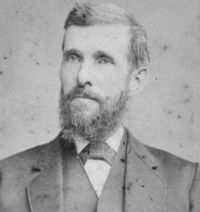 William Patton,
An Essay on the Origin and Relative Status of the White and Colored Races of Mankind
(1871)
William Patton,
An Essay on the Origin and Relative Status of the White and Colored Races of Mankind
(1871)
“ Therefore, if the coloring process of a hot climate, applied to the white man over 1500 years, has made no perceptible change in his complexion—and, as it is a poor rule that wont work both ways—I am curious to know how long the process will require to protuburate the features, straighten the wool, and bleach the black man white? or to flatten the features, and color the white man black? ”
“ And it is not merely the demand of the white man that the Negro step aside by himself, for the Negro himself is drawing the colour line, and drawing it with as much enthusiasm as the white man. A genuine race-spirit or race-consciousness is developing. Negroes are meeting prejudice with self-development. ”
Charles Stuart, A memoir of Granville Sharp (1836)
“ Alas! if color could disgrace a people, how deep in the nethermost regions of shame, would that color be, which is called white in the United States; frequently with such utter recklessness of truth. White! ”
Masterpieces of Negro Eloquence
“ We talk about the "color [376] line," but you know and I know that the blackest Negro in Alabama or Mississippi or Africa or anywhere else who puts the same amount of skill and energy into his farming gets as large returns for his labor as the whitest Anglo-Saxon. The earth yields up her increase as willingly to the skill and persuasions of the black as of the white husbandman. Wind, wave, heat, stream, and electricity are absolutely blind forces and see no race distinction and draw no "color line." ”
 W. E. B. Du Bois,
The Souls of Black Folk
W. E. B. Du Bois,
The Souls of Black Folk
“ I know some towns where a straight line drawn through the middle of the main street separates nine-tenths of the whites from nine-tenths of the blacks. In other towns the older settlement of whites has been encircled by a broad band of blacks; in still other cases little settlements or nuclei of blacks have sprung up amid surrounding whites. Usually in cities each street has its distinctive color, and only now and then do the colors meet in close proximity. ”
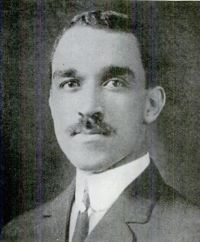 Benjamin Griffith Brawley,
A Social History of the American Negro
Benjamin Griffith Brawley,
A Social History of the American Negro
“ The instinct for beauty insists upon an outlet, and if one can find no better picture he will paste a circus poster or a flaring advertisement on the wall. Very few homes have not at least a geranium on the windowsill or a rosebush in the garden. If we look at the matter conversely we shall find that those things which are most picturesque make to the Negro the readiest appeal. Red is his favorite color simply because it is the most pronounced of all colors. ”
Hubert H. Harrison, The Negro and the nation (1917)
“ Christian America created the color line; and all the great currents of critical opinion, from the eighteenth century to our time, have found the great barrier impassible and well-nigh impervious. Behind the color line one has to think perpetually of the color line, and most of those who grow up behind it can think of nothing else. Even when one essays to think of other things, that thinking is tinged with the shades of the surrounding atmosphere. ”
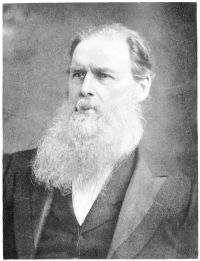 Edward Burnett Tylor,
Popular Science Monthly
(1881)
Edward Burnett Tylor,
Popular Science Monthly
(1881)
“ On the whole, it seems that the distinction of color, from the fairest Englishman to the darkest African, has no hard and fast lines, but varies gradually from one tint to another. The natural hue of skin farthest from that of the negro is the complexion of the fair race of Northern Europe, of which perfect types are to be met with in Scandinavia, North Germany, and England. In such fair or blonde people the almost transparent skin has its pink tinge by showing the small blood-vessels through it. ”
 Frederick Douglass,
The Color Line
(1881)
Frederick Douglass,
The Color Line
(1881)
“ After all, some very well informed and very well meaning people will read what I have now said, and what seems to me so just and reasonable, and will still insist that the color of the negro has something to do with the feeling entertained toward him; that the white man naturally shudders at the thought of contact with one who is black -- that the impulse is one which he can neither resist nor control. ”
William Wells Brown,
The Rising Son; or, the Antecedents and Advancement of the Colored Race
“ Let us survey the gradations of color on the continent of Africa itself. The inhabitants of the north are whitest; and as we advance southward towards the line, and those countries in which the sun’s rays fall more perpendicularly, the complexion gradually assumes a darker shade. And the same men, whose color has been rendered black by the powerful influence of the sun, if they remove to the north, gradually become whiter (I mean their posterity) , and eventually lose their dark color. ”
“ Amid the throng of many colours move white people from every land of Europe, and the babel of tongues is as astonishing as the mingling of costumes.Here is struck at once the note of colour which enlivens every street scene in India. The people wear robes of every shade, and turbans or caps of every hue—black, white, red, green, yellow, purple, pink, every colour of the rainbow—and a hundred shades of every colour meet and mingle as the crowds flow to and fro. ”
 Madison Grant,
The Conquest of a Continent; or…
Madison Grant,
The Conquest of a Continent; or…
“ With this brief review of the essential difference between race and language or culture, we may return to a consideration of humanity in terms of essentially racial characters.The world as a whole can be roughly mapped racially according to the most obvious human differentiation—namely, color: white, yellow, red, black, and brown. The white race at the present day dominates Europe, northern Asia in part, Australia, and North America as far south as Mexico, with outposts scattered all over the globe. Eastern Asia is yellow. Southern Asia and northern Africa are brown. ”
 Lafcadio Hearn,
Two years in the French West Indies
Lafcadio Hearn,
Two years in the French West Indies
“ It is true that certain elements continue to dominate in certain communes, but the particular characteristics come and vanish in the most mysterious way. As to color, I doubt if any correct classification can be made, especially by a stranger. Your eyes give you general ideas about a red type, a yellow type, a brown type; but to the more experienced eyes of a creole, accustomed to live in the country districts, every individual of mixed race appears to have a particular color of his own. ”
The partnership of paint (1920)
“ Assuming that you live on a street containing representative American homes, we must plan the color treatment of your own so that it will not appear violent in comparison with that of your neighbor’s. You have no doubt seen the deplorable result of a variance of preference when one side of a semi-detached residence has been painted white and the other half done in green. ”
“ In the South the most intelligent and best educated Negroes are, generally speaking, the leaders of their race, but in Northern cities some of the ablest Negroes will have nothing to do with the masses of their own people or with racial movements; [Pg 219] they hold themselves aloof, asserting that there is no colour line, and if there is, there should not be. Their associations and their business are largely with white people and they cling passionately to the fuller life. ”
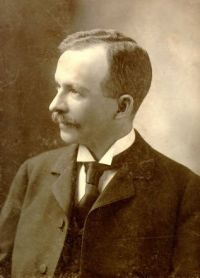 Charles W. Chesnutt,
The Wife of his Youth and Other Stories of the Color Line…
Charles W. Chesnutt,
The Wife of his Youth and Other Stories of the Color Line…
“ The question whether persons are colored or white, where color or feature is doubtful, is for the jury to determine by reputation, by reception into society, and by their exercises of the privileges of a white man, as well as by admixture of blood. ”
Charles W. Chesnutt,
The Wife of his Youth and Other Stories of the Color Line…
“ Anyone at all familiar with the hopes and aspirations of the colored race, as expressed, for instance, in their prolific newspaper literature, must have perceived the wonderful inspiration which they have drawn from the career of a few distinguished Europeans of partial Negro ancestry, who have felt no call, by way of social prejudice, to deny or conceal their origin, or to refuse their sympathy to those who need it so much. ”
“ It will enlarge your mind so much, and think of the local colour you will gain!’ I have note-books crammed full of local colour, only waiting for the stories which are to bring it in, and the worst of it is that when I do write anything, I am always so frightfully interested in the people that the local colour gets crowded out. ”
“ The Northern Negro who has been enjoying the free life of Boston and Philadelphia has protested passionately against the drawing of a colour line: he wishes to be looked upon, and not at all unnaturally, for he possesses human ambitions and desires, solely for his worth as a man, not as a Negro. ”
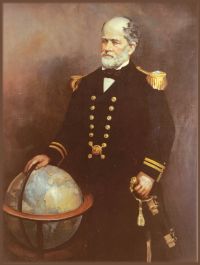 Matthew Fontaine Maury,
Maury's New Elements of Geography for Primary and Intermediate Classes
(1907)
Matthew Fontaine Maury,
Maury's New Elements of Geography for Primary and Intermediate Classes
(1907)
“ Most of those that we see are white; some are black. In the western part of our country there are a good many red men, and in some parts yellow men, or Chinese, are found. In other parts of the world we find men of one more color still, the brown. ”
William Wells Brown,
The Rising Son; or, the Antecedents and Advancement of the Colored Race
“ The various colors seen in the natives in Africa, where amalgamation with other races is impossible, has drawn forth much criticism, and puzzled the ethnologist not a little. Yet nothing is more easily accounted for than this difference of color amongst the same people, and even under the same circumstances. Climate, and climate alone, is the sole cause. ”
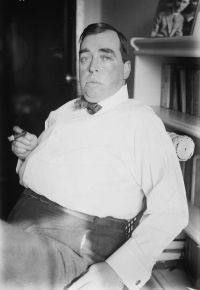 Irvin S. Cobb,
J. Poindexter, Colored
Irvin S. Cobb,
J. Poindexter, Colored
“ Yes sir, the run of colored folks is much more secretious than what the run of the white folks give 'em credit for. I reckon they has been made so. In times past they has met up with so many white folks which taken the view that everything black men and black women done in their lodges or their churches or amongst their own color was something to joke about and poke fun at. ”
 William Benjamin Smith,
The Color Line: A Brief in Behalf of the Unborn
William Benjamin Smith,
The Color Line: A Brief in Behalf of the Unborn
“ If we sit with Negroes at our tables, if we entertain them as our guests and social equals, if we disregard the colour line in all other relations, is it possible to maintain it fixedly in the sexual relation, in the marriage of our sons and daughters, in the propagation of our species? ”
William Wells Brown,
The Rising Son; or, the Antecedents and Advancement of the Colored Race
“ The origin of the African race has provoked more criticism than any other of the various races of man on the globe. Speculation has exhausted itself in trying to account for the Negro’s color, features, and hair, that distinguish him in such a marked manner from the rest of the human family. ”
“ Coloured doctors and lawyers in Boston have more or less white practice. Of course, coloured men who can succeed without reference to their colour and do business with both races, wish to continue to do so—but the tendency in the North, as in the South, is all against such development and toward Negro enterprises for the Negro population. ”
“ Add to this the fact that the darker races in other parts of the world have, in the last four centuries, lagged behind the flying and even feverish footsteps of Europe, and we face to-day a widespread assumption throughout the dominant world that color is a mark of inferiority. ”
William Horatio Barnes, History of the Thirty-Ninth Congress of the United States
“ But the term 'color' is nowhere defined in the Constitution or the law. We apply the term to persons who are of African descent, whether their color is whiter or darker than ours. Every one who is familiar with the ethnological condition of things here in the United States, and who sees the general mixing up of colors, particularly in the Democratic portion of the country—I allude to that portion south of Mason and Dixon's line—must say with me that the word 'color' has no very distinct meaning when applied to the different peoples of the United States of America. ”
Charles W. Chesnutt,
The Wife of his Youth and Other Stories of the Color Line…
“ If they could themselves speak of their origin, without any unpleasant consequences, it would be a handsome thing for the colored race. That they do not is no reproach to them; they are white to all intents and purposes, even by the curious laws of the curious States from which they derived their origin, and are in all conscience entitled to any advantage accompanying this status. ”
Merton Leland Miller and Lester Frank Ward, The American Journal of Sociology (1896)
“ Just as there are peoples belonging to the White, Caucasian or Eurafrican race who are almost black, so there are men of a light brown or yellow color who belong to the Black, Ethiopian or Austafrican race. Racial divisions are based not on any one character but on many taken together. But men differ not merely physically. ”
 Eugene V. Debs,
The negro workers
(1923)
Eugene V. Debs,
The negro workers
(1923)
“ I never knew of any distinction on account of the color of the flesh of a human being. Indeed, when I think of what the colored people have been made to suffer at the hands of their supposedly superior race, every time I look a colored brother in the face I blush for the crimes that my race has committed against his race. ”
William Priest, Travels in the United States of America
“ Are not the fine mixtures of red and white, the expression of every passion by a greater or less suffusion of colour in the one, preferable to that eternal monotony, that immovable veil of black, which covers all the emotions of the other race? Add to these, flowing hair, a more elegant symmetry of form, their own judgment in favour of the whites, declared by their preference to them, as uniformly as is the preference of the oroonowtang for the black women over those of his own species? ”
“ This very absence of a clear demarcation is significant of many relationships in the South. The colour line is drawn, but neither race knows just where it is. Indeed, it can hardly be definitely drawn in many relationships, because it is constantly changing. This uncertainty is a fertile source of friction and bitterness. The very first time I was on a car in Atlanta, I saw the conductor—all conductors are white—ask a Negro woman to get up and take a seat farther back in order to make a place for a white man. I have also seen white men requested to leave the Negro section of the car. ”
 John RuskinCharles StuartFrederick DouglassLafcadio Hearn
 Harry Alverson FranckWilliam PattonHervey Allen
 Lydia Maria ChildIrvin S. CobbWilliam Horatio BarnesChautauqua InstitutionBenjamin Griffith BrawleyW. E. B. Du BoisWilliam Wells BrownHubert H. HarrisonCharles W. ChesnuttChicago Commission on Race RelationsSterling A. BrownArlo BatesEdward Burnett Tylor