Lunar theory

Definition and stakes

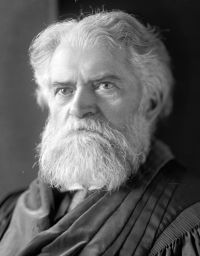
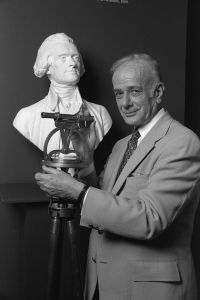
Portrait of Harold Jacoby Harold Jacoby,  Practical Talks by an Astronomer

“ And why does the moon ride thus through the stars of night? Modern science has succeeded in disentangling the intricacies of her motion, until to-day only one or two of the very minutest details of that motion remain unexplained. But it has been a hard problem. Someone has well said that lunar theory should be likened to a lofty cliff upon whose side the intellectual giants among men can mark off their mental stature, but whose height no one of them may ever hope to scale. ”
Source: Gutenberg

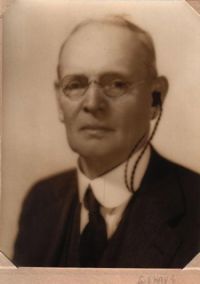
Portrait of Agnes M. Clerke Agnes M. Clerke,  A Popular History of Astronomy During the Nineteenth Century

“ Even our own moon threatens to break loose from the trammels of calculation, and commits "errors" which sap the very foundations of the lunar theory, and suggest the formidable necessity for its complete revision. Nay, the steadfast earth has forfeited the implicit confidence placed in it as a time-keeper, and questions relating to the stability of the earth's axis and the constancy of the earth's rate of rotation are among those which it behoves the future to answer. ”
Source: Gutenberg

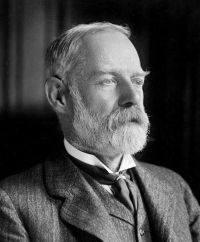
Portrait of Sir Oliver Lodge Sir Oliver Lodge,  Pioneers of Science

“ A good many other minor irregularities are now known—some thirty, I believe; and altogether the lunar theory, or problem of the moon's exact motion, is one of the most complicated and difficult in astronomy; the perturbations being so numerous and large, because of the enormous mass of the perturbing body.
The disturbances experienced by the planets are much smaller, because they are controlled by the sun and perturbed by each other. The moon is controlled only by the earth, and perturbed by the sun.
”
Source: Gutenberg

Get perspective with Kwize: daily news enlightened by great literature