Magnetic induction

Definition and stakes

Little Masterpieces of Science…

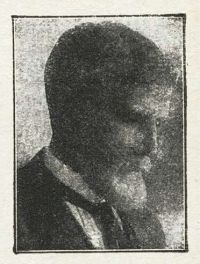
“ We pass, therefore, to electrical communication as effected by induction—the influence which one conductor exerts on another through an intervening insulator. At the outset we shall do well to bear in mind that magnetic phenomena, which are so closely akin to electrical, are always inductive. To observe a common example of magnetic induction, we have only to move a horseshoe magnet in the vicinity of a compass [Pg 110] needle, which will instantly sway about as if blown hither and thither by a sharp draught of air. ”

Source: Gutenberg

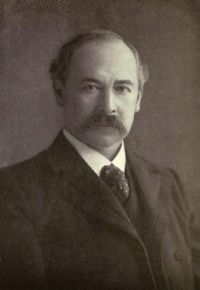
Portrait of Michael Faraday Michael Faraday,  Experimental researches in electricity…

“ Nothing can be more clear, therefore, than that with iron, and bodies admitting of ordinary magnetic induction, _opposite_ poles on opposite sides of the edge of the plate neutralize each other's effect, whilst _similar_ poles exalt the action; a single pole end on is also sufficient. But with copper, and substances not sensible to ordinary magnetic impressions, _similar_ poles on opposite sides of the plate neutralize each other; _opposite_ poles exalt the action; and a single pole at the edge or end on does nothing. ”
Source: Wikisource

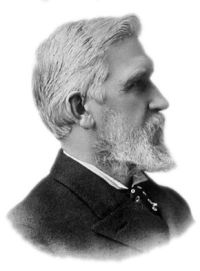
Portrait of James Clerk Maxwell James Clerk Maxwell,  A Treatise on Electricity and Magnetism (1873)

“ The magnetic induction, on the other hand, is from the positive pole to the negative outside the magnet, and from the negative pole to the positive within the magnet, so that the lines and tubes of induction are re-entering or cyclic figures.
The importance of the magnetic induction as a physical quantity will be more clearly seen when we study electromagnetic phenomena. When the magnetic field is explored by a moving wire, as in Faraday's Exp. Res. 3076, it is the magnetic induction and not the magnetic force which is directly measured.
The Vector-Potential of Magnetic Induction.
”
Source: Wikisource

Get perspective with Kwize: daily news enlightened by great literature