Solenoid

Definition and stakes

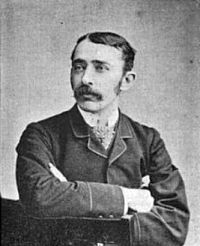
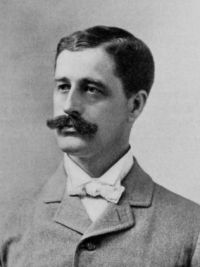
Portrait of A. Frederick Collins A. Frederick Collins,  Handicraft for boys (1918)

“ The spanker sets in the slot in the floor and the brads rest in the grooves and serve as pivots.
A solenoid is merely an electromagnet with a loose [248] iron core in it. Make a cardboard spool 11⁄4 inches long and 11⁄2 inches in diameter and have the hole in it 7⁄16 inch in diameter; wind it full of No. 20 or 22 double cotton covered magnet wire and your solenoid is done. An iron bolt 3⁄8 inch in diameter and 11⁄4 inches long makes a good plunger, as the loose iron core is called.
”
Source: Gutenberg

Various,  Encyclopaedia Britannica, 11th Edition…

“ If a copper wire insulated or covered with cotton or silk is twisted round a thin rod so as to make a close spiral, this 213 forms a “solenoid,” and if the solenoid is bent round so that its two ends come together we have an endless solenoid. Consider such a solenoid of mean length l and N turns of wire. If it is made endless, the magnetic force H is the same everywhere along the central axis and the line integral along the axis is Hl. If the current is denoted by I, then NI is the total current, and accordingly 4πNI = Hl, or H = 4πNI/l. ”
Source: Gutenberg

Portrait of James Clerk Maxwell James Clerk Maxwell,  A Treatise on Electricity and Magnetism (1873)

“ To determine the effect of the positive end of the solenoids we must calculate the coefficient of induction on the outer solenoid due to the circular disk which forms the end of the inner solenoid. For this purpose we take the second expression for , as given n equation (15) , and differentiate it with respect to . This gives the magnetic force in the direction of the radius. We then multiply this expression by , and integrate it with respect to from to . This gives the coefficient of induction with respect to a single winding of the outer solenoid at a distance from the positive end. ”
Source: Wikisource

Get perspective with Kwize: daily news enlightened by great literature