Cosine

Definition and stakes

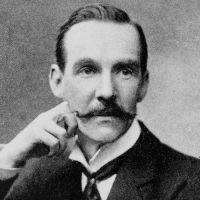
Portrait of Ernest William Hobson Ernest William Hobson,  Encyclopædia Britannica, Ninth Edition (1888)

“ Suppose OP of fixed length, equal to OA, and let PM, PN be drawn perpendicular to A A, B B, " respectively; then OM and ON, taken with their proper signs, are the projections of OP on A A and B B. The ratio of the projection of OP on B B to the absolute length of OP is dependent only on the magnitude of the angle POA, and is called the sine of that angle; the ratio of the projection of OP on A A to the length OP is called the cosine of the angle POA. The ratio of the sine of an angle to its cosine is called the tangent of the angle, and that of the cosine to the sine the cotangent of the angle ”

Source: Wikisource

Denys Cochin,  Popular Science Monthly (1884)

“ We derive from coal what we used to look for in living plants, and the art of the chemist has fabricated vegetable substances. It would not, however, be correct to say that vegetable substances have been constituted from mineral elements, for coal is not a mineral, but a decomposed vegetable product. It is not pure carbon, but a mixture of hydrocarbons, of combinations which chemistry calls organic, because they proceed from living organisms and preserve a distinctive character peculiar to substances that have been endowed with life. ”
Source: Wikisource

Denys Cochin,  Popular Science Monthly (1884)

“ All of our products have been obtained from a vegetable or organic, not from the primary mineral, carbon; not from carbon either, but from compounds of carbon and hydrogen of a character which we have not yet been able to produce by synthesis of the primary mineral elements, but which the sun stored up for us ages ago, working through the agency of organic growth. ”
Source: Wikisource

Get perspective with Kwize: daily news enlightened by great literature