Magnetic meridian

Definition and stakes

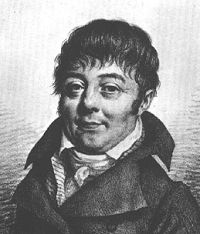
Sir Douglas Mawson,  The Home of the Blizzard

“ The Earth's magnetic force, which is the active agent in maintaining the compass-needle in the magnetic meridian** at any particular spot, acts, not as is popularly supposed, in a horizontal plane, but at a certain angle of inclination with the Earth's surface. The nearer the magnetic poles the more nearly vertical does the freely suspended needle become. At the South Magnetic Pole it assumes a vertical position with the south end downwards ”
Source: Gutenberg

William Watson,  1911 Encyclopædia Britannica, Volume 17… (1911)

“ In order to determine the magnetic meridian the orientation of the magnetic axis of a freely suspended magnet is observed; while, in the absence of a distant mark of which the azimuth is known, the geographical meridian is obtained from observations of the transit of the sun or a star. The geometrical axis of the magnet is sometimes defined by means of a mirror rigidly attached to the magnet and having the normal to the mirror as nearly as may be parallel to the magnetic axis. ”
Source: Wikisource

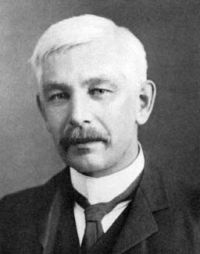
Portrait of Charles Chree Charles Chree,  1911 Encyclopedia Britannica (1911)

“ Auroral Meridian.—It is a common belief that the summit of an auroral arc is to be looked for in the observer’s magnetic meridian. On any theory it would be rather extraordinary if this were invariably true. In temperate latitudes auroral arcs are seldom near the zenith, and there is reason to believe them at very great heights. In high latitudes the average height is probably less, but the direction in which the magnetic needle points changes rapidly with change of latitude and longitude, and has a large diurnal variation. ”
Source: Wikisource

Get perspective with Kwize: daily news enlightened by great literature