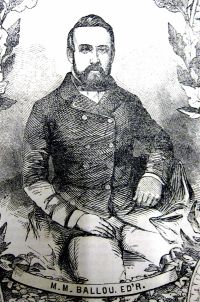
“ Sunday morning is the great market day of the week, the same as in all Mexican cities, when there is here a confusion of tongues that would silence the hubbub of the Paris Bourse. How a legitimate business can be accomplished under such circumstances is a marvel. Each line of trade has its special location, but confusion reigns supreme. ”
Market day
Definition and stakes
The theme of “market day” has been addressed by authors such as Henry Howard Harper, Helen Douglas-Irvine, Madeleine Black, William C. Van Antwerp and Charles Duguid. It is often associated with terms like stock, exchange, price, vegetable and finance.
Quotes about “market day”
 Philip Gibbs,
Adventures in Journalism
“ It was market day, and thousands of women had come in from the country districts, with market produce and great milk cans slung across their shoulders on big poles, glistening like quicksilver in the brilliant sunlight. ”
Clive Day, A history of commerce (1922)
“ The gain in regularity shows itself notably in institutions like the market, the fair, and the exchange. The old system of market-days, under which country people came to town on stated days to display their wares and enable housewives to lay in a supply of provisions, has given place to a steady flow of products through city shops and market halls to the consumers. Fairs have lost their significance in modern countries, because the volume of trade is now so great, and the instruments of trade are so highly developed, that commerce has developed into one permanent fair. ”
H. R. Wilton Hall, Social Life in England Through the Centuries
“ There is much to see in a market-place on a market-day. If the market-day is Saturday, you will find the place thronged with people, especially at night; and even quite small towns are then so crowded that you wonder where the people come from.Fairs, in the Middle Ages, provided for much of the wholesale trade of the country, and markets for the retail trade. The two were very much alike, and the rights 111 to hold an annual fair and a weekly market mostly went together. ”
Angus Buchanan, Exploration of Aïr (1921)
“ Once a week, on a set day, it is the custom of each village to hold market; and market-day constitutes the most important occasion in the routine of native life, for all are born traders, even in this impoverished territory of small productiveness, and outlying natives and the inhabitants of other villages travel eagerly, often long distances, with their quota of humble produce, to swell the concourse. Sunday was the day of market at Dambiri, so that there was unwonted stir about the place when we arrived, and much sound of tom-toms. ”
 Richard Jefferies,
Hodge and His Masters
“ In the crush are many ladies who would find their business facilitated by coming on a different day. But market-day is a tradition with all classes; even the gentry appear in greater numbers. If you go forth into the Market-place you will find it thronged with farmers. If you go into the Corn Hall or Exchange, where the corndealers have their stands, and where business in cereals and seeds is transacted; if you walk across to the auction yard for cattle, or to the horse depository, where an auction of horses is proceeding; everywhere you have to push your way through groups of agriculturists. ”
Various, Harper's New Monthly Magazine, No…
“ The market itself presents a beautiful scene. In the clear morning air of an autumn day the whole of the vast square is distinctly seen from one end to the other. The sky is red and golden with the newly-risen sun, and the rays falling on the fresh and vivid colors of the fruit and vegetables, brighten up the picture as with a coat of varnish. ”
“ Sunday is the principal market-day, when the country people for miles around bring in fruit, vegetables, flowers, pottery, and home-woven articles for sale. Men and women, sitting on the ground, patiently wait for hours to make trifling sales, the profit on which cannot exceed a few pennies, and often the poor creatures sell little or nothing. The principal market is a permanent building, occupying a whole block, or square. The area about which it is built is open in the centre ”
 Martin P. Nilsson,
Primitive Time-reckoning
“ But if the shifting sabbath is old, the question arises whether analogous periods exist in primitive time-reckoning. Certainly they do, and they are periods of a quite definite nature,—the market-weeks. There are market-weeks of three, four, five, six, eight, and ten days: that seven does not appear in any example must therefore be an accident. The market-week is spread over the whole earth at a more advanced stage of civilisation. The market-day is a rest-day, since the people go to the market: since they rest and gather together it is therefore a festival day. ”
Henry Howard Harper, The psychology of speculation (1926)
“ The market tipsters, the financial editors of newspapers, the brokers’ letters and all stock market literature, with but few exceptions, were crowing loud and boastfully for still higher prices, and after the whole group of stocks had risen in unison for a time, some individual stock was singled out every day or so, pushed into the forefront and skyrocketed to dizzying heights. The brokers and all the customers were delirious with joy and excitement. ”
Thomas Atwood, The History of the Island of Dominica
“ Sunday is the chief market day there, as it is in all the West Indies; on this day the market is like a large fair, the negros from the plantations, within eight miles of Roseau, come thither in great numbers, each one bringing something or other to dispose of for himself, often to the amount of three or four dollars; and many of them, who bring kids, pigs, or fowls, seldom return [180] home without fifty or sixty shillings, the produce of their articles. ”
Susanne R. Day, Round about Bar-le-Duc
“ Day after day we watched breathlessly for the communiqués; evening after evening we went to the market hoping for better news, but there was no lifting as yet in the storm-cloud that hung above the horizon. And still the refugees poured through. We spent the greater part of each day at the market now, snatching meals at odd hours, and turning our hands to anything. ”
Robert Gibbs, Press Briefing by Press Secretary Robert Gibbs…
“ I also believe that -- I mean, I think most economists would also tell you that an accumulation of news both over the weekend and on Monday impact the market on Tuesday, regardless of what individual policy moves might draw attention that day. ”
Edith Dunham, Jogging round the world (1905)
“ Market-day is a great event; everyone must go, and of course all the people in the country places try to grow the choicest vegetables and fruits, and raise the very best fowls. The flowers, too, offered for sale, are beautiful and very fragrant ”
William Harrison, Elizabethan England
“ If there happen to be such plenty in the market on any market day that they cannot sell [Pg 39] at their own price, then will they set it up in some friend’s house, against another on the third day, and not bring it forth till they like of the sale. If they sell any at home, beside harder measure, it shall be dearer to the poor man that buyeth it by twopence or a groat in a bushel than they may sell it in the market. ”
James P. Boyd, Stanley in Africa
“ Here good Father Anselmo, of the Ursulines, pours out a benediction upon the market and the awaiting people. When the gates are opened the police take their stations and the market is ready to receive the buyers and sellers of the day. Through the open portals into the market flows a stream of laughing, singing men and women. ”
Geo. T. Fairchild, Rural Wealth and Welfare: Economic Principles Illustrated and Applied in Farm Life
“ In large cities the brokers naturally unite for convenience of business in the so-called stock exchange, in which the market price of all current forms of indebtedness or deferred payments is fixed from day to day, or from hour to hour, by the higgling of the market, just as the price of produce is fixed in the produce exchange. Naturally, as in the case of produce, a fictitious business, purely speculative, grows up around the legitimate dealing [pg 163] in stocks and bonds. ”
James Melvin Lee, History of American Journalism (1917)
“ We also give audiences to visitors, gentlemen on business, and some of the loveliest ladies in New York, who call to subscribe Heaven bless them! At one we sally out among the gentlemen and loafers of Wall street find out the state of the money market, return, finish the next day's paper close every piece of business requiring thought, sentiment, feeling, or philosophy, before four o'clock. We then dine moderately and temperately read our proofs take in cash and advertisements, which are increasing like smoke and close the day by going to bed always at ten o'clock, seldom later. ”
William C. Van Antwerp, The Stock Exchange from Within
“ Every day we hear of combinations, Farmers’ Alliances, rural co-operative movements, etc., each designed to regulate the market for eggs, butter, potatoes, and such things, and each having for its purpose the very functions which govern a Stock Exchange in its own field—namely, the establishment of a fair price under the nearest possible approach to ideal conditions. ”
William C. Van Antwerp, The Stock Exchange from Within
“ Such things do not happen in the New York Exchange, for when there is a slump in any group of shares, instantly there gathers a number of individuals who are there for the very purpose of making a market. It may be a “soft” market, with wide fluctuations, but it is a market for all that, and the timely absence at an all-day luncheon of any one man or any group of men cannot possibly affect it. ”
Various, Harper's New Monthly Magazine, No…
“ On a Saturday—the coster's business day—it is computed that as many as 2000 donkey-barrows, and upward of 3000 women with shallows and head-baskets visit this market during the forenoon. About six o'clock in the morning is the best time for viewing the wonderful restlessness of the place, for then not only is the "Garden" itself all bustle and activity, but the buyers and sellers stream to and from it in all directions, filling every street in the vicinity. ”
Franklin Escher, Elements of Foreign Exchange: A Foreign Exchange Primer
“ Under the stimulus of some favorable development, for instance, which becomes known here only after the Stock Exchanges abroad are closed for the day, the New York market closes buoyant. The chances are that the receipt of the news abroad over night will make the London market open up strong in the morning. To buy stock right at the closing of the market here for the purpose of selling it out next morning in London at the opening is an operation not without risk, but one which is likely to make money. ”
 Annie Brassey,
A Voyage in the 'Sunbeam', Our Home on the Ocean for Eleven Months
“ Sunday, December 3rd.—At a quarter to five this morning some of us landed to see the market, this being the great day when the natives come in from the country and surrounding villages, by sea and by land, in boats, or on horseback, to sell their produce, and buy necessaries for the coming week. We walked through the shady streets Page 231 to the two covered market buildings, partitioned across with great bunches of oranges, plantains, and many-coloured vegetables, hung on strings. ”
 Honoré de Balzac,
The Firm of Nucingen
(1838)
“ A business which should consist in going out at night to look for goods to sell in the day would obviously be impossible. You find the instinct of forestalling the market in the very match-seller. How to forestall the market—that is the one idea of the so-called honest tradesman of the Rue Saint-Denis, as of the most brazen-fronted speculator. If stocks are heavy, sell you must. ”
Alfred Kingston, Fragments of Two Centuries: Glimpses of Country Life when George III. was King
“ Time was when the Royston market had commenced at a late hour, as it does now, but owing to the necessity of being late home, or the felt want of a jovial gathering at the market ordinary in times when the farmer himself worked and needed one day's relaxation, the fiat for change went forth on the 23rd October, 1782, and the hour was changed from 3 p.m. to 11 a.m.—an arrangement made possibly with a view to the pleasures of the market ordinary, and one under which, at any rate, that institution flourished most famously for fifty years or more. ”
 Henry Clews,
Fifty years in Wall Street
(1908)
“ A stock is bought up freely at New York because London is taking large amounts of it; a day or two later, the deliveries show that large holders connected 203with the management are unloading on the foreign market upon knowledge of facts damaging to the prospects of the property; the late buyers then rush to realize, and pocket a loss instead of a profit. ”
Clive Day, A history of commerce (1922)
“ In this practice is found the origin of the market, a medieval institution of which more will be said later. A market was a place appointed by the government, where bargains could properly be made; and only small exchanges of household produce could be made outside it, in the open country. Beginning in the need that was felt to prevent thieving it developed as a public institution, which the people found it profitable to extend as a means of collecting tolls and of regulating internal trade.35. Society organized to exist with the minimum of commerce ”
Hutton Webster, Early European History
“ TRADE AND COMMERCE MARKETS Nearly every town of any consequence had a weekly or semiweekly market, which was held in the market place or in the churchyard. Marketing often occurred on Sunday, in spite of many laws against this desecration of the day. Outsiders who brought cattle and farm produce for sale in the market were required to pay tolls, either to the town authorities or sometimes to a neighboring nobleman. ”
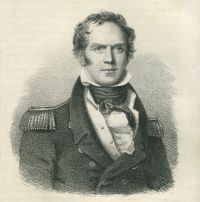 Hugh Clapperton,
Narrative of travels and discoveries in Northern and Central Africa…
(1826)
“ The market is crowded from sunrise to sunset every day, not excepting their Sabbath, which is kept on Friday. The merchants understand the benefits of monopoly as well as any people in the world; they take good care never to overstock the market, and if any thing falls in price, it is immediately withdrawn for a few days.—The market is regulated with the greatest fairness, and the regulations are strictly and impartially enforced. ”
William C. Van Antwerp, The Stock Exchange from Within
“ At each of the posts, and along the north wall, the specialists in these various groups of stocks are at work before the opening of the market, entering the day’s orders in their books, some with the rapid energy that betokens an active opening, others with an indifference that spells dulness in their particular line. ”
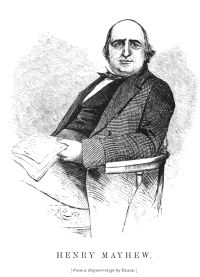 Henry Mayhew,
London Labour and the London Poor…
“ In the summer the dealers often go to market and lay out as much as 1s. “On Saturday morning, this time of year, I buys as many as nine hands—there’s more call for ’em on Saturday and Sunday morning than on any other days; and we always has to buy on Saturdays what we want for Sundays—there an’t no market on that day, sir. At the market sufficient creases are bought by the sellers for the morning and afternoon as well. In the morning some begin crying their creases through the streets at half-past six, and others about seven. ”
 Virginia Penny,
The Employments of Women: A Cyclopædia of Woman's Work
“ Watchmen are about the markets at all hours of the day and night, and in some markets an extra fee is paid by the sellers to secure attention to their stalls. At two o'clock in the morning, Washington market is fully lighted, and the farmers begin to arrive to sell to grocers. The grocers usually buy from four to five in summer, and from four to six in winter. Boarding-house keepers mostly buy from [Pg 160] seven to nine o'clock. Families buy during any of these hours, or later. All the markets are open by half past three. ”
Madeleine Black, A Terminal Market System: New York's Most Urgent Need
“ Every day a bulletin issued by the market commission sets out the wholesale prices, while a weekly list gives the retail prices, but in the latter case the note is added that the market commission will not be responsible for any controversy that may arise. All the stocks held by the market traders are insured by the municipality, though not to their full value. ”
Henry Howard Harper, After the stock market crash of November… (1930)
“ Many of these so-called investment trusts accumulated thousands upon thousands of highly speculative common shares that paid less than 2% income on their market value. Indeed one day in September, 1929, a statistician figured that the twelve most active stocks on the New York Stock Exchange averaged a return of only one and three-fifths per cent. ”
Clive Day, A history of commerce (1922)
“ A fair is the same kind of institution as a market, and grew up for similar reasons, but it represented a further step of development, for it attracted buyers and sellers from a far greater area, and served the needs of wholesale as well as retail trade. The fair is, of course, much less advanced than the modern exchanges (stock and produce) , from the fact that it was intermittent instead of being continuous, as well as for other reasons; but in the Middle Ages it was the means by which commerce grew strong, and the prosperity of commerce could be measured by the prosperity of fairs. ”
Related terms
Authors who wrote about “market day”
Henry Howard HarperHelen Douglas-IrvineMadeleine BlackWilliam C. Van AntwerpCharles DuguidClive DayH. R. Wilton HallHenry ClewsJohn James ButlerGeo. T. FairchildFranklin Escher Frank ChodorovEarle Ashley Walcott
 David Ricardo
 Adam SmithSusanne R. Day
 Edwin LefevreChester Arthur PhillipsThomas Atwood
 William R. Day
Henry ClewsJohn James ButlerGeo. T. FairchildFranklin EscherFrank ChodorovEarle Ashley WalcottDavid RicardoAdam SmithSusanne R. DayEdwin LefevreChester Arthur PhillipsThomas AtwoodWilliam R. Day