Moving picture

Definition and stakes

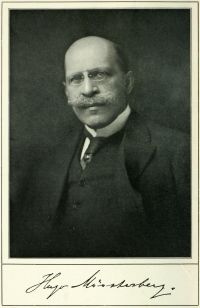
Walter Julius Bloem,  The soul of the moving picture (1924)

“ The moving picture is an art based on feeling, and not on thought. It has to do with the emotions rather than with the intellect. The man who goes to the moving picture wants to experience certain incidents, not by thinking about them, but by feeling them. Just as music arouses the feelings through tones, just so does the moving picture attempt to solve, not the riddle of the human brain, but of the human soul. A moving picture is a feeling expressed through gestures. ”
Source: Gutenberg

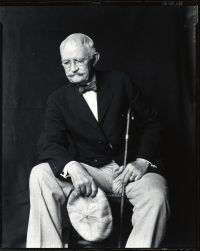
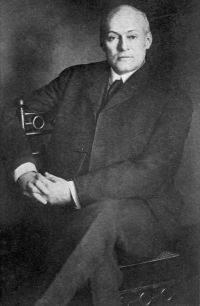
Portrait of Arthur E. Bostwick Arthur E. Bostwick,  A Librarian's Open Shelf: Essays on Various Subjects

“ Here, of course, is where we make connection with the moving picture, whose fascinating realism and freedom from the taint of the footlights have perhaps been sufficiently insisted upon in what has been already said. In the moving picture, with the possibility of realistic backgrounds such as no skill, no money, no opportunity could build up on the ordinary stage—distant prospects, marvels of architecture, waving trees and moving animals—comes the ability of passing from one environment to another, on the other side of the globe perhaps, in the twinkling of an eye. ”
Source: Gutenberg

Portrait of Eden Phillpotts Eden Phillpotts,  The Red Redmaynes

“ We accept the convention of the moving picture, the light and darkness, the tones and half tones, because these moving stains and shadows take the shape of familiar objects and tell a coherent story, showing life in action. But we know, subconsciously, all the time that it is merely an imitation of reality, as in the case of a picture, a novel, or a stage play. ”
Source: Gutenberg

Get perspective with Kwize: daily news enlightened by great literature