Musk deer

Definition and stakes

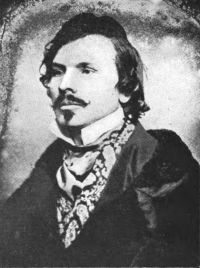
Portrait of William T. Hornaday William T. Hornaday,  Popular Official Guide to the New York Zoological Park…

“ Its flesh is most excellent food. From its peculiar, yapping cry, many times repeated, it is often called the Barking Deer. It breeds readily in captivity, and its bright fawn color attracts to it much attention.
The Musk Deer, (Moschus moschiferus) , of northern India, Tibet and Southern China is the creature which produces the well-known musk perfume of commerce. The product is secreted by the male in the “rutting” season. This species is one of the smallest of the true deer.
”
Source: Gutenberg

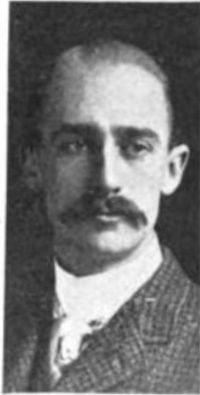
Portrait of Clive Phillipps-Wolley Clive Phillipps-Wolley,  Big Game Shooting, volume 2 (of 2…

“ The hair of the musk deer seems always loose, and comes out readily. A musk deer just grazed by a bullet (by no means an [Pg 287] uncommon occurrence with so small a beast) seems to vanish in a cloud of hair. The male has an abdominal gland containing more or less musk according to the season, it being fullest during the rutting season in the winter; this pod is valuable (a good one is worth Rs. 5 in the jungle) , and leads to the musk deer being so mercilessly snared and hunted by natives that in many districts they are almost extinct. ”
Source: Gutenberg

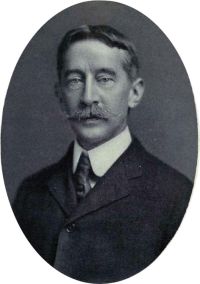
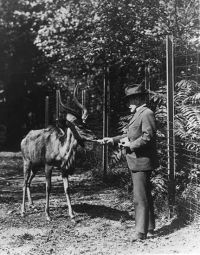
Portrait of Roy Chapman Andrews Roy Chapman Andrews,  Across Mongolian Plains

“ Running to the spot where the head had been I found a beautiful brown-gray animal lying behind a bush. It was no larger than a half-grown fawn, but on either side of its mouth two daggerlike tusks projected, slender, sharp and ivory white. It was a musk deer—the first living, wild one I had ever seen. Even before I touched the body I inhaled a heavy, not unpleasant, odor of musk and discovered the gland upon the abdomen. It was three inches long and two inches wide, but all the hair on the rump and belly was strongly impregnated with the odor. ”
Source: Gutenberg

Get perspective with Kwize: daily news enlightened by great literature