Mythopoeia

Definition and stakes

Aegineta Paulus,  The seven books of Paulus Ægineta… (1844)

“ If the bone is not diseased, but is denuded of flesh all around, it is to be sawn in the same manner, for bones which are disengaged from the other parts all around cannot possibly incarnate. In like manner, the extremity of a bone near a joint, if diseased, is to be sawn off; and often, if the whole of a bone, such as the ulna, radius, tibia, or the like, be diseased, it is to be taken out entire. But if the head of the thigh-bone, or pelvis, or a vertebra of the spine be diseased, we must not attempt to operate upon them for fear of the adjoining arteries. ”
Source: Gutenberg

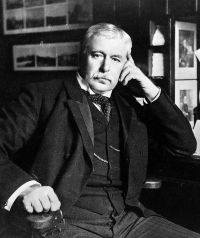
Portrait of Patrick Manson Patrick Manson,  Tropical Diseases (1919)

“ As the foot enlarges the leg atrophies from disuse; so that in the advanced disease an enormously enlarged and misshapen foot, flexed or extended, is attached to an attenuated leg consisting of little more than skin and bone. In some the tibia, or, if the hand is the seat of invasion, the bones of the forearm become involved; in others the disease at first may be confined to a toe, or a finger, or other limited area. In a very few instances the seat of the disease is the knee, thigh, jaw, or neck. ”
Source: Wikisource

Edward Adams,  Surgery, with Special Reference to Podiatry

“ In a work of this limited size the sensibility of the various tissues cannot be fully treated but it should be borne in mind that the integument and the subcutaneous tissue, fat and muscles as well as the tendons, their sheaths, the muscles and periosteum and perichondrium covering the bones and cartilages throughout the body, are all highly sensitive to pain. It is also equally true that the bone substance, the bone marrow, and the cartilages are devoid of any of the four modalities of sensation. ”
Source: Gutenberg

Get perspective with Kwize: daily news enlightened by great literature