Oil paint

Definition and stakes

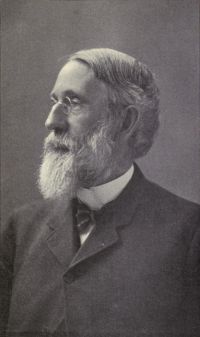
James Bartlett,  1911 Encyclopædia Britannica (1911)

“ Oil paints are made up of four parts—the base, the vehicle, the solvent and the driers. Pigment may be added to these to obtain a paint of any desired colour.
There are several bases for oil paint, those most commonly used for building work being white lead, red lead, zinc white and oxide of iron. White lead is by far the commonest of bases for paint. When pure it consists of about 75% carbonate of lead and about 25% of lead hydrate. It is mixed with 6 or 7% by weight of pure linseed oil, and in this form is supplied to the painter.
”
Source: Wikisource

George D. Armstrong,  Cyclopedia of Painting (1908)

“ Oil paint is apt, after a time, to present a greasy surface, so that it will ciss, even if oil color is laid over it, that is to say, the color will not lie, but will curl up into small beads. This tendency, as well as the want of affinity between water and oil, makes it necessary to prepare the ground for the reception of the graining color. ”
Source: Wikisource

George Terry,  Pigments, Paint and Painting: A practical book for practical men

“ All organic substances are liable to a more or less rapid oxidation, especially if exposed to light and heat. Oil is no exception to this rule; but it seems that, in its pure state, it is much more durable than when mixed with other substances. Although ground-nut-and poppy-oils are sometimes employed by artists where freedom from colour is essential, yet linseed-oil is the vehicle of by far the larger proportion of paints used both for artistic and general purposes.
Oil-paint appears to have been unknown to the ancients, who used various vehicles, chiefly of animal origin.
”
Source: Gutenberg

Get perspective with Kwize: daily news enlightened by great literature