Optical glass

Definition and stakes

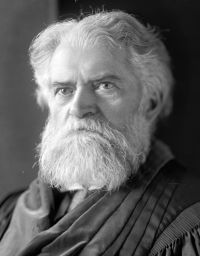
Portrait of Simon Newcomb Simon Newcomb,  Side-Lights on Astronomy and Kindred Fields of Popular Science

“ The construction of the object-glass requires two completely distinct processes: the making of the rough glass, which is the work of the glass-maker; and the grinding and polishing into shape, which is the work of the optician. The ordinary glass of commerce will not answer the purpose of the telescope at all, because it is not sufficiently clear and homogeneous. OPTICAL GLASS, as it is called, must be made of materials selected and purified with the greatest care, and worked in a more elaborate manner than is necessary in any other kind of glass. ”
Source: Gutenberg

C. A. Ealand,  The Romance of the Microscope

“ On account of this property of glass it must be cooled very slowly indeed; the process is known as annealing.
Optical glass unlike most other kinds must be manufactured in thick blocks—some of the large lenses on telescopes are of considerable thickness. All glass for scientific instruments must also be homogeneous, which our dictionary tells us means of the same kind. To be more explicit each particle of optical glass should be precisely the same in composition and properties as every other particle.
”
Source: Gutenberg

Walter Rosenhain,  Glass Manufacture

“ These are the general physical and chemical qualities which are essential in all good glass, but especially emphasised by the fact that the requirements for optical glass are more stringent than for any other variety of the material. Thus chemical stability is of the greatest importance, for the best lenses would soon become useless if the action of atmospheric moisture were to affect them appreciably—the polished surfaces would rapidly become dull and the whole lens would soon be rendered useless. ”
Source: Gutenberg

Get perspective with Kwize: daily news enlightened by great literature