Orbit (anatomy)

Definition and stakes

active 1883-1912 James Weir,  The Energy System of Matter: A Deduction from Terrestrial Energy Phenomena

“ In virtue of the gravitative attraction or gravitation field between the two, they will mutually attract one another in their motion, and each will, in consequence, be deflected more or less out of that orbital path which it would normally pursue in the absence of the other. This attraction will naturally be greatest when the planets are in the closest proximity; the planet having the widest orbit will then be drawn inwards towards the central axis, the other will be drawn outwards. ”
Source: Gutenberg

Portrait of George Biddell Airy George Biddell Airy,  Popular Astronomy: A Series of Lectures Delivered at Ipswich (1881)

“ That part of the force which is in the direction NM, perpendicular to the orbit, produces an effect similar to that which gravity produces in the motion of a cannon ball : it makes the orbit curved. But that part which acts in the direction of OM, parallel to the orbit, produces a different effect; it accelerates the planet's motion in its orbit. Thus, in going from l towards L, the planet is made to go quicker and quicker. ”
Source: Wikisource

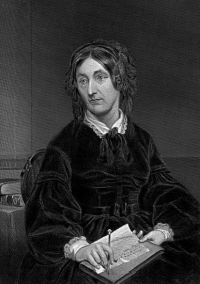
Portrait of Mary Fairfax Somerville Mary Fairfax Somerville,  A Preliminary Dissertation on the Mechanisms of the Heavens (1831)

“ From the rotation of the sun, there is every reason to believe that he has a progressive motion in space, although the direction to which he tends is as yet unknown; but in consequence of the reaction of the planets, he describes a small irregular orbit about the centre of inertia of the system, never deviating from his position by more than twice his own diameter, or about seven times the distance of the moon from the earth. ”
Source: Wikisource

Get perspective with Kwize: daily news enlightened by great literature