“ It is doubtful whether the owner of a large collection of Orchids gets a greater amount of pleasure than the beginner starting with but one Orchid house, provided the owner of the single structure is careful in selecting his plants.In cases where only one Orchid house is possible, and a more or less general collection of plants is desired, that house should be heated as an intermediate house. The single Orchid house has often been the starting-point of more extensive culture. ”
Orchid house
Definition and stakes
The theme of “orchid house” has been addressed by authors such as James O'Brien, Frederick Boyle, Jas. Bateman, Thomas Moore and Various. It is often associated with terms like greenhouse, plant, temperature, flower and garden.
Quotes about “orchid house”
Various, Popular Science Monthly (1890)
“ The glass houses at Kew are extensive structures. The Winter Garden covers more than an acre and a half of ground. The Palm House is three hundred and sixty-two feet long and one hundred feet wide. The new Orchid House is one hundred and forty feet in length, adding the two wings together. This last is not wholly satisfactory—to the orchid enthusiast an orchid house never is, nor can be. Supplemented, however, by a low, neat range, from which the public is excluded, nearly all the 1,400 species which form the national collection thrive admirably. ”
 Thomas Moore,
The Orchid Album, Volume 1
“ The plant being very compact in growth, occupies but little space, so that anyone having a small vacant place in the Orchid-house or plant stove, might readily grow it. It will thrive either in a basket suspended from the roof of the house, or in a pot planted in sphagnum moss, with good drainage, and a moderate supply of water during the summer season, while in winter only just sufficient should be given to keep the moss damp. ”
Jas. Bateman, A Monograph of Odontoglossum
“ All went well so long as the temperature of the house did not exceed 70°, but when the winter had passed away and they had to face the intense heat at which the Orchid-houses of that period were ordinarily maintained, they then quickly lost their vigour and before a twelvemonth had passed were all gone, victims—like a multitude of other invaluable plants—to our then ignorance of the conditions under which alone the Orchids of cool countries could be expected to thrive! ”
“ The natural earth is the best base for an Orchid house, and open wood-work trellises placed on the natural earth are far preferable to tiled paths, therefore their use is strongly recommended. Beneath the central stage, from end to end, deep tanks with cemented interior should be provided, because rain-water [Pg 10] is essential for watering the plants. To create a good appearance, narrow, ornamental rockeries may be arranged at the edge of the side staging and beneath it, and in any part of the basement available. ”
Frederick Boyle, About Orchids: A Chat
“ Under such constant drenching the leaf-beds decay, throwing up those gases and vapours in which the orchid delights at home. Thus the amateur should arrange his greenhouse, so far as he may. But I would not have it understood that these elaborate contrivances are essential. If you would beat Nature, as here, making invariably such bulbs and flowers as she produces only under rare conditions, you must follow this system. But orchids are not exacting.The house opens, at its further end, in a magnificent structure designed especially to exhibit plants of warm species in bloom. ”
“ It is more in accordance with nature to grow epiphytal Orchids of convenient size in baskets to be suspended from the roof of the Orchid house, and in the case of subjects reputedly difficult to grow the best results are often attained in this way. At the same time, this is due as much to the plants being placed near to the glass of the roof, as to the fact that the air has better access to the roots than when the plants are in pots. ”
Thomas Moore,
The Orchid Album, Volume 1
“ The Estate is situated in an open part of the country, and the Orchid-houses are built on the side of a hill where they get the full light and sun, while they are sheltered from the driving winds; these houses are, indeed, all that can be desired, the requisitions of the various classes of plants having been well studied. ”
“ Great care has to be taken to obtain a reliable quality of paint that will not harm the plants, and to keep the house vacant for as long a time as possible for the gases from the paint to escape. After the plants are returned to the house some ventilation must be maintained day and night for a time. Tar should not be used inside an Orchid house for any purpose. ”
Thomas Moore,
The Orchid Album, Volume 3
“ Beddoes, the gardener at Birkdale, grows this plant in the same house with Cattleya Trianæ, of which Mr. Percival has a remarkably fine collection. The house in which they are grown, is a good-sized one, and is so built and glazed that there is plenty of light admitted. It is also a well ventilated structure, so that plenty of water may be used about the house in their growing season, when the temperature is right both inside and outside the house. This a most important item in the successful cultivation of Orchids, as well as of other plants. ”
Thomas Moore,
The Orchid Album, Volume 3
“ Disa grandiflora.—We received a wonderfully fine spike of this superb Orchid from Mr. Thomas Speed, the Duke of Devonshire’s gardener, at Chatsworth. The spike was two feet six inches in length from the pot, and bore twelve flowers of large size and fine colour—a bright scarlet and crimson, the lip veined with pink, which gives a nice contrast. It is a most charming cool-house Orchid that every one may grow who has an ordinary greenhouse. Mr. Speed is a most successful cultivator of this fine plant. ”
Thomas Moore,
The Orchid Album, Volume 1
“ The flowers, which are rather large for so small a plant, being of a rich and brilliant colour, become rather effective; and though, of course, they do not compare at all in gorgeous beauty with those of many of the larger-flowered Orchids, they are by no means to be despised even from the decorative point of View; indeed, when grown on a block, as represented in the accompanying Plate, and suspended from the roof of the house, the plant forms a very pretty and distinct object, occupying, as it does, but a small space in which it displays much beauty and attractiveness. ”
Thomas Moore,
The Orchid Album, Volume 2
“ We mention this in order that cultivators may know and understand that there are various Orchids which can be grown, and grown well, in company with other subjects in an ordinary plant stove. We ourselves have found that many of the species do best in a house where such plants as Crotons, &c., are grown. Dendrobiums especially like this treatment, under which the bulbs attain much larger dimensions, and become better ripened. It is quite an erroneous idea that Orchids all require special houses for their successful cultivation. ”
Thomas Moore,
The Orchid Album, Volume 2
“ There are in our collections many forms of this species, and most of them are well worthy of cultivation, the flowers being for the most part good in shape and of a pure white, which is a colour generally sought after by those who have a keen taste for floral beauty. A hundred of these gems can be cultivated in a small space, and they can now be purchased at so cheap a rate that they are within reach of everyone who can afford to erect a small house; and being really cool Orchids they require but little fire heat at any time, and none whatever during the summer months. ”
Thomas Moore,
The Orchid Album, Volume 1
“ There is no house specially devoted to the cultivation of this class of plants, but they are grown in different houses intermixed with stove-flowering plants, foliage plants, and ferns, and in no instance have we seen East Indian Orchids grown to greater perfection. ”
Thomas Moore,
The Orchid Album, Volume 1
“ The glass roof of the structure upon which the sun is shining becomes very hot, even when shaded with ordinary blinds; but if Raised Blinds are used a current of air is allowed to pass over the entire surface of the roof, and the glass is kept comparatively cool. The effect of this is to decrease very appreciably the internal temperature of the house; and the moisture, which would otherwise be dried up by the burning heat of the sun, produces a nice humid genial atmosphere in which Orchids delight. ”
Frederick Boyle, The Woodlands Orchids, Described and Illustrated
“ At least the broad fact is so well established that one might almost fancy Baron Schröder’s Odontoglots would do better, if that were possible, in a ‘lean-to.’There are three glass partitions, but from either door the full length of the house is seen; a pleasing vista even when there are no flowers—all smoothly green on one hand, rocky bank upon the other, studded with ferns and creepers and [Pg 222] an orchid here and there. Why these plants dislike to stand in a long house open from end to end is a question none the less puzzling because every gardener is ready to explain it. ”
“ The wood-work, when of pitch-pine or other hard wood planed smooth, may be oiled or varnished, painting being undesirable for new houses. In course of time, however, painting has to be resorted to, and it is one of the most trying operations about the Orchid houses. ”
Thomas Moore,
The Orchid Album, Volume 1
“ By their agency our Orchid houses may be kept gay for several months in the most dreary time of the year, for when there is a number of plants they may be flowered in succession. The plants can now be bought at a reasonable price, as, in consequence of the large importations of them, they have become plentiful. ”
Thomas Moore,
The Orchid Album, Volume 1
“ They occupy 67 but little space in the Orchid-houses, and are best grown in small pans suspended near the glass where they have the full benefit of the light, but must be shaded from the sun since their thin-textured leaves would suffer injury from too complete an exposure. ”
Thomas Moore,
The Orchid Album, Volume 2
“ The Orchid houses at Oakleigh are well arranged, so that the different temperatures required by plants coming from different localities are readily obtainable, and the plants being grown near the glass they have plenty of light. This is a great advantage to Orchids generally, as by this means the growths get better ripened, and this enables the plants to flower more freely, and to produce flowers of a richer colour. ”
Thomas Moore,
The Orchid Album, Volume 1
“ This genus of Orchids does not comprise so many species as many others, but among those which are known and introduced, are some which make very useful autumn and winter flowering subjects, and which are well adapted for decorating our stoves and Orchid houses. Amongst them occur some of the oldest of cultivated Orchids, such as are generally to be met with in good old-fashioned places. ”
Frederick Boyle, About Orchids: A Chat
“ Not only do they persist in escaping; more than that, they decline to catch insects, sitting motionless all day long—pretty, if you like, but useless. The fact is, that all these creatures are nocturnal of habit. Very few men visit their orchid-houses at night, as I do constantly. ”
Frederick Boyle, About Orchids: A Chat
“ It is astonishing to me that so few people grow orchids. Every modern book on gardening tells how five hundred varieties at least, the freest to flower and assuredly as beautiful as any, may be cultivated without heat for seven or eight months of the year. It is those "legends," I have spoken of which deter the public from entertaining the notion. An afternoon at an orchid sale would dispel them. ”
Thomas Moore,
The Orchid Album, Volume 3
“ Cœlogyne coronaria, Lindley, Botanical Register, 1841, misc. 178.Eria coronaria, Reichenbach, in Walpers’ Annales Botanices Systematicæ, vi., 271.The Orchid, of which we now submit a figure, is a very pretty free-growing species; it is also distinct from any other Orchid, and one well worthy a place in any collection. Almost every one who sees it in flower admires it, not, perhaps, so much for its showy character, as for its neat pleasing inflorescence and fragrant flowers. There are admirers of small flowered Orchids as well as of those with larger and more showy blossoms. ”
Thomas Moore,
The Orchid Album, Volume 2
“ We here present a picture of one of our oldest cultivated Orchids, and one which, we believe, is a universal favourite, for no person who is fortunate enough to see this grand old plant in flower, can fail to admire its beauty. The flowers make their appearance, too, when Orchid blossoms are scarce, and at our autumn exhibitions it becomes invaluable on this account. ”
Thomas Moore,
The Orchid Album, Volume 3
“ We have no hesitation in stating that this is the most wonderful Orchid that has been introduced for many years—one which all growers will be delighted to possess, as it belongs to a most noble section of the Orchid family, of which there have long been many beautiful species in cultivation. ”
Thomas Moore,
The Orchid Album, Volume 2
“ They are not only esteemed for their fine showy flowers but for their long lasting qualities, and they can nearly all be grown in houses with a low temperature. The species we now bring before the notice of our readers is a most distinct and desirable one, which has been known in cultivation for many years. The drawing from which our plate was prepared was taken from a plant that flowered in the collection of W. Salt, Esq., of Ferniehurst, Shipley, Yorkshire, who has a grand lot of cool Orchids, which are, moreover, exceedingly well cultivated. ”
“ Pitch-pine or teak, being durable, are good woods for the wood-work, and, in any case, the use of cheap, soft [Pg 11] timber should be avoided. In glazing, only a thin bedding of putty should be used, and the glass should be bradded on the upper side, as top putty when decaying or on becoming loose is worse than useless, and tends seriously to foul the water in the cisterns. Span-roofed houses 12 feet to 15 feet wide, and of proportionate elevation, are suitable for ordinary Orchids, but if specimen plants are desired a loftier house will be necessary. ”
Various, Encyclopaedia Britannica, 11th Edition…
“ Orchard Houses are span-roofed or lean-to structures, in which various fruits are cultivated without the aid of artificial heat. Peaches, nectarines, apricots, cherries and the more tender varieties of plums and pears succeed well in houses of this kind. The types of houses in general use are substantially as shown in fig. 7, for span-roofed, and as fig. 5, for lean-to; in each case without the heating apparatus. The orchard house is among the most generally useful of all garden structures. ”
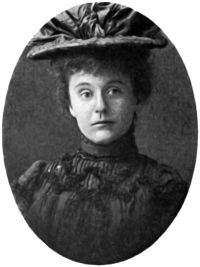 Frances Theodora Parsons,
How to know the wild flowers
(1893)
“ Spiranthes cernua. Orchis Family (p. 17) . Stem.—Leafy below, leafy-bracted above, six to twenty inches high. Leaves.—Linear-lance-shaped, the lowest elongated. Flowers.—White, fragrant, the lips wavy or crisped; growing in slender spikes.This pretty little orchid is found in great abundance in September and October. The botany relegates it to “wet places,” but I have seen dry upland pastures as well as low-lying swamps profusely flecked with its slender, fragrant spikes. ”
Thomas Moore,
The Orchid Album, Volume 2
“ The Dendrobes form a large and splendid group of Orchids, in which may be found some of the finest examples of the Orchid family. The species we have now the pleasure to bring before our readers is of recent introduction, and is one of the most beautiful and distinct of the whole family, not only as regards its flowers, which are very attractive, but also on account of its very peculiar jointed stems, of which a better idea will be obtained from our illustration than from any minute description. ”
“ In laying out a garden there must be protection from the north winds, and if the hills are wooded thus much is gained for profit as for ornament. Every homestead supposes a wood-lot and forest paths for walking and meditation. So the garden claims some shading down from pasture fields and the wilder scenery skirting it. The orchard is an improvement on the garden, and holds a nobler relation to the house and its occupants. Without suitable ornaments and enclosures, these must be set to the side of the farm solely, not to the house, humanity, nor art. ”
Thomas Moore,
The Orchid Album, Volume 1
“ The bulbs sometimes shrivel when they flower too freely; if this is observed do not allow the blossoms to remain too long on the plants, as they will keep a good time in water when cut from the plant. Being of a graceful character they are well adapted for the decoration of drawing-room stands, in which, if intermixed with foliage and other flowers, they help to produce a very charming effect. Indeed no flowers are so useful as Orchids for decorative purposes, as they last so long when cut. ”
Related terms
Authors who wrote about “orchid house”
James O'BrienFrederick BoyleJas. BatemanThomas MooreVarious Edith Wharton
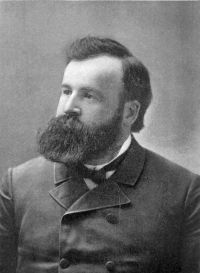 W. Hamilton GibsonFrances Theodora Parsons
 Amos Bronson Alcott
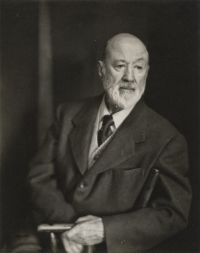 Charles Ives
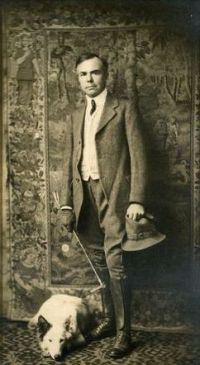 Melville Davisson Post
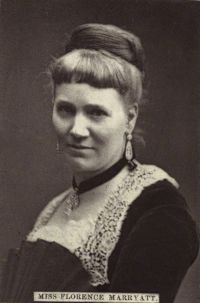 Florence MarryatEdna Worthley Underwood
 Shirley HibberdJames E. Homans, editor
 Walt Whitmangardener William Keane
 Robert Frost
 Alexander Pope
 Leo Tolstoy
Thomas MooreVariousEdith WhartonW. Hamilton GibsonFrances Theodora ParsonsAmos Bronson AlcottCharles IvesMelville Davisson PostFlorence MarryatEdna Worthley UnderwoodShirley HibberdJames E. Homans, editorWalt Whitmangardener William KeaneRobert FrostAlexander PopeLeo Tolstoy