Ore (mineral)

Definition and stakes

Arthur J. Hoskin,  The Business of Mining

“ Ore is a natural aggregation of one or more minerals from which useful metal may be profitably extracted.
There is, then, no such thing as "pay ore" or "non-pay ore," expressions still quite common among miners and prospectors of the uneducated types. Prof. James F. Kemp, probably America's best-posted writer upon the subject, in an attempt to formulate one acceptable and unchangeable meaning for the word ore, says, "In its technical sense, an ore is a metalliferous mineral or an aggregate of such minerals, more or less mixed with gangue, and capable of being won and [19] treated at a profit.
”

Source: Gutenberg

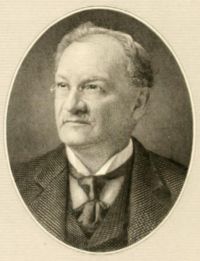
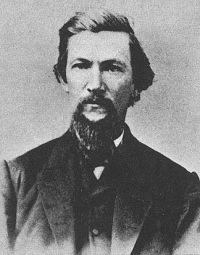
Portrait of James Furman Kemp James Furman Kemp,  1911 Encyclopædia Britannica, Volume 18… (1911)

“ When we compare the first and second tabulations with the third it is at once apparent that with the possible although only occasional exception of iron the production of an ore-body from the normal rocks which constitute the outer mass of the earth requires the local concentration of each of the metals by one or several geological processes, and to a degree that is only occasionally developed in the ordinary course of nature. ”
Source: Wikisource

Portrait of James Furman Kemp James Furman Kemp,  1911 Encyclopædia Britannica, Volume 18… (1911)

“ Replacement implies the precipitation of the ore and gangue, molecule by molecule, in the position of the original minerals but without, as in pseudomorphs, the necessary reproduction of crystalline forms. Some waterway must of course introduce the ore-bearing solutions, but it may be slight compared with the great size of the resulting ore-bodies. Lead and zinc ores, often carrying some silver, are those most widely distributed, as they were also the earliest recognized in deposits of this character. More than any other metals their association with limestone is pronounced. ”
Source: Wikisource

Get perspective with Kwize: daily news enlightened by great literature