Painted glass

Definition and stakes

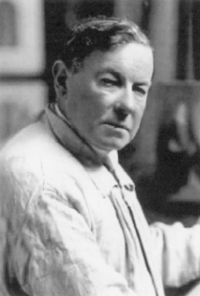
Portrait of Christopher Whall Christopher Whall,  Stained Glass Work: A text-book for students and workers in glass

“ For no one, I suppose, ever took his first batch of painted glass out of the kiln without disappointment and without wondering what use there is in such an art. For the painting when it went in was grey, and silvery, and sharp, and crisp, and firm, and brilliant. Now all is altered; all the relations of light and shade are altered; the sharpness of every brush-mark is gone, and everything is not only "washed out" to half its depth, but blurred at that. Even if you could get it, by a second painting, to look exactly as it was at first, you think: "What a waste of life! ”
Source: Gutenberg

William Frederic Faber,  Stained Glass Windows: An Essay… (1900)

“ In the early period of the art, beginning in the eleventh century and running parallel with the development of Pointed (commonly called Gothic) Architecture, only true stained glass was used. The use of enamel paints applied to the surface to produce a different color marks also the beginning of the decadence of the art; for the glory of true glass is in its jewel-like quality, its color being within itself and all absolutely translucent, while a painted glass will always be necessarily dull in comparison. ”
Source: Gutenberg

Lewis F. Day,  Windows: A Book About Stained & Painted Glass

“ In painted glass, on the other hand, the colour is not in the glass but upon it, more or less firmly attached to it by the action of the fire. A metallic colour which has some affinity with glass, or which is ground up with finely powdered glass, is used as a pigment, precisely as ceramic colours are used in pottery painting. The painted glass is then put into a kiln and heated to the temperature at which it is on the point of melting, whilst the colour actually does melt into it. ”
Source: Gutenberg

Get perspective with Kwize: daily news enlightened by great literature