Plant physiology

Definition and stakes

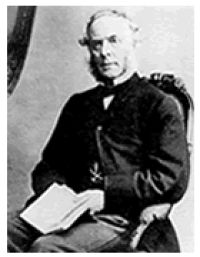
Julius Ritter von Wiesner Smithsonian Report/1898 (1899)

Like all other sciences, plant physiology has developed in response to the demands of life. As physics and chemistry had their basis in the industries, so plant physiology grew by each experience gathered from agriculture, horticulture, and sylviculture. Even if the origin of plant physiology be not historically demonstrable as a result of the demands of practical life, still a portion of our terminology would bear witness to the correctness of the assumption.
Source: Wikisource

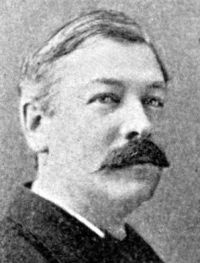
Portrait of Frances Theodora Parsons Frances Theodora Parsons Plants and their children (1896)

They breathe when the leaf mouths take from the air the oxygen, and give back to it carbonic-acid gas.
The veins and veinlets, of which you see so many running through a leaf, act in something the same way as the water pipes of a city; for through these veins the watery food, the earth broth, is carried to the different cells.
When one knows all that we know even now about a plant, one looks at a tree covered with leaves with a good deal of admiration.
Source: Gutenberg

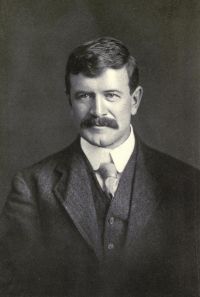
Asa Gray The Elements of Botany, For Beginners and For Schools

These abound in the cells of all common leaves and the green rind of plants, wherever exposed to the light. The green color is seen through the transparent skin of the leaf and the walls of the containing cells. Chlorophyll is essential to ordinary assimilation in plants: by its means, under the influence of sunlight, the plant converts crude sap into vegetable matter.
418. Far the largest part of all vegetable matter produced is that which goes to build up the plant's fabric or cellular structure, either directly or indirectly.
Source: Gutenberg

Get perspective with Kwize: daily news enlightened by great literature