Plasmodium

Definition and stakes

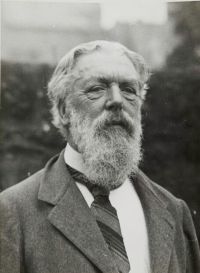
Portrait of Woods Hutchinson Woods Hutchinson,  Preventable Diseases

“ The only thing that makes any knowledge unpractical is our more or less temporary ignorance of how to apply it. The first question which instantly raised itself was, "How did the plasmodium get into human blood?" The very sickle-shape of the plasmodium turned itself into an interrogation mark. The first clew that was given was the new and interesting one that this organism was a new departure in the germ line in that it was an animal, instead of a plant, like all the other hitherto known bacilli, bacteria, and other disease-germs. ”
Source: Gutenberg

Thomas R. Henry,  The Strangest Things in the World… (1958)

“ The nuclei in the plasma still present the same appearance as those observed in the streaming plasmodium. In about another hour these nuclei show the beginning of division. As this process develops the plasma becomes separated in masses of two spores capacity. An hour later the nuclei have divided and the young spores are forming. Their color rapidly changes. In about the first twenty hours after the first concentration of the fragments of the plasmodium they have matured and present the appearance of minute black pins standing in regular order on wood. ”
Source: Gutenberg

Joseph Jackson Lister,  1911 Encyclopædia Britannica (1911)

“ The plasmodia move slowly about over or in the substratum, concentrating in regions where food supply is abundant, and leaving those where it is exhausted.
On examining under the microscope a film which has spread over a cover-slip, the channels are seen to be streams of rapidly moving granular protoplasm. This movement is rhythmic in character, being directed alternately towards the margin of an advancing region of the plasmodium, and away from it.
”
Source: Wikisource

Get perspective with Kwize: daily news enlightened by great literature