Polar cap

Definition and stakes

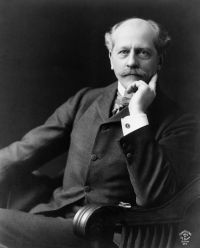
Portrait of Percival Lowell Percival Lowell,  Mars (1896)

“ For the polar cap is the most brilliant part of the disk; and for the same reason that any bright body seems larger than a dark one of the same size, it dilates the planet unduly in that direction. The resulting effect is further complicated by the fact that the polar cap is eccentrically situated with regard to the pole of rotation, as we shall see later; and as the pole is tilted, the cap is sometimes on the edge of the disk and the irradiation in consequence large, and sometimes well on the disk itself where its irradiation is little or nothing. ”
Source: Wikisource

Portrait of Percival Lowell Percival Lowell,  Mars (1896)

“ Having thus followed to its vanishing point the polar cap, we will now return to it in the heyday of its youth, in June, 1894, when it was girdled by its broad blue belt. We have seen that we have reason to believe this to be in all probability a polar sea, a real body of water. There is, therefore, water on the surface of Mars. We also mark that this body of water is ephemeral. It exists while the ice-cap is melting, and then it somehow vanishes. What becomes of it, and whether there be other bodies of water on the planet, either permanent or temporary, we will now go on to inquire. ”
Source: Wikisource

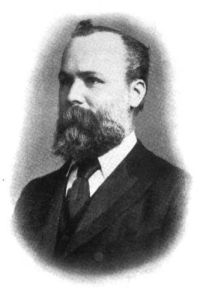
Portrait of E. Walter Maunder E. Walter Maunder,  The Science of the Stars

“ Round the pole in winter a broad white cap forms, which begins to shrink as spring comes on, and may entirely disappear in summer. No corresponding changes have been observed on the Moon, but it is easy to find an analogy to them on the Earth. Round both our poles a great cap of ice and snow is spread—a cap which increases in size as winter comes on, and diminishes with the advance of summer—and it seems a reasonable inference to suppose that the white polar caps of Mars are, like our own, composed of ice and snow. ”
Source: Gutenberg

Get perspective with Kwize: daily news enlightened by great literature