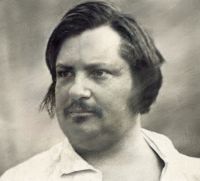
 Honoré de Balzac,
The Works of Honoré de Balzac: About Catherine de' Medici…
Honoré de Balzac,
The Works of Honoré de Balzac: About Catherine de' Medici…
“ Power is action; the electoral principle is discussion. No political action is possible when discussion is permanently established. ”
Honoré de Balzac,
The Works of Honoré de Balzac: About Catherine de' Medici…
“ Power is action; the electoral principle is discussion. No political action is possible when discussion is permanently established. ”
George Thomas Daly, Catholic Problems in Western Canada
“ We believe in popular rule through political action, but as to details we are on a search for improvement. We ask you to learn our language and our institutions and then give us the benefit of your best thought on ways and means for the improvement of our machinery for democratic government. The bars are down for the frankest criticism from men and women who have the democratic patience to trust their proposals to peaceful procedure. ”
James Rees, Foot-prints of a letter carrier…
“ Action, action is the motto of our land. This the effect of a cause,—that cause the Revolution. It changed alike men and the opinion of nations upon the subject of sovereignty. Mental, physical, political, speculative, and financial revolutions are all the results of one great cause,—a241 cause bearing date 1776. Here we are; here in the post-office, one of the branches of the General Government. This is the little world of letters, this the index to the inner history of man. ”
 Frederick Jackson Turner,
The Frontier in American History
Frederick Jackson Turner,
The Frontier in American History
“ These are the vital forces that work beneath the surface and dominate the external form. It is to changes in the economic and social life of a people that we must look for the forces, that ultimately create and modify organs of political action. ”
 Carl Schurz,
Speeches, correspondence and political papers of Carl Schurz
(1913)
Carl Schurz,
Speeches, correspondence and political papers of Carl Schurz
(1913)
“ If we want good government, is it not time that we should take our share in the struggle to secure it?” And hence that fresh political activity, that freedom of criticism, that breaking of party lines, that movement of independence all over the field, which makes political ringmasters tremble and patriotic citizens rejoice in new hope. ”
 John Stuart Mill,
Considerations on Representative Government
(1861)
John Stuart Mill,
Considerations on Representative Government
(1861)
“ A place where every interest and shade of opinion in the country can have its cause even passionately pleaded, in the face of the government and of all other interests and opinions, can compel them to listen, and either comply, or state clearly why they do not, is in itself, if it answered no other purpose, one of the most important political institutions that can exist any where, and one of the foremost benefits of free government. ”
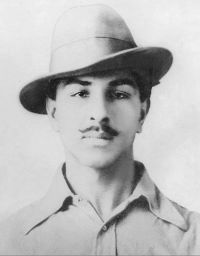 Bhagat Singh,
To Young Political Workers
(1931)
Bhagat Singh,
To Young Political Workers
(1931)
“ For, you must know that revolution means action. It means a change brought about deliberately by an organized and systematic work, as opposed to sudden and unorganised or spontaneous change or breakdown. ”
Popular Science Monthly (1882)
“ The era of elective government has come, and in the wise ordering of it so as to give public reason the upper hand, and to reduce, as far as possible, the influence of passion, class interest, selfish ambition, faction, and corruption, lies the political hope of the world. ”
Various, The Continental Monthly, Vol. 6…
“ Add to these obstacles the fierce partisan feeling engendered by the circumstances of the time and country—fears of aristocratic influences on the one hand, and sectional intrigues on the other, and we can easily perceive that the first duty of the enlightened and patriotic was to clear away prejudices, explain principles, advocate cardinal political truths, and lift the whole subject out of the dense region of faction and into the calm and clear sphere of reason and truth. ”
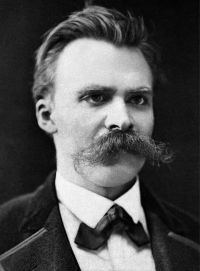 Friedrich Wilhelm Nietzsche,
Human, All-Too-Human: A Book for Free Spirits…
Friedrich Wilhelm Nietzsche,
Human, All-Too-Human: A Book for Free Spirits…
“ New and Old Conceptions of Government.—To draw such a distinction between Government and people as if two separate spheres of power, a stronger and higher, and a weaker and lower, negotiated and came to terms with each other, is a remnant of transmitted political sentiment, which still accurately represents the historic establishment of the conditions of power in most States. ”
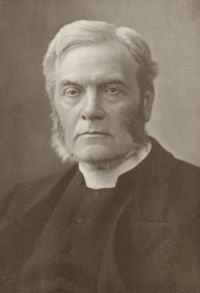 Marcus Dods,
How to become like Christ
Marcus Dods,
How to become like Christ
“ We should, therefore, recognise what is here suggested, and should counter-balance an undue regard for political movements and political power by the remembrance that the hardest tasks of all are accomplished by quite another power, and by a power which the politician often overlooks. ”
Milan C. Edson, Solaris Farm: A Story of the Twentieth Century
“ If, in connection with these solid foundations for a natural religion, we add the important fact, that this is a republic, in which the wish of the majority, should become the law of the mass; we shall discover that politics become the natural channel, through which the wishes of the majority are expressed; that corrupt politics, result in bad government; that pure politics, insure good government; that a wise, just government, is the greatest political benefit which can be conferred on the people governed. ”
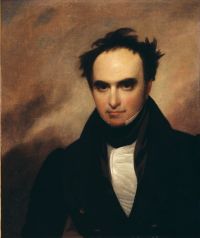 Daniel Webster,
Daniel Webster for Young Americans
Daniel Webster,
Daniel Webster for Young Americans
“ A popular government of this extent, it was evident, could be framed only by carrying into full effect the principle of representation or of delegated power; and the world was to see whether society could, by the strength of this principle, maintain its own peace and good government, carry forward its own great interests, and conduct itself to political renown and glory. ”
Carl Schurz,
Speeches, correspondence and political papers of Carl Schurz
(1913)
“ Some time ago, a Republican Senator, whom his colleagues had honored with the presidency pro tempore of the Senate, gave expression to these significant sentiments: The purification of politics is an iridescent dream. Government is force. Politics is a battle for supremacy. Parties are the armies. The Decalogue and the Golden Rule have no place in a political campaign. ”
 Emma Goldman,
The Individual, Society and the State
(1940)
Emma Goldman,
The Individual, Society and the State
(1940)
“ The State, government with its functions and powers, is now the subject of vital interest to every thinking man. Political developments in all civilized countries have brought the questions home. Shall we have a strong government? Are democracy and parliamentary government to be preferred, or is Fascism of one kind or another, dictatorship - monarchical, bourgeois or proletarian - the solution of the ills and difficulties that beset society today? ”
William D. Guthrie, Magna Carta, and Other Addresses
“ No other method has yet been discovered by which effectively to express political opinion, to secure stability in governmental administration and policies, and to effectuate the real and permanent judgment of the people and promote their best interests. ”
Carl Schurz,
The Reminiscences of Carl Schurz
(1908)
“ I think it can be said without exaggeration that there has never been in the history of this Republic a political movement in which the purely moral motive was so strong—indeed, so dominant and decisive. ”
 Woodrow Wilson,
Congressional Government
Woodrow Wilson,
Congressional Government
“ Such samples of the character which political questions have hitherto borne in this country are sufficient to remind all readers of our history of what have been the chief features of our politics, and may serve, without further elaboration, to illustrate the point I wish to emphasize. It is manifest how such a course of politics would affect statesmanship and political leadership. ”
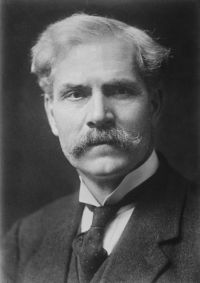 James Ramsay MacDonald,
The Socialist Movement
(1911)
James Ramsay MacDonald,
The Socialist Movement
(1911)
“ Finally, when the state becomes a democratic organisation and co-operates with the individual in all spheres of his activity, the movement for political democracy has ripened and has produced its natural social fruits. ”
 Fredrika Bremer,
The Homes of the New World
(1853)
Fredrika Bremer,
The Homes of the New World
(1853)
“ Ask we too the ages what they have done to develope the true theory of political organisation, to improve the mechanism of the social system, to impart practical wisdom to its ministrations, in order that the State may discharge its high duty to the citizen, for whose sake it exists, and whose allegiance it claims. ”
Carl Schurz,
Speeches, correspondence and political papers of Carl Schurz
(1913)
“ The people will, if the Democratic leaders do not, appreciate the greatness and beneficence of the idea upon which the new order of things, the settlement we propose, rests—true and general self-government exercised in and through the States ”
 Francis Bacon,
The Works of Francis Bacon
(1884)
Francis Bacon,
The Works of Francis Bacon
(1884)
“ The next removal must be to the study of politics; to know the beginning, end, and reasons of political societies; that they may not in a dangerous fit of the commonwealth be such poor, shaken, uncertain reeds, of such a tottering conscience, as many of our great counsellors have lately shown themselves, but steadfast pillars of the state. ”
Sir James Steuart, An Inquiry into the Principles of Political Oeconomy…
“ The principles I am enquiring into, regard the cool administration of their government; it belongs to another branch of politics, to contrive bulwarks against their passions, vices and weaknesses, as men. ”
 Thorstein Veblen,
The Place of Science in Modern Civilisation…
Thorstein Veblen,
The Place of Science in Modern Civilisation…
“ Just how great must be the advance of society and just what must be the character of the advance, preliminary to its advantageously assuming the autonomous—republican—form of political organisation, must be admitted to be an open question. ”
Carl Schurz,
Speeches, correspondence and political papers of Carl Schurz
(1913)
“ It is our business to lay down certain principles and propositions of policy, and we have to present to the suffrage of the people, men for the highest offices of the Republic, who, if elected, are to carry those principles and propositions into a living reality. ”
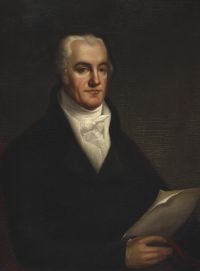 Joel Barlow,
The Columbiad: A Poem
Joel Barlow,
The Columbiad: A Poem
“ In the difference of national character between the people of these two empires we may discern the influence of political systems on the human mind, and infer the importance of the task which a legislator undertakes, in attempting to reduce a barbarous people under the control of government and laws. ”
John Quincy Adams, State of the Union Addresses of John Quincy Adams
“ But moral, political, intellectual improvement are duties assigned by the Author of Our Existence to social no less than to individual man. For the fulfillment of those duties governments are invested with power, and to the attainment of the end--the progressive improvement of the condition of the governed--the exercise of delegated powers is a duty as sacred and indispensable as the usurpation of powers not granted is criminal and odious. ”
Randall Garrett, Hail to the Chief
“ It is the essence of democratic government that disagreements in the upper echelons of that government shall be resolved by the action and the will of the governed. You, the people of the United States, have done just that. ”
 William Graham Sumner,
War and Other Essays
(1911)
William Graham Sumner,
War and Other Essays
(1911)
“ There are economic and sociological causes for our political vitality and vigor, for the ease and elasticity of our social relations, and for our industrial power and success. Those causes have also produced democracy, given it success, and have made its faults and errors innocuous. ”
 François Guizot,
Memoirs to Illustrate the History of My Time…
François Guizot,
Memoirs to Illustrate the History of My Time…
“ An unfavourable position for founding a Government, and, above all, a free Government. A certain degree of excitement and emulation invariably exists between the [108] people and the political parties, which constitutes the very life of the social body, and encourages its energetic and wholesome development. ”
 Anna Garlin Spencer,
The family and its members
Anna Garlin Spencer,
The family and its members
“ And every new idea of political reform and social progress that by dint of hard work among the intellectual and moral élite has gained a substantial following in public opinion of even a relatively small minority, has, in justice, and in demand for constant advance in human affairs, a right to a place in the high debate of political leadership. ”
John Stuart Mill,
Considerations on Representative Government
(1861)
“ We have from the first affirmed, and unvaryingly kept in view, the coequal importance of two great requisites of government—responsibility to those for whose benefit political power ought to be, and always professes to be, employed ”
“ In this, the first decade of the twentieth century, we find new conditions confronting the people called by many in the political sense, “Progressive.” There are many conditions in both the commercial and political orders of the time which are deemed by the leaders to need a change. ”
Carl Schurz,
Speeches, correspondence and political papers of Carl Schurz
(1913)
“ You learn here what good political institutions mean. The country is being badly governed at this moment, but, however it may be governed, incapable as the men at the helm may be, things go well, nevertheless. ”
 Gustave Le Bon,
The Crowd: A Study of the Popular Mind
Gustave Le Bon,
The Crowd: A Study of the Popular Mind
“ POLITICAL AND SOCIAL INSTITUTIONS The idea that institutions can remedy the defects of societies, that national progress is the consequence of the improvement of institutions and governments, and that social changes can be effected by decrees— this idea, I say, is still generally accepted. ”
Herbert Croly, The Promise of American Life — Chapter VII (1909)
“ The desirable democratic object, implied in the traditional democratic demand for equality, consists precisely in that of bestowing a share of the responsibility and the benefits, derived from political and economic association, upon the whole community. ”
 William Bennett Munro,
Social Civics
(1922)
William Bennett Munro,
Social Civics
(1922)
“ The Growth of Radicalism.—Two working principles have hitherto furnished the basis for political and economic organizations in such countries as the United States, Great Britain, and France. |Democracy and individualism.| Democracy, by which we mean the control of government by the whole people, acting chiefly through their representatives, has been the accepted basis of political institutions. ”
 Scott Nearing,
Civilization and Beyond: Learning from History
(1975)
Scott Nearing,
Civilization and Beyond: Learning from History
(1975)
“ The goal of world government, as of any political enterprise that pretends to represent human needs, will be social stability, security, efficiency of service, and enlarged opportunities for citizens to speak and act for themselves, directly or through their representatives, at all levels. Politics is the theory and practice of the possible in any given situation. ”
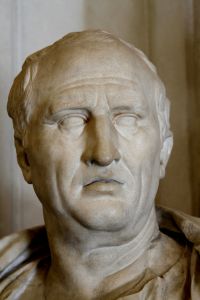 Marcus Tullius Cicero,
Cicero's Tusculan Disputations
(1888)
Marcus Tullius Cicero,
Cicero's Tusculan Disputations
(1888)
“ For the grand point of political science, the object of our discourses, is to know the march and the deviations of governments, that when we are acquainted with the particular courses and inclinations of constitutions, we may be able to restrain them from their fatal tendencies, or to oppose adequate obstacles to their decline and fall. ”
Various, Blackwood's Edinburgh Magazine…
“ Take, for instance, the exercise of political power. Is a state free in proportion to the number of its subjects who are admitted to rank among its citizens, or to the degree in which its recognised citizens are invested with political authority? ”
Woodrow Wilson,
An old master, and other political essays
(1893)
“ That the government which we thus set up in a perfectly normal manner has nevertheless changed greatly under our hands, by reason both of growth and of the operation of the general democratic forces,—the European, or rather worldwide, democratic forces of which I have spoken. ”
 George William Russell,
The National Being: Some Thoughts on an Irish Polity
(1916)
George William Russell,
The National Being: Some Thoughts on an Irish Polity
(1916)
“ We have been told, during my lifetime at least, not to criticize leaders, to trust leaders, and so intellectual discussion ceased and the high principles on which national action should be based became less and less understood, less and less common possessions. ”
E. W. Burgess, Introduction to the Science of Sociology
“ The political process, by which a society or social group formulates its wishes and enforces them, goes on within the limits of the mores and is carried on by public discussion, legislation, and the adjudication of the courts. ”
 Timothy Thomas Fortune,
Black and White: Land, Labor, and Politics in the South
(1884)
Timothy Thomas Fortune,
Black and White: Land, Labor, and Politics in the South
(1884)
“ When I say that this question is of a most complex and perplexing nature, I only assert what is known of all men.I would not forget that the arguments for and against independent action on our part are based upon two parties or sets of principles. Principles are inherent in government by the people, and parties are engines created by the people through which to voice the principles they espouse. ”
 Pierre-Joseph Proudhon,
Translation:Confessions of a Revolutionary…
Pierre-Joseph Proudhon,
Translation:Confessions of a Revolutionary…
“ In the eyes of reason, governments and parties are merely the mise en scène of the fundamental concepts of society, a realization of abstractions, a metaphysical pantomime, from which the direction is Liberty. ”
EZLN, Fourth Declaration of the Lacandon Jungle
“ A political force which can organize the demands and proposals of those citizens and is willing to give direction through obedience. A political force which can organize a solution to the collective problems without the intervention of political parties and of the government. ”
 Isabella Lucy Bird,
The Englishwoman in America
(1856)
Isabella Lucy Bird,
The Englishwoman in America
(1856)
“ Where the whole machinery of government is capable of being changed or modified by the will of the people while the written constitution remains, and where hereditary and territorial differences of opinion exist on very important subjects, is not surprising that party spirit should run very high. ”
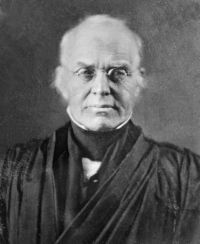 Joseph Story,
Commentaries on the Constitution of the United States
(1833)
Joseph Story,
Commentaries on the Constitution of the United States
(1833)
“ A weight of public opinion among the people for such a period, uniformly thrown into one scale so strongly, and so decisively, in the midst of all the extraordinary changes of parties, the events of peace and of war, and the trying conflicts of public policy and state interests, is perhaps unexampled in the history of all other free governments. ”
 Arthur Hugh Clough,
Prose remains of Arthur Hugh Clough…
(1888)
Arthur Hugh Clough,
Prose remains of Arthur Hugh Clough…
(1888)
“ The highest political watchword is not Liberty, Equality, Fraternity, nor yet Solidarity, but Service. ”
Carl SchurzJohn Stuart MillVariousDaniel Webster Bertrand RussellHerbert CrolyJames ReesBhagat SinghGeorge Thomas DalyHonoré de BalzacFriedrich Wilhelm NietzscheMarcus DodsMilan C. Edson
 Friedrich NietzscheEmma GoldmanWilliam D. GuthrieFrederick Jackson TurnerJames Ramsay MacDonaldWoodrow WilsonThorstein Veblen