Primary color

Definition and stakes

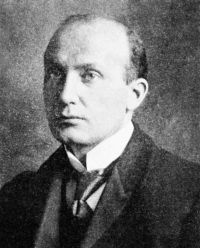
Portrait of Birge Harrison Birge Harrison,  Landscape Painting (1909)

“ We are all born color-blind. The most perfect eyes in the world cannot see one-quarter of the colors which are known to exist in nature. Those of us who are fortunate, it is true, are able to differentiate with reasonable exactness the three primary colors which go to make up our limited human color-scale—but what about the tones which certainly exist above the ultra-violet band and below the infra-red? ”

Source: Wikisource

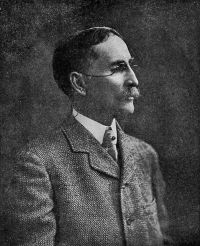
Portrait of Birge Harrison Birge Harrison,  Landscape Painting (1909)

“ As an artist's color, it replaces almost all the other red pigments which we have inherited from the past. The same chemists have an equally powerful yellow and blue under careful observation, and it is highly probable that in another year or two these, also, will be given to the world. Now it is evident that if painters can secure these three primary colors in two values, a light and a dark shade, they will, with the addition of white and black, have a perfect palette ”
Source: Wikisource

C. R. Clifford,  Color Value

“ There is only one true standard of color, and that is the standard as shown in the prism, and expressed by the spectrum. It is within the province of any man to determine the proper relationship of color if he starts with the chart we here present. We fix definitely the three primary and the three secondary colors, the primaries, red, yellow and blue, being those indicated by the heavy black lines; the secondaries, orange, green and violet, being indicated by the broad stipple lines. ”
Source: Gutenberg

Get perspective with Kwize: daily news enlightened by great literature