Proper motion, an astronomical measure of the apparent movement of stars across the sky, reveals their angular velocity relative to the Solar System’s center of mass. This concept, essential in astrometry, forms the basis for understanding stellar dynamics, galactic rotation, and structures such as stellar streams.
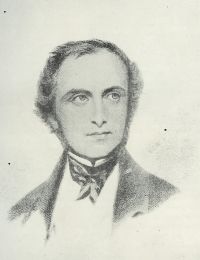
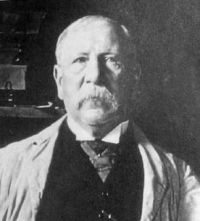
Authors such as Isaac Newton addressed proper motion in the context of combined bodily movements, while William Whewell highlighted its role in differentiating intrinsic from extrinsic forces. Robert Hunt connected it to physical forces and Earth’s motion, demonstrating its interdisciplinary importance. By combining proper motion with distance and radial velocity, astronomers decipher celestial trajectories, linking observational data with cosmic mechanics.
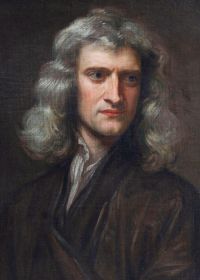 Isaac Newton,
The Mathematical Principles of Natural Philosophy…
Isaac Newton,
The Mathematical Principles of Natural Philosophy…